FAME Week Africa 2026: Africa’s Creative Economy Is Moving From Talent to Business
FAME Week Africa 2026: Why Africa’s Creative Economy Is Moving From Talent to Business
For years, conversations about Africa’s creative industries have largely revolved around one thing: Talent.
We talk about the singers breaking international records, filmmakers telling powerful African stories, designers taking African fashion to global runways and creators building millions of followers online.
But guess what? Something is changing. The conversation is increasingly moving beyond “How talented are African creatives?” to more important questions:
Who owns the work?
How is it monetized?
Who distributes it?
How can creators build sustainable businesses from their talent?
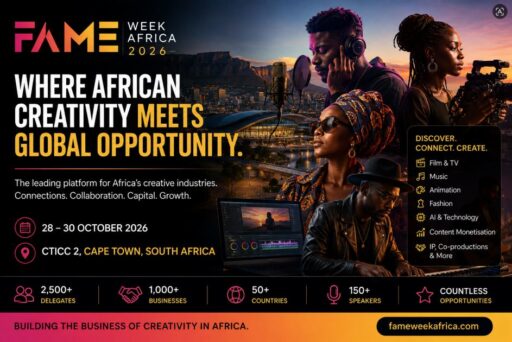
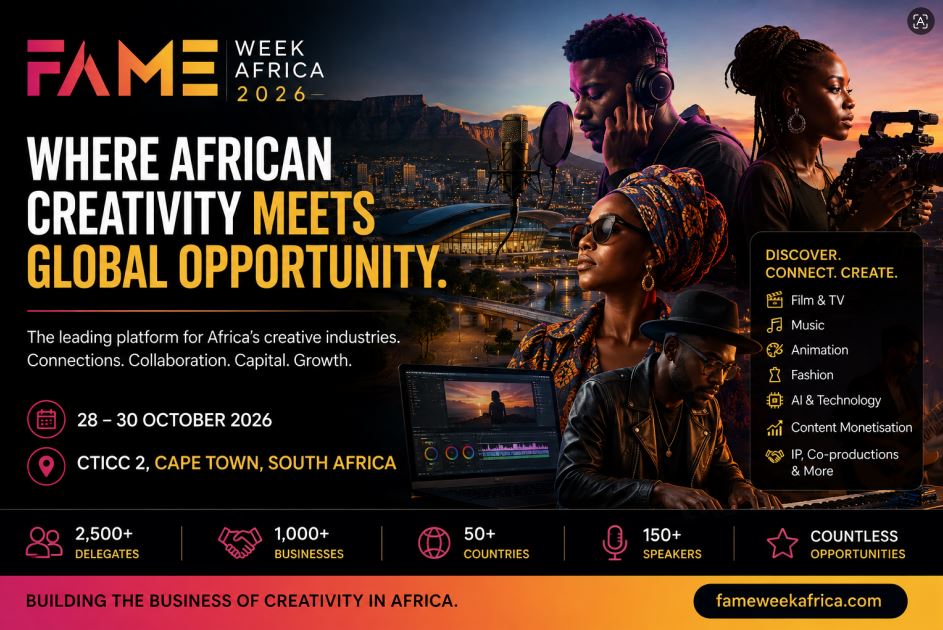
That shift will be one of the major themes at FAME Week Africa 2026, which returns to Cape Town from 28 October, bringing together professionals across film, television, animation, music, fashion and the wider entertainment industry.
And for African creatives trying to build careers, this is a conversation worth paying attention to.
The Creative Economy Is Growing Up
Africa’s creative industries have already demonstrated that there is a global appetite for African culture. Afrobeats has become a global phenomenon. African films are reaching audiences through international streaming platforms and African fashion continues to attract international attention. Creators are building audiences without traditional media companies but popularity doesn’t automatically create sustainable businesses.
A creator can have millions of followers and still struggle to make consistent money. An artist can have a hit song without fully understanding how royalties and publishing work. Also, a filmmaker can produce an excellent movie without having the distribution network needed to reach international audiences.
This is why the next stage of Africa’s creative economy has to be about structure. And that’s exactly where FAME Week Africa is positioning itself.
From Creativity to Commercial Opportunity
The 2026 programme will explore some of the issues that increasingly determine whether creative work becomes a sustainable business. Among the themes are artificial intelligence, content monetization, intellectual property, international co-productions, audience growth, creator-led businesses and changing distribution models.
That combination is important because knowing how to create is only one part of building a creative career. You also need to understand the business surrounding the creation.
How do you find an audience?
How do you protect your intellectual property?
How do you negotiate partnerships?
How do you monetize your audience?
How do you get your work into international markets?
How do you turn one successful project into a sustainable business?
These are the questions that can determine whether a creative career remains a side hustle or becomes a serious enterprise.
The Creator Economy Is Changing the Rules
One of the sessions announced for FAME Week Africa is “From Followers to Film: Growing Your Career in Media and Production.”
The session will examine how creators are moving from digital influence into sustainable careers across film, television, marketing and experiential industries.
That is a particularly relevant conversation for African creators. Social media has made it possible for almost anyone to build an audience but an audience is not the same thing as a business.
The next challenge is figuring out what to do with that audience. A creator might use their following to secure brand partnerships, launch a product, produce a television show, sell digital products, license intellectual property or develop a production company.
The possibilities are much bigger than simply getting paid for an Instagram post.
Intellectual Property Could Be Africa’s Biggest Creative Asset
One of the most important themes at FAME Week Africa is intellectual property and this deserves far more attention among African creatives. A song isn’t just a song as it can generate publishing rights, performance royalties, sync opportunities and licensing revenue.
In that same vein, a book isn’t just a book as its intellectual property could eventually become a film, television series, animation or game.
A character created by an illustrator could become merchandise and a creator’s original concept could become a format that travels across markets. The creative economy becomes significantly more valuable when creatives understand that they aren’t simply producing content.
They’re creating intellectual property.
And intellectual property can continue generating value long after the original piece of content has been released.
Africa Also Needs Better Distribution
Another major theme on the 2026 programme is the changing nature of distribution. This is actually critical as African creatives are becoming increasingly capable of producing world-class content. But production without distribution creates a bottleneck.
Who gets to see the film?
Who discovers the music?
Who buys the fashion?
Who licenses the content?
Who introduces the creator to international markets?
These questions explain why platforms such as FAME Week Africa matter.
The event brings together producers, broadcasters, commissioners, distributors, investors, creators and music executives, creating opportunities for the people producing creative work to meet the people capable of financing, distributing and commercializing it.
That’s a very different proposition from simply attending an entertainment festival.
Music Is Getting Its Own Business Platform
Music also receives a significant expansion this year through Music Week, which brings together Muziki Africa, the Pretty Loud Summit and Music Exchange. Muziki Africa will focus on areas including music rights, technology, AI, artist development, publishing, live events, creator culture and monetization.
There is even a Sync Hub, designed to facilitate meetings between music publishers, copyright holders and film and television producers. That is where the creative economy becomes particularly interesting.
A song can become part of a movie and a movie can introduce an artist to a new audience. Also, a fashion brand can collaborate with a musician, a creator can become the face of a campaign and a technology company can build a product around creative communities.
The industries are no longer operating in isolation.
They’re becoming an ecosystem.
Africa Needs More Rooms Where Deals Can Happen
Perhaps the biggest value of an event like FAME Week Africa isn’t the panel discussions, it’s the conversations that happen afterwards. The person you meet at a networking session could become your next collaborator.
A producer could discover a new filmmaker an investor could find a creative startup and a publisher could discover a story worth adapting. A brand could find its next ambassador and a music executive could discover an artist.
FAME Week Africa’s own matchmaking programme is designed around this idea, connecting creators with commissioners, producers with distributors and potential partners with one another. That’s an important development for Africa’s creative economy.
Creative industries don’t grow on talent alone.
They grow when talent meets capital, technology, distribution and business expertise.
What African Creatives Can Learn
You don’t necessarily need to attend FAME Week Africa to benefit from the conversation as the lessons are relevant to creatives everywhere. Start treating your creativity as a business by:
Understanding your intellectual property.
Building an audience you can reach directly.
Learning how your industry makes money.
Developing relationships beyond your immediate creative circle.
Looking for collaborations that can open new markets.
And don’t wait until you become famous before learning the business side of your craft because by then, you may have already given away valuable opportunities.
Wrapping Up
FAME Week Africa 2026 arrives at an interesting moment for the continent. African creativity is no longer fighting for recognition because the world is watching. The bigger challenge now is making sure African creatives can capture more of the economic value their creativity generates. That requires better institutions, better distribution, better understanding of intellectual property, more investment, stronger business skills and more collaboration between the different parts of the creative economy.
That’s why the conversations happening at FAME Week Africa matter. The future of Africa’s creative economy won’t simply belong to the most talented people. It will increasingly belong to the creatives who understand how to turn talent into intellectual property, intellectual property into businesses, and businesses into sustainable careers.
Africa has already shown the world what it can create.
Now it’s time to build the business systems that allow African creatives to own, monetize and scale what they create.
And perhaps that is the real evolution of Africa’s creative economy: from talent to business.
At GetCreativeMoney, we believe the next generation of African creatives shouldn’t just be celebrated for what they create. They should understand how to build sustainable careers and businesses around it.