African Female Artist Mentorship Program 2026–27: How to Apply
African Female Artist Mentorship Program Opens Applications for Emerging Women Artists
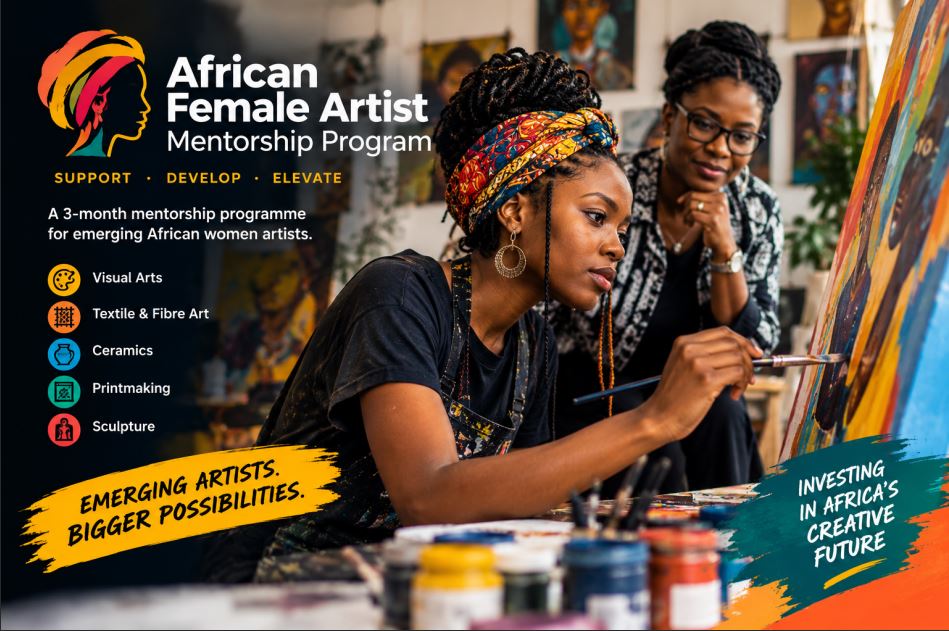
Emerging African women artists looking to develop their practice and strengthen their professional careers have an opportunity to apply for the African Female Artist Mentorship Program (AFAM) 2026–27.
The program is inviting early-career artists aged 19–40 to apply for a three-month mentorship program running from January to March 2027, with the exhibition period excluded from that duration. The program is listed as free for selected mentees, with mentorship provided by professional artists based in Nigeria.
The call is aimed at women working across several visual-art disciplines, including painting, textile and fibre art, ceramics, drawing, printmaking and sculpture.
For artists who have been developing their work independently, structured mentorship can provide an opportunity to receive feedback, examine their process and think more deliberately about the next stage of their practice.
Who is eligible to apply?
The published opportunity listing identifies the following eligibility conditions:
Applicants must be African women artists.
Applicants must be between 19 and 40 years old.
They should be at an early stage of their professional art career.
They must not currently be enrolled in post-secondary study.
Their practice should fall within one of the program’s listed visual-art disciplines.
The call is intended for emerging professional artists rather than students seeking a standard academic qualification. Applicants should check the full guidelines to understand how the organizers define early-career practice and what evidence they expect.
The program is described as free for selected mentees. Applicants should nevertheless confirm any practical costs or commitments associated with participation before accepting a place.
What disciplines does the program cover?
AFAM’s listed areas of focus include:
Painting and drawing: Artists developing work through image-making, composition, colour, mark-making and related approaches.
Textile and fibre art: Practitioners working with fabric, fibres and textile-based processes as part of their artistic practice.
Ceramics: Artists using clay and ceramic processes to create sculptural or functional forms.
Printmaking: Artists exploring print-based techniques and methods of producing images or editions.
Sculpture: Practitioners creating three-dimensional work using materials and processes appropriate to their practice.
Applicants should describe their actual work and artistic interests rather than trying to fit their practice into a discipline that does not reflect what they do.
What can artists gain from mentorship?
Mentorship can help artists examine their work with greater clarity, receive informed feedback and identify areas for development. It can also create space to discuss the professional side of an art career, including how to document work, present a portfolio and approach opportunities.
The value of a mentorship program depends on the relationship between the artist and mentor, the program structure and the mentee’s own engagement. It should not be presented as a guarantee of gallery representation, sales, exhibition opportunities or future funding.
For emerging artists, however, access to experienced practitioners can be useful in navigating questions that are difficult to answer alone: how a body of work is developing, what direction to explore next and how to communicate the work to different audiences.
What should applicants prepare?
The opportunity listing identifies an application letter of no more than two pages, including an explanation of the applicant’s artistic practice and studio activity over the preceding year.
A strong application should be specific and grounded in the artist’s real experience.
Explain your practice
Describe the kind of work you make, the ideas you explore and the materials or processes you use. Avoid relying entirely on broad descriptions such as “I am passionate about art.”
Show evidence of recent work
Where the application allows or requests it, organize images or documentation of recent work so the reviewer can understand your practice. Make sure the work is clearly identified and presented at a quality that allows it to be assessed.
Explain why mentorship would help
Identify a genuine question, challenge or area of growth in your practice. This helps show that you have thought about what you want to gain from the program.
Check eligibility carefully
Before submitting, confirm your age, professional stage, educational status and discipline against the original call. Do not assume that meeting most conditions is enough if one requirement is mandatory.
What is the deadline?
The published opportunity listing gives October 30, 2026, as the application deadline for the 2026–27 program. Selected applicants are expected to be notified approximately one month after the deadline, according to the listing.
Because this deadline is approaching, applicants should confirm the current call and submission route with the program organizer before preparing their final application.
The listing includes the African Female Artist Mentorship Program and its eligibility details. If the organizer provides a dedicated application form or original call, use that as the primary source for submission.
Why mentorship opportunities matter
Many artists develop their practice through experimentation, independent learning and peer exchange. But navigating a professional career can require guidance that goes beyond making the work itself.
Mentorship can create a space to reflect, test ideas and learn from someone with relevant experience. For emerging women artists, a program specifically focused on their development may offer a more structured route to that support.
For eligible artists, the first step is to read the complete guidelines, prepare an honest and well-organized application, and make sure the program aligns with their current stage of practice.