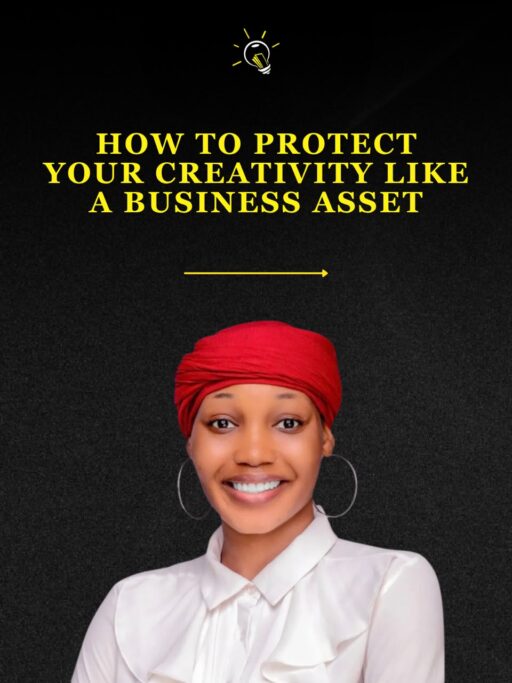
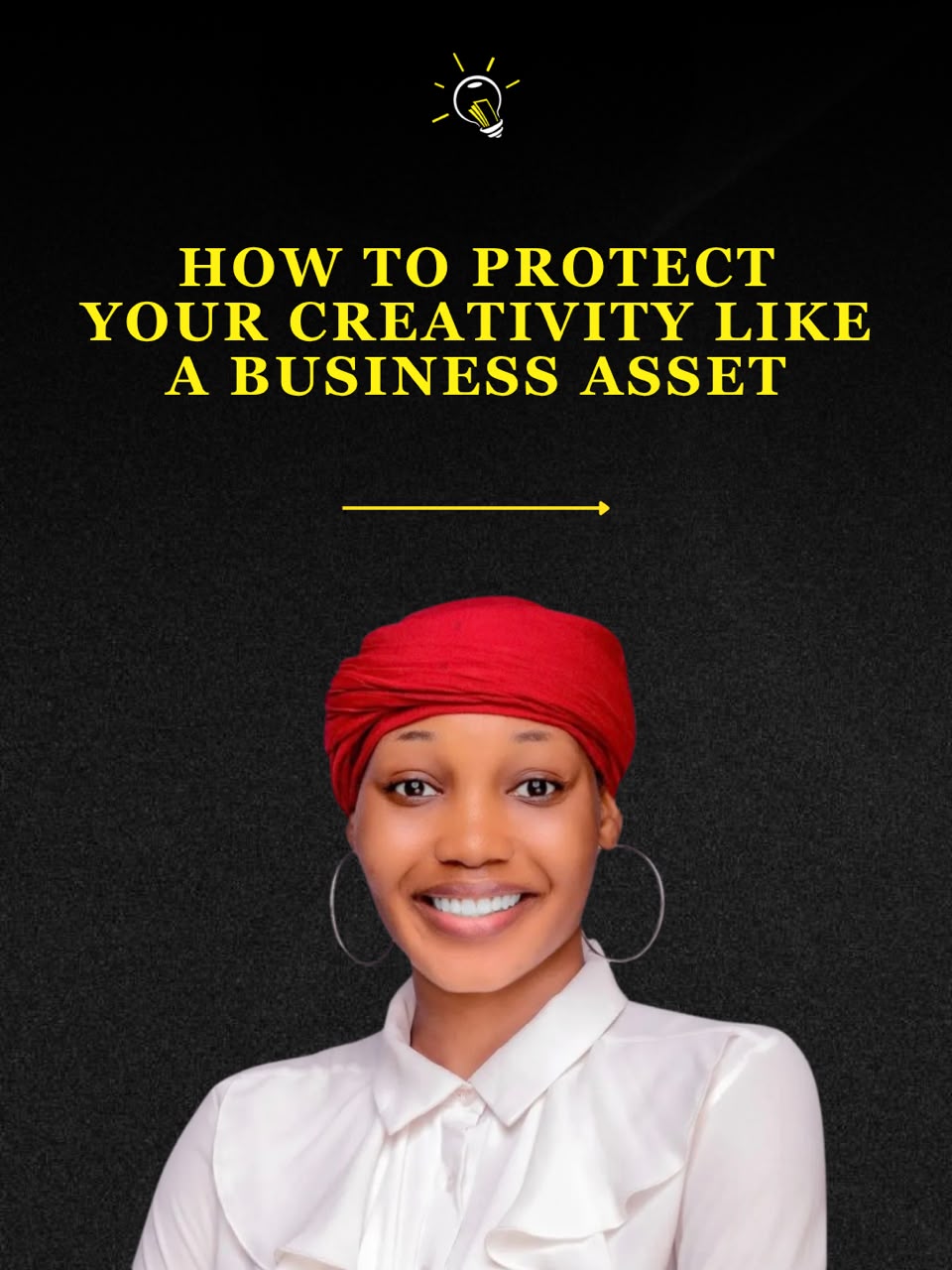
The session, titled “The Creative Goldmine: How to Protect and Monetize Your Ideas,” explored how creators can turn their ideas, content, brands and innovations into protected intellectual property assets capable of generating long-term income.
Hosted by Creative Money Africa founder Ekpedeme Ufot, the webinar brought together creatives and professionals interested in understanding how intellectual property can support ownership, monetization and sustainable business growth.
Creativity creates value, but intellectual property protects it
At the start of the session, Mrs Amosa challenged participants to think beyond the immediate value of the creative work they produce.
According to the IP expert, an asset is not limited to physical property, money, or equipment. Ideas, brands, creative works, and innovations can also become valuable assets when properly identified and protected.
Intellectual property, she explained, gives creators legal rights over creations of the mind and can help them control how their work is used, prevent unauthorized exploitation and create opportunities for revenue.
The message was particularly relevant to the wide range of creators who now operate across the digital economy, including writers, musicians, designers, photographers, podcasters, software developers, educators, and content creators.
Every creator may have more than one IP asset
One of the key ideas from the session was that creators often own more intellectual property than they realize.
A content creator, for example, may own copyright in their videos, a trademark in their channel name and logo, copyright in educational materials and potentially other intellectual property connected to merchandise, digital products or software.
Shukurat described this collection of assets as a creator’s intellectual property portfolio. Therefore, instead of seeing a single video, song, design or course as an isolated product, creators can begin to identify the different forms of intellectual property contained within the wider business they are building.
A personal brand can become a trademark. A course can become copyrighted educational content. A product design can qualify for industrial design protection. An invention that solves a technical problem may be eligible for a patent.
The creative business, in other words, can contain an entire portfolio of assets.
Copyright, trademarks and patents protect different things
A significant portion of the webinar focused on helping creators understand the differences between the major forms of intellectual property protection.
Copyright generally protects original creative works, including videos, books, music, photographs, artwork, podcasts, online courses and website content. It gives creators exclusive rights over how their work is reproduced, distributed, performed, adapted or licensed.
Trademarks, on the other hand, protect the identifiers that distinguish a brand. These can include business names, logos, slogans, product names and service names.
Mrs Amosa used familiar companies and creators to illustrate the value of strong brands. Businesses such as Apple, Nokia and Intel have built significant value around names and identifiers that consumers recognize.
She also connected the concept to creators, using Nigerian comedian and content creator Sabinus as an example of how a creator’s identity and brand can become valuable assets in their own right.
An improvement can become an invention
The discussion on patents focused on a different kind of intellectual property: innovation. Mrs Amosa explained that patents protect inventions and technical solutions that offer a new way of solving a problem.
To illustrate the concept, she referred to the evolution from wired to wireless microphones.
The wireless microphone did not simply represent another creative expression of the original product. It addressed a practical limitation of the wired design by allowing sound to be transmitted without a physical cable connecting the microphone to the audio system.
The broader lesson was that creators and innovators should pay attention to the problems their ideas solve.
A new product, technical process or innovation that improves upon an existing solution may contain intellectual property that deserves protection.
For technology creators, developers, startups and creative entrepreneurs, this can be particularly important because the value of an idea typically lies in the technical problem it solves.
Sometimes the most valuable thing is what you do not reveal
Mrs Amosa also highlighted trade secrets as another form of intellectual property protection.
Unlike copyright or patents, which may involve publicly establishing rights, trade secrets depend on keeping valuable information confidential.
The Coca-Cola formula is one of the world’s best-known examples of this approach. The company has long treated the formula as a closely guarded trade secret, protecting its commercial value by limiting access and maintaining confidentiality rather than publicly revealing the formula.
For creators and businesses, the principle can apply to valuable information such as proprietary processes, formulas, strategies and other confidential business knowledge.
The lesson is that not every valuable idea should be publicly disclosed. Sometimes, protecting an asset means understanding when to register it, when to license it and when to keep it confidential.
The route from content creator to IP owner
Mrs Amosa also demonstrated how a creator’s work can develop into a broader intellectual property business over time.
A creator might begin with educational videos and a personal brand. Over time, those assets could develop into a trademarked brand, online courses, e-books, merchandise and licensed content.
The creator is no longer just producing individual pieces of content but also building a collection of intellectual property assets that can generate revenue through different channels.
Those channels can include advertising, licensing, sponsorships, royalties, franchising, merchandising, publishing deals, course sales and brand collaborations.
“The more protected your IP, the easier it becomes to monetize,” she explained.
The point was not that legal protection automatically generates income. Rather, clear ownership makes it easier for creators to negotiate the commercial use of their work.
What happens to intellectual property created for an employer?
The question of ownership became particularly practical during the question-and-answer session.
One participant asked whether an agency owns the intellectual property created by an employee or whether the employee retains ownership of the work.
Mrs Amosa explained that, in the context discussed during the webinar, a full-time employee’s creative work may belong to the employer where the employment arrangement and contract provide for that ownership, particularly when the work is created within the scope of the employee’s role using the employer’s resources and time.
The exchange highlighted a concern many creative professionals may not consider when accepting a job.
Before creating work for an employer or client, creators need to understand what their contracts say about ownership, copyright, licensing and the right to use work in their portfolios.
The conversation also prompted a participant to consider whether freelancing could offer greater control over ownership of their work.
But the underlying lesson was broader: creators should not assume they own every piece of work they produce simply because they personally created it. Ownership can be shaped by the contract and the nature of the working relationship.
The biggest IP mistake may be waiting too long
Mrs Amosa also outlined several common mistakes that can make it harder for creators to protect their work.
These include failing to document ownership, using copyrighted material without permission, delaying trademark registration, publicly sharing inventions before seeking appropriate protection, ignoring licensing terms and assuming that social media platforms automatically protect ownership.
The digital nature of much modern creative work can make these mistakes quite easy to overlook. A creator may upload a video, launch a brand, publish a course or develop a product without first considering the intellectual property attached to it.
By the time the work becomes commercially valuable, ownership disputes or unauthorized use may already have become difficult to resolve.
The earlier creators begin to identify their intellectual property assets, the better positioned they may be to protect and commercialize them.
A creative career can become an intellectual property business
The webinar ultimately presented intellectual property as not just a legal subject but also a business conversation.
A creator’s work can become an asset. That asset can be protected. A protected asset can be licensed, commercialized and used to build long-term value. For creators operating in a fast-growing competitive economy, the ability to produce is not all it takes. It is also essential to understand what has been produced, who owns it, how it can be protected, and how it can generate income beyond the first transaction.
This second Creative Money Africa webinar continues the series’ focus on the business knowledge creators need to build sustainable careers.