Zinhle Madela – Multiple Creative Formats, One Creative Property
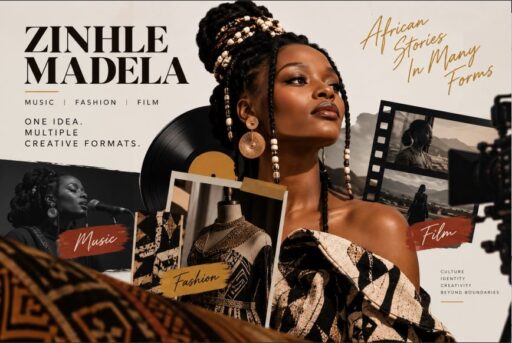
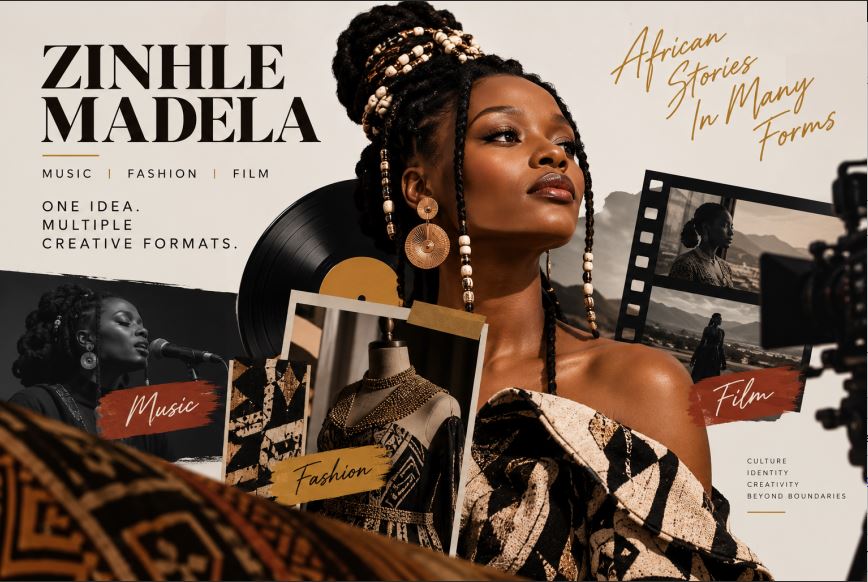
Zinhle Madela Is Turning Music, Fashion and Film Into One Creative Property
What if an artist didn’t have to choose between music, fashion and film? What if all three could become different expressions of the same creative idea? That is the direction South African artist Zinhle Madela is taking with Isigcawu – A Journey to the Heart, a project that brings together music, film, fashion and African cultural identity.
The musical film is scheduled to premiere on August 26, 2026, at the UNISA Durban Campus as part of Music Imbizo, and forms part of a broader creative project that includes an album of the same name. But describing Madela simply as a singer-songwriter misses what makes the project interesting. She is building a creative world.
One idea can become several products
The traditional model for a musician is fairly straightforward. Make music, release the music, promote the music, perform the music and repeat. Madela’s approach is different.
Isigcawu extends beyond the songs into a visual narrative, fashion and cultural storytelling. Her collaboration with Iqhosha House of Fashion brings handcrafted garments into the creative world she is building, while the film gives the music another medium through which its story can be experienced.
That creates something more valuable than three disconnected projects. It creates one idea expressed across multiple formats and that is increasingly important in the modern creative economy.
The audience doesn’t consume creativity in silos anymore
A music fan can discover an artist through TikTok, listen to the song on Spotify, see the music video on YouTube, buy the outfit worn in the video, attend the artist’s live show, follow the fashion designer, watch the film inspired by the album and buy merchandise.
The boundaries between creative industries have become increasingly blurred. Madela’s project reflects that reality. The music establishes the sound, the film expands the story, the fashion establishes the visual identity and the cultural themes give the entire project meaning.
Instead of asking audiences to consume a song and move on, the artist is giving them an entire creative experience to enter.
Culture becomes more than inspiration
There is another reason the project is worth paying attention to. Madela’s work is deeply rooted in Zulu identity and explores the relationship between tradition, spirituality, community and contemporary African life. That gives the project something many creative businesses struggle to manufacture: authenticity with a clear point of view.
African creatives are often encouraged to make their work “global” but global does not necessarily mean removing the things that make the work African. Sometimes the more powerful strategy is the opposite.
Take the cultural elements that are specific to your community and find a contemporary way to make them relevant to people beyond it. That is what makes culture commercially interesting. It creates differentiation.
Fashion becomes part of the storytelling
The relationship with Iqhosha House of Fashion is particularly interesting because the clothing is not being treated simply as wardrobe. It becomes part of the project’s storytelling language.
That creates opportunities for collaboration between creative disciplines that would otherwise operate separately.
A musician brings an audience.
A fashion designer brings a visual identity.
A filmmaker brings narrative.
A photographer creates campaign assets.
A stylist creates a distinct aesthetic.
A content creator extends the story online.
Suddenly, one creative project can support an entire network of creative businesses. That is what a healthy creative ecosystem looks like.
This is also a lesson in intellectual property
There is a bigger business lesson here. Creators should ask themselves:
What else can this idea become?
A song can become a music video.
A music video can become a short film.
A character can become merchandise.
A fashion collection can become a documentary.
A podcast can become a live event.
A book can become a film.
A cultural story can become an album, exhibition, fashion collection and digital series. The objective isn’t to force every idea into five different formats. It is to identify whether an idea has enough depth to travel across formats.
Madela’s Isigcawu demonstrates what that can look like. The project has reportedly been three years in the making, giving it the kind of long-term development that is often missing from fast-moving creative industries.
African creatives can build worlds, not just careers
Perhaps the most interesting part of Madela’s approach is that she isn’t simply trying to release more content. She is creating a body of work with a consistent identity. That distinction matters.
Content is often designed to be consumed and replaced. A creative property is designed to accumulate meaning over time. The more people encounter the music, film, fashion and story surrounding Isigcawu, the more recognizable the world becomes.
That recognition can eventually create opportunities for performances, partnerships, licensing, fashion collaborations, film distribution and other commercial extensions. Of course, none of those opportunities is guaranteed but building a strong creative universe makes them possible.
The future may belong to multidisciplinary creatives
African creative industries have traditionally been separated into categories: music, film, fashion, art, advertising. The audience doesn’t necessarily see those boundaries anymore and increasingly, neither should the creators.
The most interesting creative businesses may be built by people who understand how different disciplines can reinforce one another.
Zinhle Madela’s Isigcawu is a useful example. It begins with an artist, becomes music and then it becomes film. Fashion enters the world, culture ties everything together and suddenly, what started as a creative project starts looking much more like a creative property.
For African creatives, that may be the bigger lesson. You don’t always need to create more. Sometimes you need to find more ways to make one great idea matter.