

Why Africa’s Creative Economy Is Becoming a Tech Industry
Technology and creativity have spent years moving closer together. Today, that relationship is becoming impossible to ignore. You’lll find out that a musician can distribute a song globally without signing to a traditional record label and a filmmaker can reach international audiences through streaming platforms. Same way, a fashion designer can sell directly to customers online, a creator can build a media business from social platforms and an independent game developer can create a product for a global audience without having a physical office outside Africa.
Now, one of Africa’s biggest technology conferences is reflecting that change.
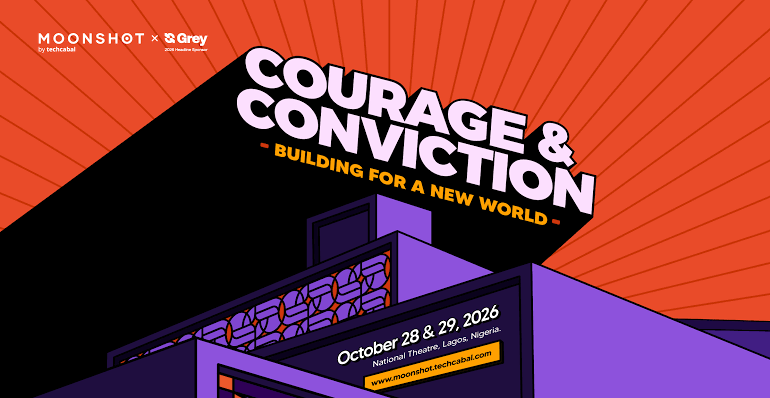
Moonshot by TechCabal 2026 will feature a dedicated Creative Economy track, placing creativity alongside areas such as artificial intelligence, commerce, climate technology, government and policy, and emerging technology. The conference is scheduled for October 28–29 at the National Theatre in Lagos.
At first glance, this might simply look like another conference programme but there is a bigger story underneath it.
Africa’s creative economy is increasingly becoming a technology story.
Creativity Is No Longer Separate From Technology
For a long time, “tech” and “creative industry” were treated as completely different worlds. Technology belonged to programmers, engineers and startup founders. Creativity belonged to musicians, filmmakers, designers, writers and artists. That distinction is becoming increasingly difficult to maintain.
Consider music; streaming technology has fundamentally changed how African music is distributed and discovered. Take a look at the film industry, streaming platforms have changed how African films reach audiences. For content creation, social media has turned individual creators into publishers, broadcasters and media businesses. In the gaming industry, it’s a combination of software development, storytelling, animation, music, design and community building and then there is AI.
Artificial intelligence is now affecting practically every part of the creative process, from brainstorming and writing to image generation, video production, music and post-production.
Technology isn’t simply supporting Africa’s creative economy anymore. It is helping define how the industry operates.
Moonshot’s Creative Economy Track Is Significant
Moonshot’s 2026 programme describes its Creative Economy track as a space focused on the intersection of technology, culture and creativity, bringing together storytellers, creators, founders and platforms shaping Africa’s cultural exports. That description is important because it doesn’t frame creativity as an isolated entertainment category. It places creativity inside the wider technology and innovation ecosystem and that makes a lot of sense because many of the biggest opportunities facing African creatives today involve technology.
- How do creators reach audiences?
- How do they monetise those audiences?
- How do they distribute intellectual property?
- How can AI make production cheaper?
- How can digital platforms help African products reach global markets?
- How can technology help creators manage their businesses?
These aren’t purely artistic questions. Rather, they’re technology and business questions.
Africa’s Creatives Are Becoming Digital Entrepreneurs
The traditional model was relatively straightforward where an artist needed a record label, a filmmaker needed a studio or television network or a writer needed a publisher. Technology has disrupted many of those gatekeepers.
Today, a creative can potentially build an audience first and find commercial opportunities later and that has created an entirely new class of entrepreneur:
the creator entrepreneur.
Someone can simultaneously be:
- A content creator
- A publisher
- A media company
- A brand
- A product developer
- An educator
- An influencer
- An intellectual-property owner
The boundaries are becoming increasingly blurred.
But Technology Doesn’t Automatically Create Successful Creatives
This right here is an important warning here because having access to technology doesn’t guarantee success. Africa’s creators still face challenges around monetization, funding, infrastructure, intellectual property protection and access to international markets.
A creator can have 500,000 followers and still struggle to build sustainable income. Same way a musician can have millions of streams while having limited understanding of publishing and royalties and a filmmaker can produce an excellent project but struggle to secure distribution.
Technology creates access but business knowledge determines what happens after access. That is why the combination of creativity, technology and entrepreneurship is becoming so important.
AI Could Change the Economics of Creative Production
Artificial intelligence may be the biggest technological development affecting the creative industries right now. For African creators working with limited resources, AI could potentially lower the cost of certain tasks.
A small creative team can use AI-assisted tools for research, brainstorming, editing, transcription, design exploration, translation and other parts of production. That doesn’t mean AI replaces creative professionals.
Instead, it could allow smaller teams to produce work that previously required larger budgets and that matters in Africa.
A creator doesn’t necessarily need access to Hollywood-level resources to compete internationally if technology can reduce some of the barriers to production. However, AI also introduces difficult questions around copyright, consent, originality and ownership. Those questions will become increasingly important as African creators adopt these tools.
The Next African Tech Companies May Serve Creatives
There’s another opportunity hiding inside this shift. If Africa has millions of creators, those creators will need infrastructure. They need payment platforms, distribution platforms, audience analytics, copyright management, digital storefronts, financial services, collaboration tools, AI tools designed around their realities and platforms that help them sell internationally.
This creates opportunities for African technology companies to build products specifically for the creative economy and some of those businesses could become significant companies in their own right.
The Creative Economy Is Becoming More Investable
The growing intersection between technology and creativity also makes the sector more interesting to investors.
Brookings has highlighted the growth of African creative industries and pointed to major transactions such as Universal Music Group’s majority acquisition of Mavin Global as evidence of growing international interest in African creative businesses.
The lesson is simple:
Investors aren’t only investing in artists. They’re investing in the businesses, platforms and intellectual property surrounding artists.
That distinction matters as the next big creative economy success story may not necessarily be a musician. It could be a platform that helps African musicians collect royalties or a technology company helping filmmakers distribute content. Who knows, it could even be an AI startup serving African creators, a gaming studio, a fashion-tech company or a company helping African intellectual property travel across borders.
What This Means for African Creatives
If you’re a creative professional, you don’t need to become a software engineer but you do need to become comfortable with technology. Learn the platforms that matter in your industry and understand how your audience discovers content. Explore AI tools that can improve your workflow, learn how digital distribution works, understand analytics, learn how online businesses make money and, perhaps most importantly, understand your intellectual property.
Because the future creative professional won’t simply ask:
“How do I make better work?”
They will also ask:
“How do I distribute it, protect it, monetize it and scale it?”
Moonshot Is Showing Where the Conversation Is Going
Moonshot by TechCabal 2026 programme includes nine content tracks, with the Creative Economy sitting alongside areas such as Future of Commerce, Emerging Tech, Government & Policy, Climate Tech and Big Tech & Enterprise.
The conference has also grown considerably since its launch in 2023. Its organizers say the first three editions attracted more than 12,650 participants from 44 countries, while the 2025 edition alone drew about 6,000 attendees from 39 countries.
That makes the inclusion of a dedicated Creative Economy track more than a programme detail. It reflects a broader shift in how Africa’s economy is being discussed.
Creativity is increasingly being recognized as part of the digital economy.
Final Thoughts
Africa’s creative economy doesn’t need to become a technology industry by abandoning creativity. That’s quite the opposite as technology gives African creativity more ways to travel. It can lower production barriers, connect creators with audiences, simplify payments, open international markets and create entirely new business models.
But the biggest opportunities will emerge where creativity, technology and business meet. That is why the Creative Economy track at Moonshot 2026 is worth watching.
The future of African technology isn’t only about fintech, AI or software. It could also be about the people creating the stories, music, games, fashion, films and digital experiences that the rest of the world wants to consume.
Africa’s next technology success story may not just be something built by a developer.
It could be something built by a creative who learned how to use technology to turn an idea into a global business.
At GetCreativeMoney, we believe African creatives shouldn’t just be consumers of technology. They should be among the people building the platforms, products and businesses that shape Africa’s creative future.