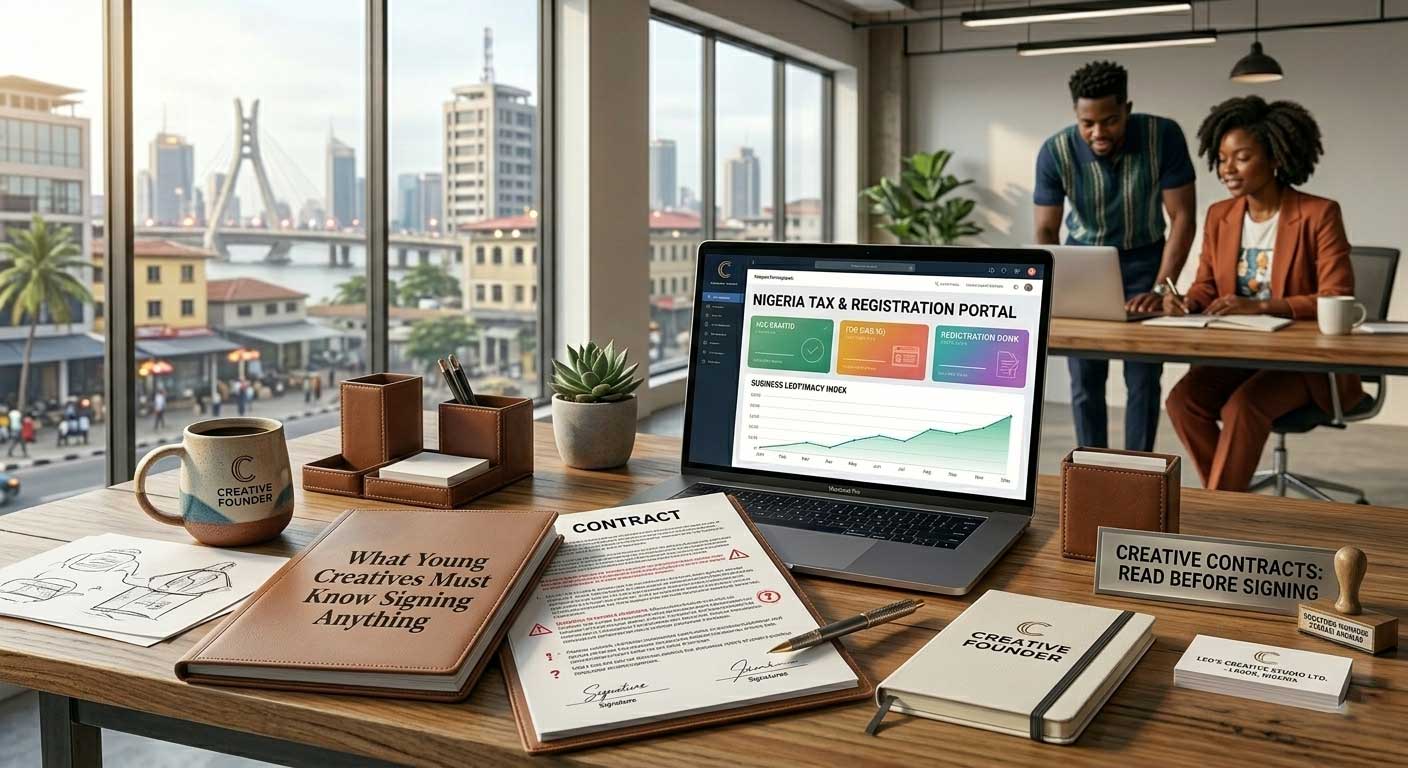
What Young Creatives Must Know Before Signing Anything
As a young creative, especially the music artists, protecting yourself is a must and you do not need to be a lawyer to do so. But you do need to understand what you are agreeing to. Know the difference between your compositions and your masters. Your compositions are the songs you wrote, belonging to you by default under Nigerian copyright law. The masters are the recordings that go to whoever the contract says they go to. Before young creatives signing anything, there are things you must know. So ask directly: who owns the masters? Do I get them back? When?
Understand what a reversion clause is. A reversion clause returns your masters to you after a certain number of years, or after a certain sales threshold, or when the label no longer actively markets your music. If a contract has no reversion clause, the label may own your recordings permanently even long after the relationship ends. Ask about this before you sign. If they resist, that tells you something.
A parent’s signature is not the same as legal protection. When a label asks your parent or guardian to cosign a contract because you are a minor, that protects the label not you. It is how they make the agreement enforceable. That does not mean the terms are fair. Also does not mean anyone reviewed the contract in your interest. Get a lawyer who works for you, not one recommended by the label to read the contract before anyone signs anything.
Find out who owns your stage name. Your name is your brand. It is how fans find you, how festivals book you, how the world knows you. If your stage name is attached to a label’s ownership rather than your own registered identity, they may have legal claim to it if you leave. This is what happened to Cynthia Morgan. Confirm who owns your name before you perform under it for someone else’s imprint.
Understand how streaming takedowns work. A label cannot simply decide to remove your music from Spotify because a dispute exists. They need a legal basis, a copyright claim, a court order, or a DMCA notice. If your music disappears, ask in writing what the specific legal grounds are. The platform will have a record. That record is where you start.
Document everything, always. Every payment you receive, every advance, every email that changes the terms of your deal and every version of your contract. The moment a dispute becomes public, the party with documentation wins more often than the party with the better story. The African creative economy is growing faster than the systems designed to protect the people inside it. Afrobeats are genuinely global. Nollywood is crossing borders. Brands and investors are circling.
The most powerful thing any young African creative can do is understand exactly what they are signing before they pick up the pen. Take Qing Madi Ex-label saga for instance. She is fighting her battle in public because she had no other option. You do not have to wait until you are in the same position to learn what she has learned.
Read the contract. Ask the questions. Know your rights. Do it now, while you still can. Nothing in this article constitutes legal advice. If you are facing a contract or label dispute, consult a qualified entertainment lawyer in your jurisdiction.