The Qing Madi Ex-label Saga – A Must Read For Every Creative
She Wrote Every Song. She Won in Court. They Still Took Her Music Down.
The Qing Madi ex-label saga is not just a celebrity drama. It is a warning every young African creative needs to read before they sign anything.
Imagine working for years to build something. You write every word and perform every note. Continuously, you show up, you push through, you grow, and the music you made starts to matter to people. Millions of streams. A real fanbase. A name people recognize. Then one day, you check Spotify only to see that your songs are gone.
Not because you did anything wrong and not because you violated any platform rule. But because someone you used to work with, someone you signed a contract with at 16 years old, went to court and got an injunction. And that injunction gave them the power to pull your music off every streaming platform, right in the middle of your biggest moment.
This is what is happening to Qing Madi right now. And if you are a young creative in Nigeria or anywhere in Africa, this story is not just about her. It is about the contract you might sign tomorrow.
Who is Qing Madi, and what exactly happened?
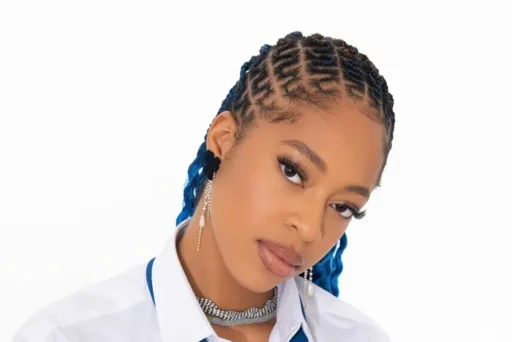
Chimamanda Pearl Chukwuma was born on July 1, 2006. She is 19 years old. At 16, she was already releasing music that people were listening to. Her single “See Finish” went viral.
Then came “Ole” featuring “BNXN.” Then “American Love.” Both songs surpassed 100 million streams on Spotify. She became one of the most popular young Afrobeats artists before turning 18. Her label at the time was JTon Music, founded by Joy Tongo. At that time, Qing Madi was a minor when she signed, her mother cosigned the contract on her behalf. Eventually, Qing Madi left JTon Music. She started her own imprint, called KFMD. She released a new EP called Barely Legal, and that is when things got complicated.
JTon Music sued her for what Qing Madi has described as $2 million, alleging she breached her contract when she left. She says she went to court, fought the case, and won. That the label could not produce enough evidence to make their claim hold, particularly around a contract signed while she was underage. JTon Music disputes this. They say the case has not yet gone to trial, that no final ruling exists, and that the injunction they obtained from the court is still active. And based on it, JTon Music issued copyright takedown requests against her music.
In late May and early June 2026, five of the seven songs on Barely Legal were taken down from Spotify and other streaming platforms. Five songs. Gone. Just like that. “The same people that tried to destroy Cynthia Morgan are trying to do the same to me.” That is a direct quote from Qing Madi’s own Instagram.
She also posted:
“The first artist you signed, Cynthia Morgan, cried. And now you’re doing it to a literal teenager. So two women have worked with you and have the same story.”
Cynthia Morgan was one of the biggest names in Nigerian Afrobeats and dancehall in the 2010s. She was signed to JTon Records, the predecessor to JTon Music, the same entity and eventually moved to Northside Records under Jude Okoye. For years after, she spoke publicly about what happened to her during and after that period: that she lost access to her stage name, lost control of her social media handles, and was left unable to perform as herself.
In a 2020 interview, she cried talking about it. Joy Tongo and Jude Okoye disputed her version of events. They issued statements rejecting her account. But what nobody disputes is the result: a generation-defining artist spent the better part of her 30s trying to reclaim an identity and a career she had already built once.
Now, five years later, Qing Madi is drawing the same line. Same manager. Same label. Similar pattern. Two women. Same story. Meanwhile, the same week Qing Madi’s songs were disappearing from Spotify, another Nigerian artist, Odumodublvck and Chocolate City went public with a different kind of label dispute. Odumodublvck, one of the most exciting rappers to come out of Nigeria in the last three years posted a series of allegations on X claiming that Chocolate City had filed a police petition against him timed to coincide with the start of his European tour.
“Chocolate City has been trying to arrest me for the longest time,” he wrote.
“They tried before my American tour. Now they are trying with the European tour.”
He described it as the ninth such attempt. Also, he linked the alleged campaign to his decision to publicly speak out about what he called a sexual abuser operating within the label’s circle. Subsequently, he warned the Nigeria Police Force that he would post every petition they sent him if they were not careful. Chocolate City denied having the power to arrest anyone. The label confirmed that a police complaint exists rooted in an alleged physical altercation at a concert in December 2025 but rejected the framing of Odumodublvck’s allegations.
Odumodublvck, for his part, was already in Europe when he posted. “We in Europe baby. My motion dey make dem sick.” He made his tour. But the allegation stands: a label used a police complaint timed to a major career moment to try to disrupt an artist’s movement.
Two stories within a week. Here is what you miss when these stories unfold;
When Nigerians on Twitter argue about Qing Madi and Odumodublvck, the debate usually goes in circles. People pick sides. Fans defend their favourites. You’d see a comment that says “read your contract.” Another that says “labels are evil.” But the point is not about whether the label is good or bad. It is not about whether any specific artist handled their business well or poorly.
The point is this: the system that governs how young African artists sign deals, how those deals are structured, and what happens when those deals go wrong is not designed to protect the artist. And until you understand that system, you are walking into every opportunity with your eyes closed. The contract you sign at 16 can follow you at 25. Here is the first thing you need to understand about Nigerian contract law and how it applies to young artists;
Under the Child’s Right Act which reflects Nigerian law on the legal capacity of minors, a child is anyone under the age of 18. And contracts entered into by children are generally voidable. Voidable does not mean automatically cancelled. It means the minor has the option to reject the contract. But here is where it gets complicated. If you sign a contract at 16, and you keep performing under that contract after you turn 18, recording music, releasing songs, accepting payments, a court may interpret that as ratification. As you, now an adult, choosing to honour the agreement. And once ratified, the contract becomes binding in full.
This is the gap that swallows young artists. They sign young because the opportunity feels urgent and perform because that is what artists do. Next, they turn 18, 19, 20, still building, still pushing and by the time a dispute arises, the argument that the contract was unenforceable because they were minors is much harder to make. And legal battles are not won on logic alone. They are won with evidence, documentation, time, and money. Labels typically have more of all four than the artists they sign.
Qing Madi posted this, and it is more important than it sounds:
“I may be young but I’m not dumb. I wrote my songs. By myself. I own my composition. I can perform all my songs. Read your contract again.” She is making a specific legal distinction, and she is right to make it. Every song that gets commercially released contains two separate sets of rights. The first is the composition, the melody and the lyrics. This belongs to the person who wrote the song. Under Nigeria’s Copyright Act 2022, composers retain rights to their musical works for their lifetime plus 70 years.
These rights include moral rights: the right to be credited as the author, and the right to object to changes that damage your reputation. Crucially, these rights cannot be fully transferred away. They stay with the creator. The second is the sound recording, what the industry calls the master. This is the specific recorded version of the song. The master typically belongs to whoever funded the recording.
In most label deals, that is the label. The master is what Aretha Franklin fought for. It is what Taylor Swift rebuilt her entire catalogue to escape. It is the centre of almost every major artist label dispute in modern music history.
When Qing Madi says she owns her compositions, she is saying: even if JTon Music has a claim to the masters, the recordings, she retains the underlying songs. She can write new recordings of those compositions. She can perform them live. This distinction determines what she can release next, what a label can remove, and what she owns no matter how the legal dispute ends.
If you are a recording artist and you do not know which rights you signed away in your contract, stop now and find out today before you record another song.
What Nigeria does not have and what it costs young artists
There is a law in California called the Coogan Law. It is named after Jackie Coogan, a child actor who earned millions as a child star in the 1920s only to discover as an adult that his parents had spent almost all of it. The resulting scandal led to legislation that now requires 15 percent of a minor’s gross entertainment earnings to be held in a protected trust account that the child can access when they reach adulthood. It also requires that entertainment contracts involving minors be reviewed and approved by a court before they can take effect.
The purpose of the law is simple: to ensure that adults cannot use a child’s talent to build a business the child will later have no claim to. Nigeria has no equivalent of the Coogan Law. There is no court approval process for entertainment contracts involving minors. Also, there’s no mandatory trust protection for a young artist’s earnings and no standard legal review that a 16yearold Nigerian artist is entitled to before they sign a recording deal.
What exists instead is this: the general principle that minors’ contracts are voidable, and the broad protections of the Nigerian Copyright Act 2022 which is a genuinely strong piece of legislation on paper, but depends on enforcement mechanisms that are still developing in practice.
The gap between what the law says on paper and what a young artist can practically access in the middle of a label dispute is where careers go to die.
What every young creative must know before they sign anything
You do not need to be a lawyer to protect yourself. But you do need to understand what you are agreeing to. Know the difference between your compositions and your masters. Your compositions are the songs you wrote, belonging to you by default under Nigerian copyright law. The masters are the recordings that go to whoever the contract says they go to. Before you sign anything, ask directly: who owns the masters? Do I get them back? When?
Understand what a reversion clause is. A reversion clause returns your masters to you after a certain number of years, or after a certain sales threshold, or when the label no longer actively markets your music. If a contract has no reversion clause, the label may own your recordings permanently even long after the relationship ends. Ask about this before you sign. If they resist, that tells you something.
A parent’s signature is not the same as legal protection. When a label asks your parent or guardian to cosign a contract because you are a minor, that protects the label not you. It is how they make the agreement enforceable. This does not mean the terms are fair. Also, it does not mean anyone reviewed the contract in your interest. Get a lawyer who works for you, not one recommended by the label to read the contract before anyone signs anything.
Find out who owns your stage name. Your name is your brand. It is how fans find you, how festivals book you, how the world knows you. If your stage name is attached to a label’s ownership rather than your own registered identity, they may have legal claim to it if you leave. This is what happened to Cynthia Morgan. Confirm who owns your name before you perform under it for someone else’s imprint.
Understand how streaming takedowns work. A label cannot simply decide to remove your music from Spotify because a dispute exists. They need a legal basis, a copyright claim, a court order, or a DMCA notice. If your music disappears, ask in writing what the specific legal grounds are. The platform will have a record. That record is where you start.
Document everything, always. Every payment you receive, every advance, every email that changes the terms of your deal and every version of your contract. The moment a dispute becomes public, the party with documentation wins more often than the party with the better story. The African creative economy is growing faster than the systems designed to protect the people inside it. Afrobeats are genuinely global. Nollywood is crossing borders. Brands and investors are circling.
The most powerful thing any young African creative can do is understand exactly what they are signing before they pick up the pen. Qing Madi is fighting her battle in public because she had no other option. You do not have to wait until you are in the same position to learn what she has learned.
Read the contract. Ask the questions. Know your rights. Do it now, while you still can. Nothing in this article constitutes legal advice. If you are facing a contract or label dispute, consult a qualified entertainment lawyer in your jurisdiction.