Uganda Bold Fashion Week – Not Just A Runway But Business
Uganda’s Bold Fashion Week Is Showing Why African Fashion Needs to Be Treated Like a Business
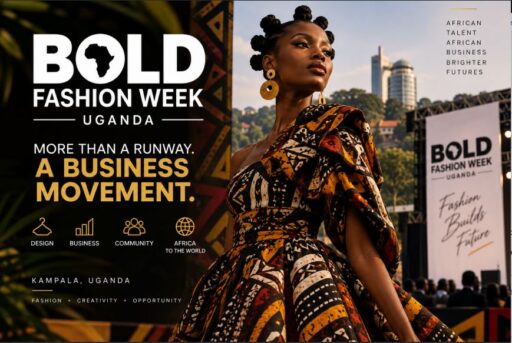
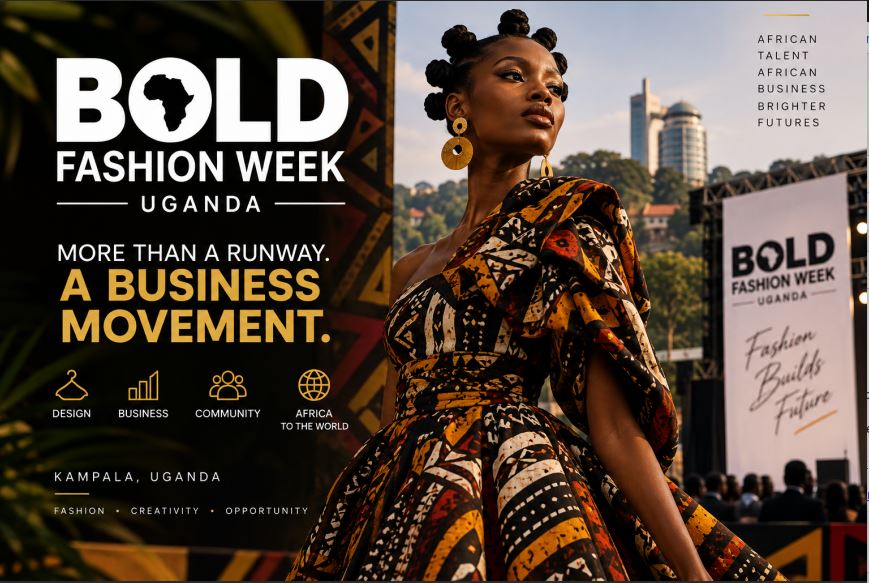
When you hear “fashion week” many things come to mind. You can think of it to be a runway, a social event, a place to take pictures or, if done properly, it can become a marketplace for creative businesses. That was one of the more interesting ideas behind the inaugural Bold Fashion Week in Kampala, Uganda.
Held from August 20 to 22 at MoTIV Bugolobi, the event brought together 10 designers from Uganda and Nigeria alongside creatives, media, consumers and industry stakeholders. Organized by Bold in Africa and Malembe Lifestyle, the event marked another step in Bold in Africa’s long-running effort to develop African fashion talent but the runway was only one part of the program and that may be the most important part of the story.
The runway was not the finish line
Bold Fashion Week included runway presentations, mentorship, networking and a retail marketplace. The marketplace, organized in partnership with Kampala Artisan Market, allowed consumers to discover and purchase pieces directly from participating designers. That simple addition changes the economics of the event.
While a traditional runway can create awareness, a marketplace creates an opportunity to convert awareness into sales. And for a designer trying to build a sustainable business, that conversion is everything.
A beautiful collection that nobody buys is still a beautiful collection but a collection that attracts customers can pay for production, fund the next collection, create jobs and help a designer build a brand. That is the difference between fashion as spectacle and fashion as business.
Banks are beginning to see the opportunity
I&M Bank was one of the partners behind the event, alongside Johnnie Walker. I&M’s involvement is particularly interesting because it reflects a growing recognition that fashion sits inside a much larger entrepreneurial ecosystem. Reporting around the event described the bank’s participation as part of its interest in Africa’s expanding creative and entrepreneurial economy.
That matters as creative businesses need many of the same things other businesses need:
Capital.
Payment infrastructure.
Business accounts.
Loans.
Financial management.
Access to customers.
Market expansion.
Yet creative entrepreneurs are still sometimes treated as though they are pursuing hobbies rather than operating businesses. Fashion makes that contradiction particularly obvious.
A designer may employ tailors, pattern makers, photographers, models, marketers and salespeople. They may purchase fabric in bulk, operate an online store, may export products and may also have wholesale customers. That is a business.
The event also created a network
Bold Fashion Week brought together Ugandan designers including Axarya, Discreet Street x Local, Good Fibre, Joan Jade, Kifahari, Kwesh, Lamara, Ofumbi and Shurea Yasmin, alongside Nigerian designer Yemi Shoyemi.
Putting designers from different markets in the same environment creates another kind of opportunity: collaboration.
A Ugandan designer can meet a Nigerian designer. A photographer can meet a brand, astylist can meet a model, a retailer can discover a new label, a customer can discover a designer they had never encountered before and an international partner can discover an entire market. This is why creative events can be economically valuable even when there isn’t an obvious transaction happening on the runway.
They reduce the distance between people who have something to sell and people who can help them sell it.
Mentorship matters as much as exposure
The program also included mentorship sessions and discussions around design, business development, branding and access to markets. That is another important distinction.
Emerging designers don’t necessarily need another person to tell them that their work is beautiful. They need to know:
How do I price it?
How do I manage production?
How do I build a recognizable brand?
How do I sell outside my city?
How do I approach retailers?
How do I protect my designs?
How do I market to customers?
How do I turn Instagram attention into revenue?
Creative talent gets a business opportunity only when it can survive the business mechanics surrounding it.
Africa has the talent. The infrastructure needs to catch up.
One of the participating designers, Lincoln Axarya, described the African fashion sector as increasingly profitable and said stronger investment and support could help fashion create jobs, grow businesses and open new markets.
That is perhaps the most important takeaway from Bold Fashion Week. The question is no longer whether African fashion has commercial potential because it clearly does. The bigger question is whether the continent can build enough infrastructure around its designers to capture that potential. What that means is; more retail channels, more manufacturing capacity, better access to finance, better logistics, more fashion education, more digital commerce, better intellectual-property protection, more international market access and more platforms that connect designers with actual customers.
Kampala’s role is worth watching
There is also a geographic story here. Lagos, Johannesburg, Nairobi and Accra tend to dominate conversations about African creative industries. Kampala is showing that there is room for other African cities to build their own creative ecosystems.
The inaugural Bold Fashion Week reportedly brought together around 320 guests, designers and media representatives, with organizers positioning Kampala as an emerging destination for African fashion and creative enterprise. That matters because Africa does not need one creative capital but needs multiple interconnected creative hubs.
The more cities develop their own fashion, music, film, design and art ecosystems, the easier it becomes for talent to move across the continent and for businesses to discover new markets.
The future of African fashion is commercial
There is nothing wrong with fashion being beautiful but beauty alone doesn’t build a sustainable fashion industry. Customers, distribution, manufacturing, capital does, branding does and repeat purchases do.
Bold Fashion Week’s combination of runway, mentorship, networking and retail is therefore worth paying attention to because it represents a more complete understanding of what a fashion event can accomplish.
The runway gets people looking, mentorship helps designers build, networking creates relationships, marketplace creates transactions and the partnerships bring capital and commercial infrastructure into the conversation.
That is the model African fashion needs more of because the next phase of the continent’s fashion industry shouldn’t just be about getting African designers onto more runways.
It should be about helping them build brands that can survive long after the runway lights go off.