Africa’s Creative Economy is Ready for Investment, Leaders Say
Africa’s creative industries have no shortage of talent, cultural influence or global attention. What they need now are stronger institutions, deeper investment, enabling policies and business systems capable of turning creative potential into sustainable economic growth.
This message echoed repeatedly at the Africa Creative Market (ACM) 2026, which brought thousands of delegates to Lusaka, Zambia, for six days of investment conversations, policy discussions, business partnerships and cultural exchange.
Held from June 29 to July 4, ACM 2026 was organised in collaboration with the Creative Industries Business Summit Zambia (CIBSZ) and the Kwimbo National Arts Festival. The gathering brought together government officials, policymakers, investors, development partners, entrepreneurs, creatives and industry leaders from Zambia, Nigeria, South Africa, Zimbabwe, Ghana, Cameroon, Senegal and other African countries.
Across conferences, specialised summits, exhibitions, film screenings, business forums, networking sessions and cultural showcases, participants explored one central question:
How can Africa build creative industries that are not only culturally influential but also commercially competitive, investable and globally scalable?
The answer, speakers suggested, will depend on whether the continent can build the systems that allow creative talent to generate long-term economic value.
Talent alone cannot build a creative economy
Opening the event, Africa Creative Market Founder Dr. Inya Lawal described Zambia as a fitting host for the 2026 edition because of the country’s growing commitment to developing its creative industries.
“People often ask me why we chose Zambia,” she said. “My answer has always been simple: because Zambia is ready.”
That readiness, however, does not stop at just artistic talent.
Representing the Zambian government, Permanent Secretary in the Ministry of Youth, Sport and Arts, Kangwa Chileshe, stressed that creative potential must be supported by practical systems.
“Talent alone is not enough,” he said. “We must build the structures that allow talent to thrive.”
The statement captured a challenge that continues to shape Africa’s creative economy.
Across the continent, musicians are building global audiences, African films are reaching international streaming platforms, fashion designers are gaining recognition beyond their home markets, and digital creators are developing communities with millions of followers.
Yet many creative businesses still struggle to access funding, protect intellectual property, expand into new markets, build sustainable revenue models or scale beyond individual success.
The gap is a often a lack of infrastruture, not necessarily a lack of creativity.
Creative businesses need capital, not only recognition
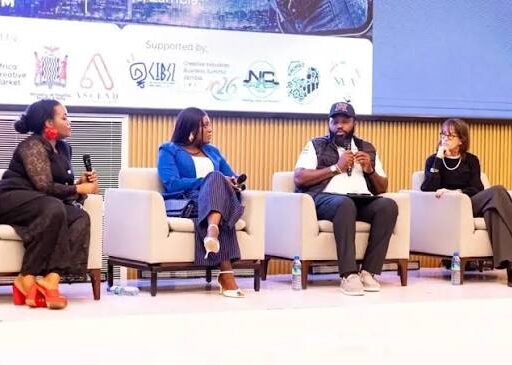
Investment and enterprise development emerged as major priorities during the Creative Capital Forum, where policymakers, financial institutions, entrepreneurs and ecosystem builders examined how creative businesses can access the capital required to grow.
The discussions focused on expanding financing opportunities, strengthening entrepreneurial capacity, adopting new technologies and developing long-term support systems for creative enterprises.
This is becoming important as the creative economy shifts from a collection of individual talents into a network of businesses.
A successful musician may require managers, producers, distributors, lawyers, marketers, tour operators and technology platforms. A film production can support actors, writers, directors, editors, production designers, equipment providers and post-production companies. A fashion brand may depend on manufacturers, logistics providers, retailers, photographers and export networks.
The economic value of creativity requires capital to yield tangible results.
Creative entrepreneurs need financing to purchase equipment, hire teams, develop intellectual property, produce new work, enter international markets and build systems that can support long-term growth.
Without access to appropriately structured capital, many promising ventures remain dependent on personal savings, short-term project income or inconsistent commercial partnerships.
The conversations at ACM 2026 show a growing recognition that creative businesses cannot be expected to scale using financial systems designed primarily for traditional industries.
Stronger legal systems could unlock more value
The Global Creative Legal Summit brought legal practitioners, policymakers and industry stakeholders together to examine some of the structural issues affecting creative businesses across Africa.
Discussions covered intellectual property protection, collective rights management, cross-border licensing, artificial intelligence and the opportunities created by the African Continental Free Trade Area (AfCFTA).
The event also introduced the African Creative Economy Lawyer initiative and the Entertainment & Creative Law Hub, strengthening efforts to develop legal expertise tailored to the creative sector.
For many African creators, intellectual property remains one of their most valuable assets but one of their least understood.
A song, film, book, design, character, photograph, script or digital product can generate income long after it is created. However, that value may be lost when ownership is unclear, contracts are poorly structured, rights are not properly managed or creators lack access to effective collection systems.
The growth of cross-border digital distribution makes these issues even more urgent.
African creative work can now reach audiences across multiple countries within minutes. But global reach does not automatically translate into fair compensation.
The systems responsible for tracking ownership, licensing content, collecting royalties and enforcing rights must evolve alongside the speed of digital distribution.
Technology is changing how African creators build businesses
Innovation was another major focus of ACM 2026.
At the Creative Technology Summit, industry leaders examined how artificial intelligence, animation, immersive technologies and digital tools are changing storytelling and expanding opportunities for African creators.
The conversations pointed to the fact that technology has advanced beyond being a tool for distributing creative work to becoming part of how work is produced, monetised and experienced.
Artificial intelligence can support creative research, production and audience analysis. Digital platforms can help creators reach global communities without traditional gatekeepers. Immersive technologies can create new forms of entertainment and storytelling. Animation can extend African stories into international markets across film, gaming and digital media.
But technology also introduces new questions around ownership, compensation and creative rights.
As AI-generated content becomes more common, African creators and policymakers will need to consider how original work is protected, how creative labour is valued and how technology can be used to expand opportunity without weakening creator ownership.
Viral success is not the same as a sustainable business
The growth of the creator economy featured prominently throughout the week.
At The YouTube Economy: A Creator’s Roadmap to Revenue, creators and digital entrepreneurs explored audience growth, platform monetisation and sustainable content businesses.
The Digital Creator Africa Summit also encouraged creators to look beyond viral moments and build businesses supported by intellectual property, partnerships, technology and multiple revenue streams.
Let’s look at it this way: a creator can attract millions of views and still struggle to build stable income. Audience attention may create opportunity, but sustainable success often depends on what happens after that attention is gained.
Creators may need to diversify through:
Advertising and brand partnerships
Digital products
Courses and paid communities
Licensing
Merchandise
Consulting and professional services
Publishing
Events and live experiences
Intellectual property ownership
The strongest creator businesses nowadays are developing assets and revenue systems that can continue generating value even when algorithms change or audience behaviour shifts. They are not building around one platform or only one source of income.
The future of the creator economy may, therefore, be more about who can turn attention into lasting commercial infrastructure than who can go viral.
Across visual arts, fashion, photography, film, theatre, dance and music, participants returned to a shared idea: African culture is a source of both artistic identity and economic opportunity.
The Art. Craft. Commerce Summit examined how visual artists can preserve cultural identity while embracing innovation and ethical creative practice.
The Business of Photography Summit explored branding, storytelling, commercial growth and intellectual property.
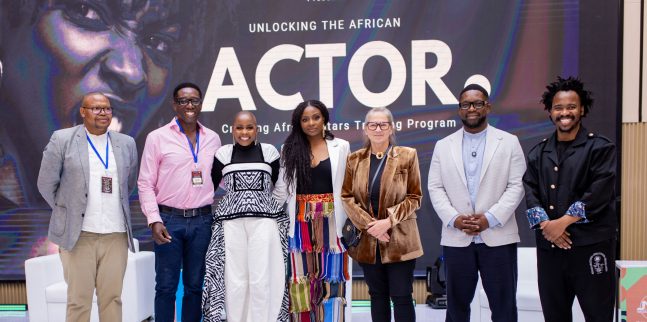
Film and television professionals discussed financing, leadership, talent development, distribution and audience access through programmes including the Women in Film & TV Africa Conference, Actor Spaces Summit, Theatre & Dance Session, Kingdom Film Festival and Distribution Summit.
The Zambian premiere of the feature film 77 brought together actors, filmmakers, government officials, media professionals and cinema audiences, highlighting the growing potential for cross-border collaboration in African film.
Fashion is becoming a business and export opportunity
Fashion also occupied a prominent place at ACM 2026.
Through the FashionEVO Summit and FashionEVO Fashion Show & Awards, designers, manufacturers, investors, policymakers and fashion entrepreneurs explored sustainable production, manufacturing, exports, innovation and investment.
Africa’s fashion industry is often celebrated for its creativity and cultural influence. Yet many designers continue to face challenges involving production capacity, access to materials, financing, logistics and international distribution.
Building globally competitive fashion businesses will, thus, require stronger manufacturing networks, reliable supply chains, export systems and investment in businesses that can scale while maintaining creative identity.
Creative wellbeing is part of economic sustainability
ACM 2026 also made room for a conversation that has suffered a lack of deeper coverage in discussions about creative growth: wellbeing.
Through The Activated Creative, participants explored burnout, mental wellbeing, resilience and the need to build creative careers that are sustainable beyond productivity.
The inclusion of wellbeing signals a positive development for the creative industry at large. Over time, creative industries have come to reward constant output.
Artists, freelancers, entrepreneurs and digital creators may feel pressure to remain visible, meet deadlines, respond to changing trends and continuously produce new work.
But a creative economy cannot be sustainable if the people powering it are consistently exhausted.
Supporting creative professionals also means building healthier work cultures, improving access to support systems, and recognising that long-term creativity depends on human wellbeing.
Collaboration may be Africa’s greatest competitive advantage
Beyond the formal sessions, ACM 2026 strengthened relationships among programme partners, supporting organisations, exhibitors, media platforms and other stakeholders.
These partnerships created opportunities for knowledge exchange, investment, market access and long-term cooperation across different creative sectors.
This may be one of the continent’s most important advantages. Africa’s creative economy is made up of diverse markets, languages, cultures and audiences. Rather than treating that diversity as a barrier, stronger regional collaboration could turn it into a competitive strength.
Cross-border partnerships can help creative businesses:
Reach new audiences
Share production resources
Develop regional distribution networks
Access specialised expertise
Build larger markets for African products
Strengthen negotiating power in global markets
The AfCFTA could further support this opportunity by encouraging trade and collaboration across African economies.
However, creative integration will require practical systems that make movement, licensing, payments, distribution and business partnerships easier.
Turning cultural influence into economic transformation
As ACM 2026 concluded, organisers described the platform as more than an annual gathering.
It has become a meeting point where policy connects with enterprise, culture intersects with commerce and creative relationships develop into long-term opportunities.
The conversations in Lusaka also reflected a wider change across Africa.
For years, discussions about the continent’s creative industries focused primarily on talent, cultural identity and global visibility. While those conversations remain important, the focus is expanding to address questions regarding investment, ownership, technology, market access, intellectual property, enterprise development and institutional capacity.
Africa does not need to prove that it can create globally relevant culture as it has already done that.
The greater challenge is building the financial, legal, technological and commercial systems that allow creators and creative businesses to capture more of the value they generate.