Eastern Cape is Tying Film Funding Directly To Local Economic Impact
Africa Creative Market Is Making the “Creative Economy” Conversation More Serious and Eastern Cape Is Tying Film Funding Directly to Local Economic Impact
For a while, “Africa’s creative economy” risked becoming one of those phrases everyone used without agreeing on what it actually meant. There would be panels about the economic potential of music, fashion, film and art, conversations about Africa’s young population and global cultural influence and plenty of talk about talent. But eventually, someone has to answer the uncomfortable questions:
Where is the money?
Where are the buyers?
Where are the deals?
Where is the data?
And how do African creative businesses actually get from being locally interesting to becoming globally competitive This is where the Africa Creative Market is becoming interesting.
Its 2026 edition moved beyond a conventional conference format, with a six-day flagship program in Lusaka, Zambia, from June 29 to July 4, alongside a wider five-city activation involving Lusaka, Cannes, Lagos, Johannesburg and Kigali. The objective was not simply to showcase African creativity. It was to connect creativity with trade, investment, technology, policy and business.
That distinction matters
Africa Creative Market describes itself as a platform designed to strengthen the business side of the creative sector, connecting creatives with trade finance, investment, training, data and commercially viable business models. Its sectors span film, music, fashion, art, photography, AR/VR, sports entertainment and dance. That sounds like a small change in language but it isn’t.
The difference between a creative showcase and a creative market is essentially the difference between:
“Look at what Africa can create.”
and
“Here is what Africa has created. Who wants to buy, finance, distribute or invest in it?”
The second question is where economic value begins.
Zambia was an important signal
The 2026 flagship event was hosted in Lusaka in partnership with the Creative Industries Business Summit Zambia and the Kwimbo National Arts Festival. The program brought together creatives, entrepreneurs, investors, policymakers and development partners around collaboration, investment and commercial growth.
It was also the first time ACM moved its flagship event outside Lagos, a significant decision in itself. Africa’s creative economy cannot be built around one or two familiar cultural capitals.
Lagos matters, Johannesburg matters, Nairobi matters but Lusaka, Kigali, Accra, Dakar, Kampala, Kigali and other emerging creative centres also need access to capital, markets and international networks. A genuinely continental creative economy should have multiple nodes.
The next stage is proving that the marketplace actually works
This is where ACM and similar platforms will ultimately have to be judged.
How many deals happen?
How many businesses receive investment?
How many African creative products reach new markets?
How many partnerships become actual contracts?
How much export revenue is generated?
Those numbers are more important than how many people attended a panel because Africa does not need more evidence that its creatives are talented. The world already knows.
What it needs is stronger infrastructure around that talent. If Africa Creative Market can consistently connect creative businesses with buyers, financiers, distributors, policymakers and international markets, then it is helping build something much more valuable than an annual event.
It is helping build a marketplace and that is a much more serious way to think about the creative economy.
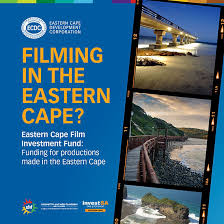
Eastern Cape Is Tying Film Funding Directly to Local Economic Impact
What if governments stopped asking only whether a film was culturally valuable and started asking what economic value the production would leave behind? South Africa’s Eastern Cape is increasingly moving in that direction.
The province’s film funding model is built around a fairly simple proposition: if public money is going into film and television, the production should generate economic activity inside the province.
That means jobs, local suppliers, small businesses, skills transfer, tourism and production spending that remains in the local economy. The results so far are difficult to ignore.
The Eastern Cape Film Investment Fund says its funding supported productions have leveraged R553.4 million in production value from R48.3 million in provincial incentives, while supporting 731 small businesses and more than 9,400 temporary jobs. That is the part of the creative-economy conversation that deserves more attention.
Film funding becomes economic policy in the Eastern Cape
The funding by the Eastern Cape Film Investment Fund is not simply designed to help filmmakers make films. Its stated purpose is to attract productions to the province and use them to generate investment, employment, SMME participation, skills development and tourism. Funding is available to productions that shoot in the Eastern Cape.
That changes the logic of public film funding.
Instead of:
“Here is money for a film.”
The proposition becomes:
“Here is money to attract a production that will spend money in our economy.”
And a film production spends money in many places; Accommodation, catering, transport, security, equipment rental, construction, costumes, laundry, warehousing, technical services, local crew. The screen is only the most visible part of the economic activity.
The numbers show why governments are paying attention
An earlier assessment of the fund found that 31 supported productions generated 9,020 temporary jobs and benefited 696 small businesses, while leveraging R521.7 million in investment from R43.1 million in incentives. The province is now planning to take that model further.
Its 2026/27 budget includes R21 million through the Eastern Cape Development Corporation for film development, with approximately 15 film projects expected to be supported. The province also plans to support emerging producers developing original content for broadcasters and streaming platforms.
And there is a particularly interesting strategic element here: the province wants productions to see the Eastern Cape not just as a place where stories can be filmed, but as a production destination.
That is a fundamentally different ambition.
Nigeria and other African markets should pay attention
African governments frequently announce creative-economy funds. The harder question is what those funds are designed to accomplish. If public money goes into a film but almost all the production spending leaves the territory, the local economic impact is limited.
If the same funding brings a production into the region, employs local crew, uses local suppliers, trains emerging talent, fills hotels and creates opportunities for small businesses, the economics look very different.
This is particularly relevant for African cities outside the traditional creative capitals. A state does not necessarily need to build the next Hollywood. It may only need to make itself an attractive production destination. That means competitive incentives, good locations, reliable infrastructure, trained crew, equipment access and a clear reason for producers to spend money there.
The Eastern Cape model suggests that film policy can become a form of place-based economic development and perhaps that is where Africa’s creative-economy conversation needs to go next. Not simply asking how much governments spend on creativity but asking:
What does every creative-economy investment produce for the economy around it?
If the answer includes jobs, businesses, skills, tourism, exports and intellectual property, then creative funding stops looking like a cultural expense. It starts looking like economic infrastructure.