HEVA Fund and NCBA KES 20 million Start-Up Fund for Creatives, Entrepreneurs
Kenya Just Made Creative-Business Financing More Accessible. Other African Markets Should Be Watching
For years, one of the biggest problems facing Africa’s creative economy has not been a shortage of talent. It has been a shortage of financing that understands how creative businesses actually work.
A fashion designer may have strong sales but no fixed asset to pledge as collateral. A filmmaker may have a signed production contract but only get paid after completing the project. A music or events company may have significant revenue opportunities but highly irregular cash flow. Traditional banking is rarely designed around those realities. However, Kenya is now trying a different approach.
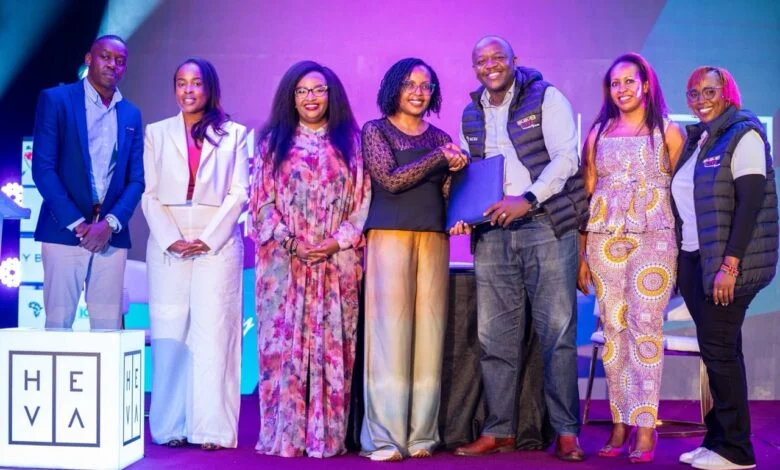
HEVA Fund and NCBA have launched a KES 20 million Start-Up Incubator Financing facility for creatives and creative entrepreneurs, with financing starting from KES 100,000, a 9% interest rate and no security requirement. The facility is open to individuals and registered SMEs across areas including fashion, film, music, gaming and performing arts. That may sound like a relatively small intervention in the context of Kenya’s wider economy but the structure is more important than the headline amount.
The problem has always been the financing model
Creative businesses are often treated by financial institutions as unusually risky because their income can be unpredictable. But unpredictability does not necessarily mean a business is weak.
A film production company can have a viable business model while earning project by project. A designer can build a profitable fashion label without owning land. A production studio can generate revenue from equipment, contracts and intellectual property rather than traditional physical assets. The financing system simply has to understand what it is looking at. That is where the HEVA-NCBA partnership becomes interesting.
The two organizations announced five financing products, including event financing, invoice discounting, LPO financing, working-capital financing and start-up incubator financing. The initial KES 20 million pool is a 50:50 commitment from HEVA and NCBA. The broader partnership was designed around financing that better reflects creative businesses’ cash-flow cycles.
In other words, the objective is not just to lend money to creatives. It is to make creative businesses legible to finance.
The bigger ambition is much larger than KES 20 million
HEVA says it deployed KES 450 million to creative entrepreneurs and businesses in 2025 and is targeting KES 900 million in financing to the sector by the end of 2026. That puts the new facility in context.
The KES 20 million is effectively an entry point into a broader financing architecture and that matters because access to capital can change what a creative business is capable of doing. A photographer can buy better equipment instead of renting indefinitely, a fashion company can purchase inventory before a major order, a production company can take on a larger contract without waiting for the client’s payment to arrive and a gaming studio can invest in development rather than constantly operating at survival level. That is where financing starts becoming an economic-development tool rather than simply a loan product.
There is a lesson here for other African markets
Across Africa, governments increasingly talk about the creative economy as a source of jobs, exports and economic diversification but talking about the sector as an economic engine while financing it like a hobby is a contradiction.
If governments and banks genuinely believe creative businesses can contribute to GDP, employment and exports, then those businesses need access to the same financial architecture being developed for other growth sectors.
Kenya’s experiment offers one possible model: bring creative-sector expertise into the banking system instead of forcing creative businesses to behave like conventional businesses before they can access capital. That distinction is important.
The question for Nigeria, Ghana, South Africa and other African markets is not simply, “How much money can we put into the creative economy?”
It is:
Can we design financial products that understand the businesses we say we want to grow?
Because a creative economy cannot scale on grants and applause alone.
It needs working capital, debt, investment, guarantees, insurance and financial institutions willing to understand the assets that make creative businesses valuable. Kenya has taken another step in that direction.
Now the interesting part is seeing what those businesses do with the money.