Nigeria Wants to Turn Intellectual Property into Wealth. Here’s Why Creatives Should Pay Attention
For years, intellectual property (IP) has been one of the most misunderstood assets in Nigeria’s economy.
Many creators know they should protect their work. Many startups know patents and trademarks exist. Yet for most Nigerians, intellectual property has remained something legal rather than something economic.
The Federal Government wants to change that.
This week, Nigeria and the World Intellectual Property Organization (WIPO) announced plans to deepen collaboration aimed at commercializing Nigerian intellectual property, supporting innovation, and strengthening the country’s creative economy.
While the announcement may sound technical, its implications could be significant for creators, entrepreneurs, researchers, startups, and investors.
What happened?
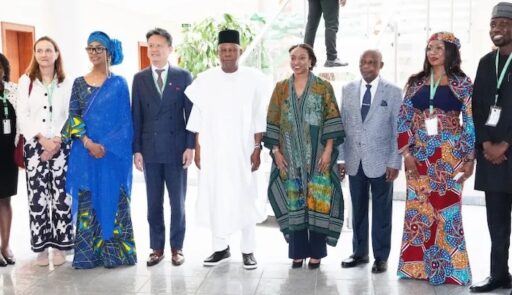
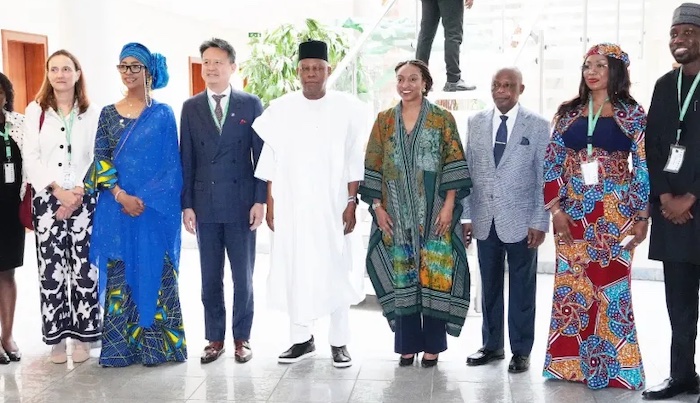
During a meeting at the State House in Abuja, Vice President Kashim Shettima and WIPO Director-General Daren Tang discussed expanding cooperation between Nigeria and the global intellectual property body.
Among the key developments highlighted were:
The opening of WIPO’s first office in Sub-Saharan Africa, located in Abuja.
Implementation of Nigeria’s National Intellectual Property Policy and Strategy (NIPPS), approved in 2025.
Plans to commercialise research produced by Nigerian universities.
Greater support for innovation, startups, and the creative economy.
Expanded capacity-building and institutional support for intellectual property development.
According to the Vice President, Nigeria’s goal is to build an intellectual property system that works for inventors, investors, entrepreneurs, creatives, researchers, and technology innovators alike.
Why this matters beyond policy announcements
Most discussions about economic growth focus on physical assets like factories, roads, oil, or natural resources. But modern economies increasingly derive value from intangible assets such as software, patents, brands, content, designs, creative works, data, and proprietary knowledge.
In many of the world’s largest companies today, intellectual property represents a significant portion of their value.
Nigeria’s policymakers appear to be recognising the same shift.
The country’s latest engagement with WIPO signals an intention to treat intellectual property not merely as a legal framework but as an economic growth strategy.
The bigger opportunity for Nigeria’s creative economy
For creators, this development may be particularly important. Nigeria’s creative industries have already demonstrated their global appeal through music, film, fashion, publishing, gaming, and digital content.
However, monetization often remains inconsistent. Many creators generate cultural value without capturing equivalent financial value.
A stronger intellectual property ecosystem could help address some of these challenges by:
Strengthening ownership
Creators are better positioned to benefit from their work when ownership structures are clear and enforceable.
Attracting investment
Investors are more likely to fund businesses built around intellectual property when ownership rights are properly protected.
Expanding licensing opportunities
Strong IP systems create pathways for creators to generate revenue through licensing, partnerships, syndication, and distribution.
Supporting global expansion
As Nigerian creative products reach international markets, intellectual property protection becomes increasingly important.
Why investors are paying attention
One of the most notable aspects of the government’s position is its emphasis on intellectual assets as wealth-generating instruments. This matters because investors evaluate companies based on more than physical assets.
Technology startups, media businesses, entertainment companies, software firms, and creator-led brands often derive their value from intellectual property.
WIPO Director-General Daren Tang highlighted that more than 3,000 Nigerian startups, including seven unicorns, have already attracted significant capital, demonstrating the growing economic relevance of intellectual property-driven businesses.
In practical terms, this means ideas are becoming investable assets.
The challenge ahead
Policy announcements alone do not automatically create economic value. The success of this initiative will ultimately depend on implementation.
Key questions remain:
Will creators have easier access to IP registration and protection?
Can universities successfully commercialise research output?
Will startups be able to leverage intellectual property when raising capital?
Can enforcement mechanisms effectively reduce infringement and piracy?
Will businesses receive sufficient education on intellectual property management?
These are the areas that will determine whether the initiative translates into measurable economic outcomes.
A shift towards an ideas economy
The most important takeaway from this development may be what it reveals about Nigeria’s broader economic direction. Policymakers are acknowledging that future growth will not come solely from natural resources or traditional industries.
It will also come from ideas, technology, innovation, culture, creativity, and from the intellectual assets that power them.
Creative Money Africa’s take
The significance of this announcement extends beyond intellectual property policy. It reflects a growing recognition that creativity, innovation, and knowledge are economic assets capable of generating jobs, attracting investment, and driving long-term growth. If successfully implemented, stronger intellectual property systems could help more Nigerian creators, entrepreneurs, and innovators capture value from the ideas they produce rather than simply contributing value to others. The real opportunity lies not just in protecting intellectual property, but in building systems that allow it to be commercialized, financed, scaled, and transformed into wealth.