How Ecobank Adire Lagos Elevates Africa’s Creative Talent
For four days, Ecobank Adire Lagos brought together designers, artisans, entrepreneurs, food vendors, and cultural enthusiasts under one roof at the Ecobank Pan African Centre, Victoria Island, Lagos to celebrate one of Africa’s most recognizable textile traditions, Adire, in all its glory.
But beyond the fashion displays and cultural festivities, the event offered a glimpse into how creative platforms generate economic activity. The festival demonstrated how indigenous creative industries can create value across multiple sectors at once, taking into consideration the likes of cross-border participation, direct-to-consumer sales, cultural tourism, and heritage preservation.
As African countries continue exploring the economic potential of culture and creativity, events like Ecobank Adire Lagos are necessary as showcases and slowly evolving into platforms where commerce, culture, and entrepreneurship intersect.
The intercultural exhibitors: a blend of Africa’s brightest fashion talent
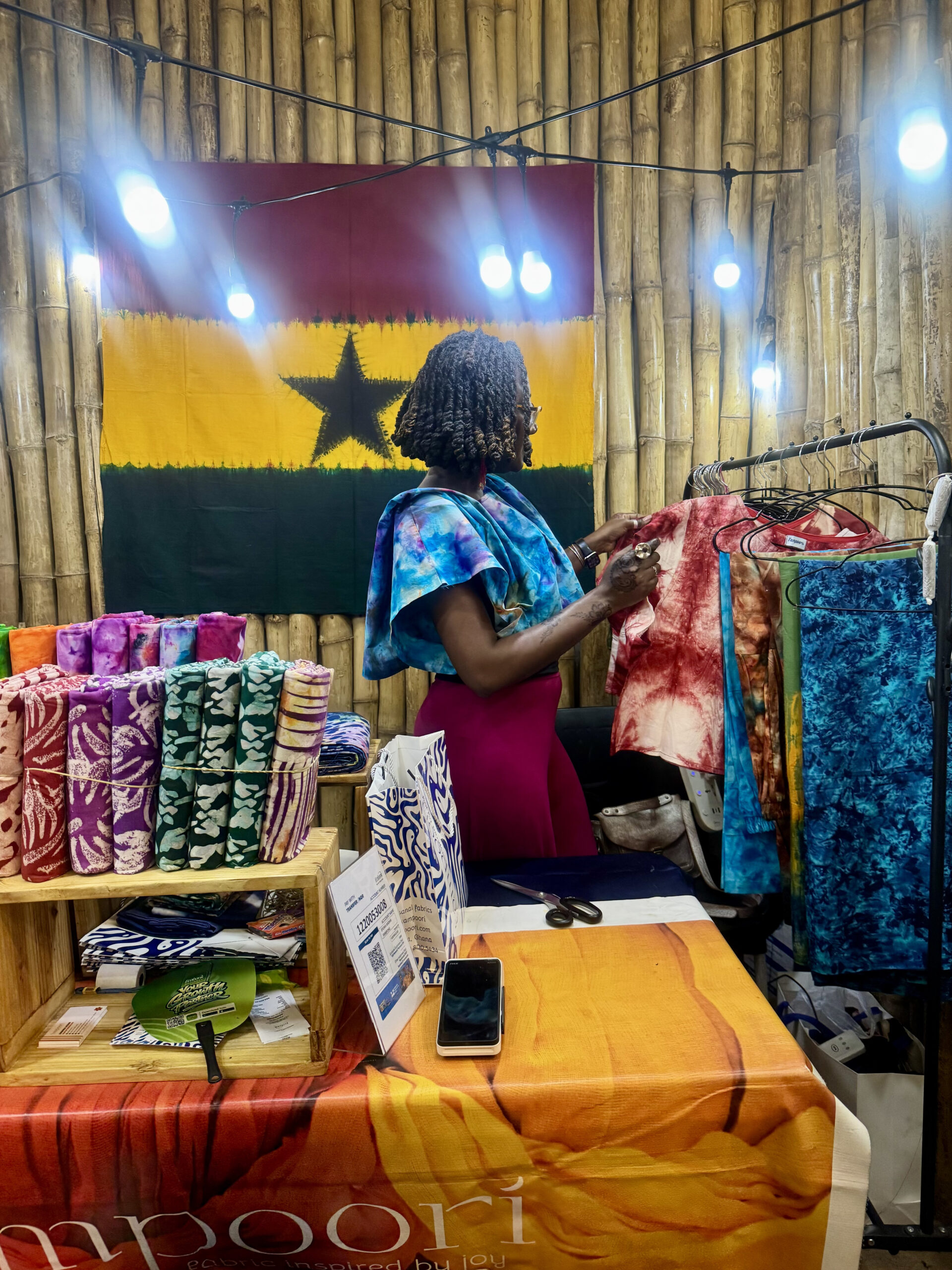
One of the most noticeable aspects of Ecobank Adire Lagos 2026 was the diversity of exhibitors represented at the event. While Adire remains deeply connected to Yoruba textile traditions, the exhibition itself reflected a broader conversation about African fashion and cultural exchange. Designers, artisans, and fashion entrepreneurs from all over Africa including Lagos, Osun, Ogun, Kwara, Ghana, and Sierra Leone occupied exhibition spaces throughout the venue, creating a cross-cultural showcase of creativity rooted in African craftsmanship.
The presence of Sierra Leonean and Ghanaian participants alongside Nigerian exhibitors reinforced the event’s theme, Threads Across Borders, demonstrating how indigenous textiles and fashion traditions can serve as common ground for creative collaboration across the continent.
Ghanaian exhibitor, Tampoori, at Stand 26 at the Ecobank Adire Lagos 2026. Credit: Creative Money Africa
The exhibition floor highlighted both traditional and contemporary interpretations of African fashion. Some exhibitors focused on preserving centuries-old textile techniques, while others presented modern designs that adapt indigenous fabrics for contemporary consumers. Together, they reflected a creative sector that continues to draw from heritage while responding to evolving market demands.
An avenue for creative talent to get rewarded
Beyond cultural celebration, the event also created direct commercial opportunities for participating businesses. Throughout the exhibition, attendees engaged with designers, explored collections, and purchased products directly from vendors. Organizers further encouraged patronage through a raffle draw that rewarded visitors who spent ₦50,000 or more at participating stands.
While seemingly simple, initiatives like this contribute to the economic viability of cultural events by encouraging spending within the creative industry.
Many independent designers and artisans are able to take advantage of events such as Ecobank Adire Lagos because it offers something that social media alone cannot provide: face-to-face interaction with potential customers, immediate feedback on products, and direct revenue opportunities.
As conversations around Africa’s creative economy continue to focus on monetization and sustainability, platforms that help creators connect directly with buyers remain important.
Fun infused with economic growth
The final day of the festival, themed the Abula Festival, transformed the venue into an exciting cultural gathering that blended commerce with entertainment.
Food vendors served traditional dishes including amala, ewedu, gbegiri, pounded yam, and palm wine, while live performances and DJ sessions kept the atmosphere lively throughout the day. The result was an experience that extended beyond fashion retail.
Visitors moved between food stalls, exhibition stands, and performance areas, creating multiple touchpoints for economic activity within a single cultural environment.
The level of participation was remarkable in itself. The venue remained packed, and many attendees arrived dressed in elaborate Adire outfits. Even foreign visitors embraced the aesthetic, contributing to an atmosphere that felt celebratory rather than transactional.
This ability to combine entertainment, tourism, food, and fashion within one experience reflects a growing model across the creative economy, where cultural events.
The influence of Adire Lagos on Africa’s creative economy
Events like Ecobank Adire Lagos reveal the economic potential that exists within Africa’s indigenous creative industries.
While Adire is often discussed as a cultural symbol, its commercial impact extends much further. Textile production supports artisans, fashion designers, retailers, creative entrepreneurs, event organizers, marketers, photographers, and a wider network of businesses connected to the fashion value chain.
The festival also demonstrated how cultural heritage can be positioned as an economic asset capable of attracting visitors, facilitating trade, and supporting creative entrepreneurship.
As African countries continue exploring new growth sectors beyond traditional industries, cultural and creative enterprises as this event are gaining more relevance as contributors to employment and economic activity.
Ecobank Adire Lagos 2026 has come and gone but not without offering a practical example of how heritage, creativity, and commerce can coexist within the same space. It brought together designers, artisans, exhibitors, consumers and cultural enthusiasts from different backgrounds. The event has also undeniably showcased the growing role that fashion and indigenous craftsmanship can play in shaping Africa’s creative economy.