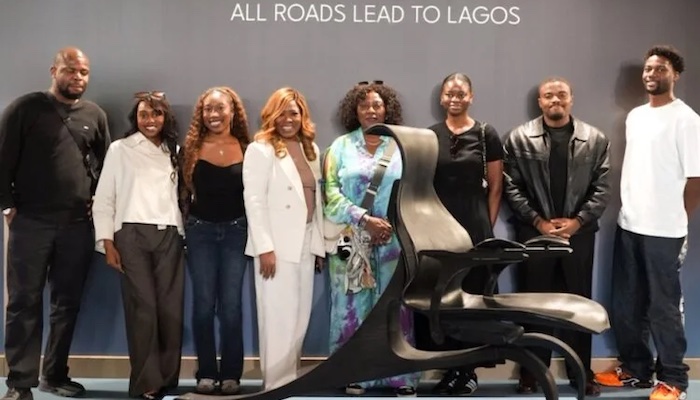

African design is stepping into a new phase of global visibility.
Design Week Lagos, with support from Afreximbank and the Lagos State Government, is gearing up to showcase emerging talent at SaloneSatellite in 2026.
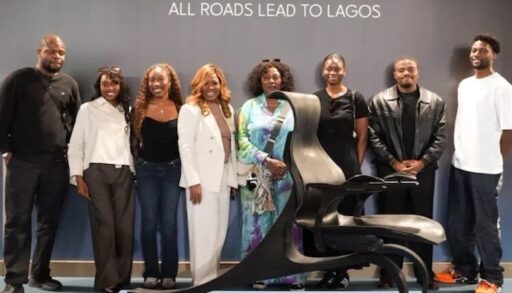
This initiative is part of a wider global activation tagged “All Roads Lead to Lagos”, a multi-city design tour aimed at repositioning African creativity not just as cultural expression, but as a commercially viable global industry.
At its core, the program is designed to connect African designers to international manufacturing, retail ecosystems, investment networks, and long-term production opportunities.
Lagos Positions Itself as a Global Design Capital
The project reflects a growing ambition from Lagos to establish itself as a global hub for creativity and innovation.
According to the organizers, the goal is not only visibility but long-term industry development and building a sustainable design economy rooted in production, trade, and global integration.
The tour will begin in Milan before moving to London and Paris and eventually return to Lagos in October 2026 for market integration and industry consolidation.
This positions Lagos as a central node in the global design value chain, more than being a creative exporter.
The Feature List
The Milan showcase will feature a curated selection of emerging African designers working across furniture, lighting, and product design.
Featured designers include Athanasius Johnson, Nicole Adaora Enwonwu, Odema Acacia Saleh, Richard A. Aina, Joan Eric Udorie, Olaoluwa AJ Durotoye, and Myles Igwebuike.
Their works are expected to reflect a blend of material innovation, cultural storytelling, production readiness, and commercial design thinking.
Beyond exhibition, the platform is also designed to facilitate direct engagement with international manufacturers, galleries, and retail partners.
The Bridge from Creativity to Commercial Markets
Speaking on the initiative, Titi Ogufere, Founder of Design Week Lagos, described the project as a structured bridge between creativity and the commercial industry.
She noted that the initiative is focused on moving African design beyond exhibitions into real production and global market integration.
According to her:
“We are building a structured pathway for Nigerian and African designers to move from creativity into real industry and global markets.”
She further explained that the program goes beyond visibility, focusing instead on training, incubation, and preparing designers for manufacturing and international collaboration.
The broader vision, she said, is to build a sustainable ecosystem that connects talent development, production systems, culture, and global market access.
Lagos Government’s Creative Economy Strategy
The initiative is closely aligned with the Lagos State Government’s wider creative economy strategy, which positions design as a driver of tourism, economic growth, cultural exchange, and international engagement.
Toke Benson-Awoyinka highlighted the importance of moving beyond exposure to actual opportunity creation for creatives.
She stated that Lagos is being positioned as one of the world’s most exciting creative capitals, with design playing a central role in that transformation.
Afreximbank’s Role in Scaling African Design
Afreximbank is supporting the activation through its Creative Africa Nexus (CANEX) program, which is focused on strengthening Africa’s creative industries as a viable economic sector.
Through this partnership, the bank aims to carry out a lot more like improving access to global markets, supporting creative trade and investment, and strengthening Africa’s creative value chain.
The involvement of Afreximbank signals growing institutional recognition of design as part of Africa’s broader economic transformation, not just cultural expression.
A Multi-City Global Strategy
The “All Roads Lead to Lagos” initiative follows a deliberate multi-city strategy:
- Milan (2026): Global showcase at SaloneSatellite
- London: Industry engagement and market expansion
- Paris: Creative and retail ecosystem integration
- Lagos (October 2026): Market return and industrial scaling phase
This structure shows a shift from isolated exhibitions to sustained global market integration.
Why This Matters for Africa’s Creative Economy
Beyond design, this initiative reflects a broader transformation happening across Africa’s creative industries.
The focus is shifting from visibility to value chains, creativity to production systems, and talent to global market readiness.
It also indicates a growing understanding that African creativity is both culturally influential and commercially competitive when properly structured.
By connecting design directly to manufacturing, investment, and retail systems, the initiative is attempting to solve one of the continent’s long-standing challenges: scaling creative output into sustainable economic progress.