
Why Africa’s Next Music Revolution Will Be Built by Institutions, Not Just Artists
Africa’s music industry has spent the last decade proving that its talent can compete with the rest of the world.
From Afrobeats dominating global charts to African artists selling out arenas on multiple continents, the continent has become one of the most exciting forces in global music.
But there is a question we don’t ask often enough:
What happens when the talent gets bigger than the systems supporting it?
As African music continues to expand internationally, the industry needs more than talented artists. It needs institutions capable of developing those artists, protecting their work, managing their rights and helping them turn attention into sustainable careers.
That is what makes DEJER’s new initiative, The Orbit, worth paying attention to.
Building More Than Another Record Label
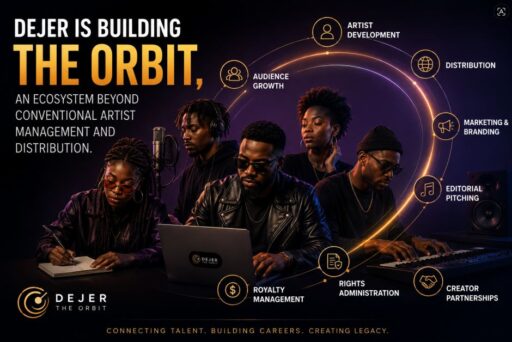
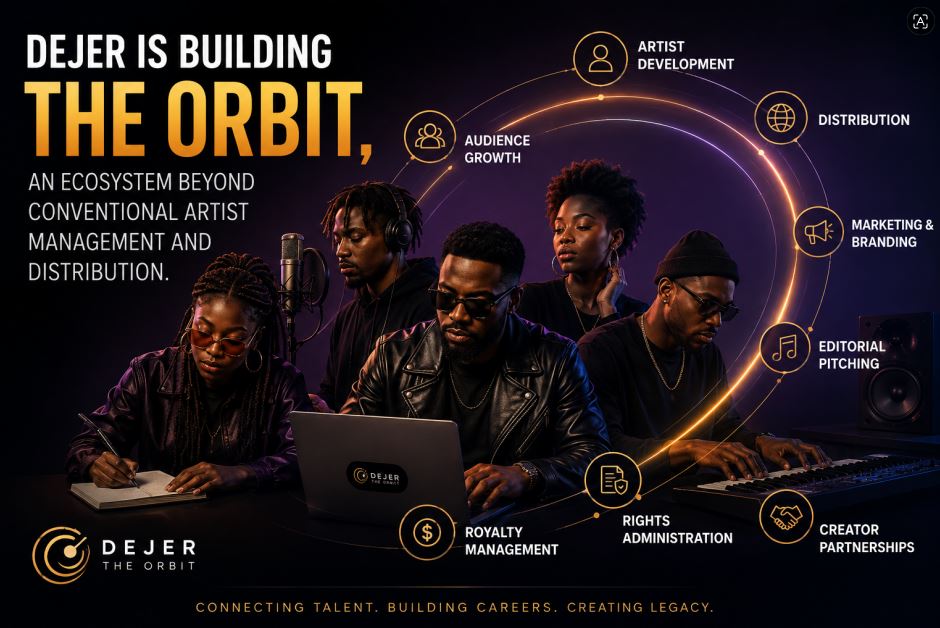
According to TurnTable Charts, DEJER is developing The Orbit as a creative ecosystem designed to connect artists, producers, songwriters and other music professionals.
Rather than limiting its role to signing artists and distributing music, the company is looking at a much wider range of services, including artist development, strategic marketing, editorial pitching, creator partnerships, rights administration, royalty management and audience growth.
That distinction matters because Africa doesn’t necessarily need more companies that simply put songs on streaming platforms. It needs organizations that help creatives build careers.
Distribution Is No Longer Enough
Getting a song onto Spotify, Apple Music, Audiomack or Boomplay is easier than it was a decade ago but getting music onto a streaming service is only the beginning. An artist still needs to figure out how to attract listeners, build a fanbase, pitch to editorial teams, manage their catalogue, collect royalties, understand their data and create opportunities beyond a single release. That is why the next generation of music companies will increasingly have to operate as ecosystems rather than single-purpose businesses.
DEJER appears to be moving in that direction with The Orbit. The company says it is also developing technology to improve areas such as performance analytics, royalty reporting and financial management.
For artists, better infrastructure in these areas could mean greater visibility into where their money comes from and how their careers are performing.
African Creatives Need Institutions That Think Long-Term
One of the biggest problems in creative industries is that attention is often focused on the next big moment. A song goes viral, an artist gets signed, a creator lands a major brand deal or a film becomes a hit then everyone moves on to the next story. However, sustainable creative careers aren’t built around isolated moments. They require systems.
Artists need people who understand their development, their intellectual property, their audience, their finances and their long-term positioning. That’s where institutions become important.
A strong creative institution can take an artist from discovery to development, from development to market entry, and from market entry to a sustainable international career.
Mavin Shows What Is Possible
Nigeria already has an example of what this kind of institution can look like.
Mavin Records has demonstrated that a music company can become more than a traditional record label. Through artist development, branding, songwriting, production, management and global partnerships, it has helped build careers that extend beyond individual songs.
That model is important because it shifts the conversation from:
“Who is the next superstar?”
to:
“What system can help the next superstar succeed?”
Africa needs more organizations thinking this way and they don’t all have to look like record labels.
They could be publishing companies, creator accelerators, rights-management organizations, artist-development platforms, creative venture funds or technology companies serving creative professionals. The common factor is infrastructure.
You can read more about this in one of our recent posts ICYMI here
The Real Value of The Orbit
What makes The Orbit particularly interesting is its attempt to bring different parts of the music ecosystem closer together.
The initiative is designed as a network rather than simply a fixed roster of artists. DEJER says it wants to connect artists, producers, songwriters and other creative partners around collaboration, strategic partnerships and long-term career development. That approach reflects how modern artists increasingly operate.
An artist is no longer just a performer. They may also be a songwriter, producer, entrepreneur, content creator, brand ambassador and intellectual-property owner.
Their team therefore needs to understand much more than music.
Africa’s Music Economy Needs More Ownership
There is another reason institutions matter and that is ownership.
African music is generating enormous international attention, but attention does not automatically translate into wealth for the people creating the music.
Rights need to be registered, royalties need to be collected, contracts need to be understood, catalogues need to be protected, data needs to be available and International opportunities need to be negotiated. Without the right systems, creators can generate significant cultural value while capturing only a fraction of its financial value.
This is why the infrastructure surrounding music may ultimately become just as important as the music itself.
The Next Opportunity Is Bigger Than Music
DEJER’s ambitions for The Orbit reportedly extend beyond artist development and distribution into live showcases, original content, educational initiatives, strategic partnerships and global collaborations.
If that vision is successfully executed, the platform could become an example of how African creative businesses can build their own ecosystems rather than depending entirely on external institutions.
And that is the bigger opportunity.
Africa doesn’t have to wait for international companies to build every system needed for its creatives. It can build its own.
What This Means for African Creatives
For artists and other creative professionals, the lesson is simple; do not only look for people who can give you exposure. Rather, look for institutions that can help you build.
When looking, ask whether a potential partner understands your long-term career, how your intellectual property will be handled, how revenue will be tracked and what development opportunities exist beyond your next release.
If you’re building a creative company yourself, think beyond the service you currently provide. Ask yourself these:
- What else does the creative need?
- What problem can you solve next?
- What infrastructure is missing?
That is where some of Africa’s biggest creative businesses may be built.
Wrapping Up
Africa has already produced the talent and right now, it needs the institutions.
The next era of African music won’t be defined only by the artists who break through. It will also be defined by the companies, platforms and organizations that discover talent early, develop it properly, protect its intellectual property and create pathways for it to reach global audiences.
DEJER’s The Orbit is one example of that emerging approach.
Whether it ultimately becomes the expansive creative ecosystem envisioned by its founders remains to be seen. But the direction is encouraging.
Because if Africa wants its creative economy to generate lasting wealth, talent alone cannot be the entire strategy. We need institutions that can turn talent into businesses, businesses into industries, and industries into lasting economic value.
The next African music revolution may not begin with the discovery of another superstar. It may begin with the creation of the institution that knows exactly what to do when that superstar arrives.
At GetCreativeMoney, we believe Africa doesn’t just need more people discovering their creative talent. It needs more systems that help those people turn that talent into sustainable careers and businesses.