NBC Says Nigeria’s Digital Switch-Over Will Boost Creative Economy, Unlock ₦605 Billion Ad Market
Nigeria’s long-delayed transition from analog television broadcasting to digital broadcasting may finally become one of the most important economic shifts the country’s media and creative industries have seen in years.
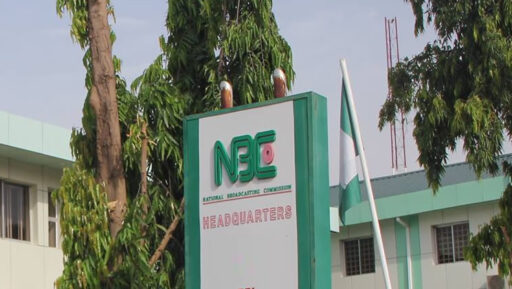
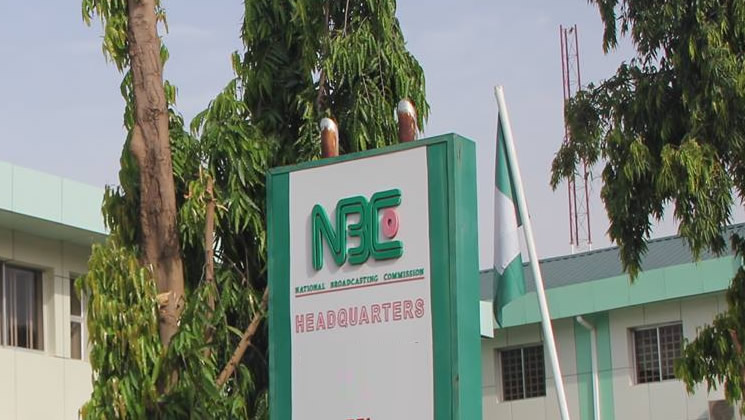
According to the National Broadcasting Commission (NBC), the planned Digital Switch-Over (DSO) programme is expected to unlock a ₦605.2 billion national advertising market for broadcasters, media companies, and content creators as Nigeria moves fully into digital terrestrial television broadcasting.
According to Ebuebu, the nationwide rollout of the Digital Switch-Over is targeted for June 17, 2026, while the final analog shutdown is expected to happen by December 31, 2028.
But beyond the technical language of broadcasting infrastructure and satellite systems lies a much bigger story: Nigeria may be preparing for a fundamental restructuring of how media, advertising, content distribution, and the creator economy operate.
What exactly is the Digital Switch-Over?
The Digital Switch-Over (DSO) refers to the transition from analog television broadcasting to fully digital broadcasting.
In practical terms, it means television signals become clearer, more efficient, and capable of carrying significantly more channels and services using less spectrum space.
For viewers, it could mean improved picture quality, more channels, better access to local content, and lower broadcasting limitations.
But for the creative economy, the implications are much larger.
Digital broadcasting expands channel capacity, creates more space for niche programming, improves audience measurement systems, and opens up new monetization opportunities for broadcasters, advertisers, filmmakers, production companies, and digital creators.
“This transition will fundamentally reshape broadcasting economics, infrastructure access, and content distribution across Nigeria,” Ebuebu said.
Why the ₦605 billion advertising opportunity matters
For years, one of the biggest limitations within Nigeria’s media ecosystem has been weak audience measurement and fragmented distribution systems.
Advertisers often struggle to accurately measure viewership behavior across television networks, while broadcasters face limitations around monetization and inventory expansion.
According to the NBC, digital broadcasting changes that.
“The DSO will unlock the ₦605.2 billion national advertising market through verifiable audience measurement, generating new revenue streams for broadcasters and content creators,” Ebuebu explained.
That statement alone may end up becoming one of the most consequential developments for Nigeria’s media economy.
Better audience measurement means advertisers can track performance more accurately. More channels mean more advertising inventory. Improved digital infrastructure means broader content distribution.
Together, that creates a significantly larger commercial ecosystem for creators and broadcasters.
For Nigeria’s entertainment industry, which already sits at the center of African pop culture influence, the timing is critical.
As Afrobeats, Nollywood, podcasts, digital media, and creator-led platforms continue gaining international attention, stronger broadcasting infrastructure could help local creators monetize audiences more effectively instead of relying heavily on fragmented social media income streams alone.
A major infrastructure upgrade for Nigeria’s creator economy
According to the NBC, Nigeria’s creative economy already contributes roughly ₦5 trillion to GDP and supports more than 4.2 million jobs.
The DSO program could accelerate that growth even further.
One of the major promises of digital broadcasting has always been the democratization of content access. Under analog systems, broadcasting space is limited and often dominated by a few major players. Digital systems allow more channels, more independent platforms, more regional programming, and more opportunities for specialized content ecosystems to emerge.
That could create stronger opportunities for the likes of:
Independent filmmakers;
Local TV producers;
Documentary creators;
Sports broadcasters;
Educational platforms;
Regional language content creators;
Faith-based media platforms;
Youth-focused entertainment channels;
Animation studios; and
Creator-led programming.
What makes this particularly important is that Africa’s creative economy is entering a new phase where infrastructure matters just as much as talent.
For years, much of the continent’s creative success has been driven by individual brilliance and internet virality. But long-term industry growth depends on scalable systems, distribution channels, monetization architecture, audience measurement, licensing frameworks, and advertising infrastructure.
The DSO project represents an attempt to modernize that ecosystem at a national scale.
The billion-dollar opportunity beyond television
Beyond broadcasting itself, the Digital Switch-Over also unlocks what experts call “digital dividend spectrum.”
This refers to the valuable spectrum space freed up after analog broadcasting is phased out. According to the NBC, the 700/800 MHz spectrum could generate more than $1 billion in auction proceeds.
The government says those proceeds would be reinvested into rural broadband expansion and wider digital infrastructure development.
That creates another layer of economic significance.
Better broadband infrastructure supports the following:
Streaming platforms;
Remote work;
Digital media startups;
Online education;
Gaming ecosystems;
Creator monetization;
Digital advertising;
AI-powered media tools; and
E-commerce businesses.
In other words, the DSO is not simply a television reform project. It is part of a much broader digital economy transition.
What ordinary Nigerians should expect
According to the NBC, the FreeTV service tied to the program will not require monthly subscriptions. Viewers would only need an open-standard DVB-S2 decoder, which the Commission says could cost between ₦15,000 and ₦25,000 on the open market.
The NBC also urged broadcasters under the Broadcasting Organisations of Nigeria (BON), alongside independent stations, to migrate to the platform and take advantage of the planned 18-month free carriage window.
Still, challenges remain.
The Commission acknowledged ongoing litigation involving local set-top box manufacturers, though officials insist the legal situation will not stop implementation.
Meanwhile, Jane Egerton-Idehen said new satellite infrastructure is already being planned to support long-term broadcasting resilience. According to her, NIGCOMSAT 2A is expected to launch in 2028, while NIGCOMSAT 2B is scheduled for 2029.
She also emphasized that the migration process would happen in phases to avoid nationwide disruptions. “We will implement a phased, zone-by-zone migration to avoid national blackouts,” she said.
Why this could reshape African media economics
Globally, countries that successfully transitioned into digital broadcasting unlocked stronger media industries, more localized content ecosystems, and more sophisticated advertising markets.
Nigeria now appears ready to make that transition at scale. If implemented successfully, the DSO could help modernize the country’s broadcasting sector while strengthening the commercial foundations of Africa’s largest entertainment industry.
And at a time when African storytelling is attracting unprecedented global demand, the ability to distribute, measure, monetize, and scale local content may become just as important as the content itself.