
The Nigerian fashion and creative economy may be entering a defining new chapter following the takeover of the Kwara Garment Factory by fashion entrepreneur and Tiffany Amber founder Folake Akindele-Coker, a move many industry observers believe could reshape local manufacturing, talent development, and Africa’s fashion production ecosystem.
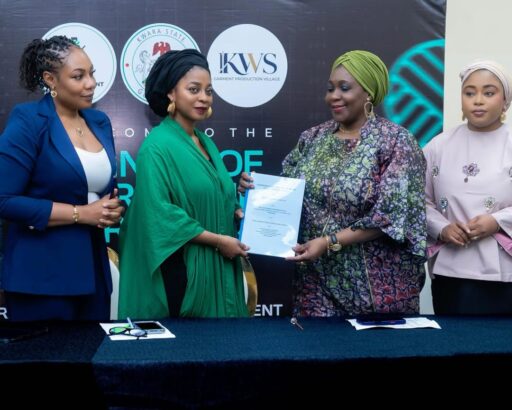
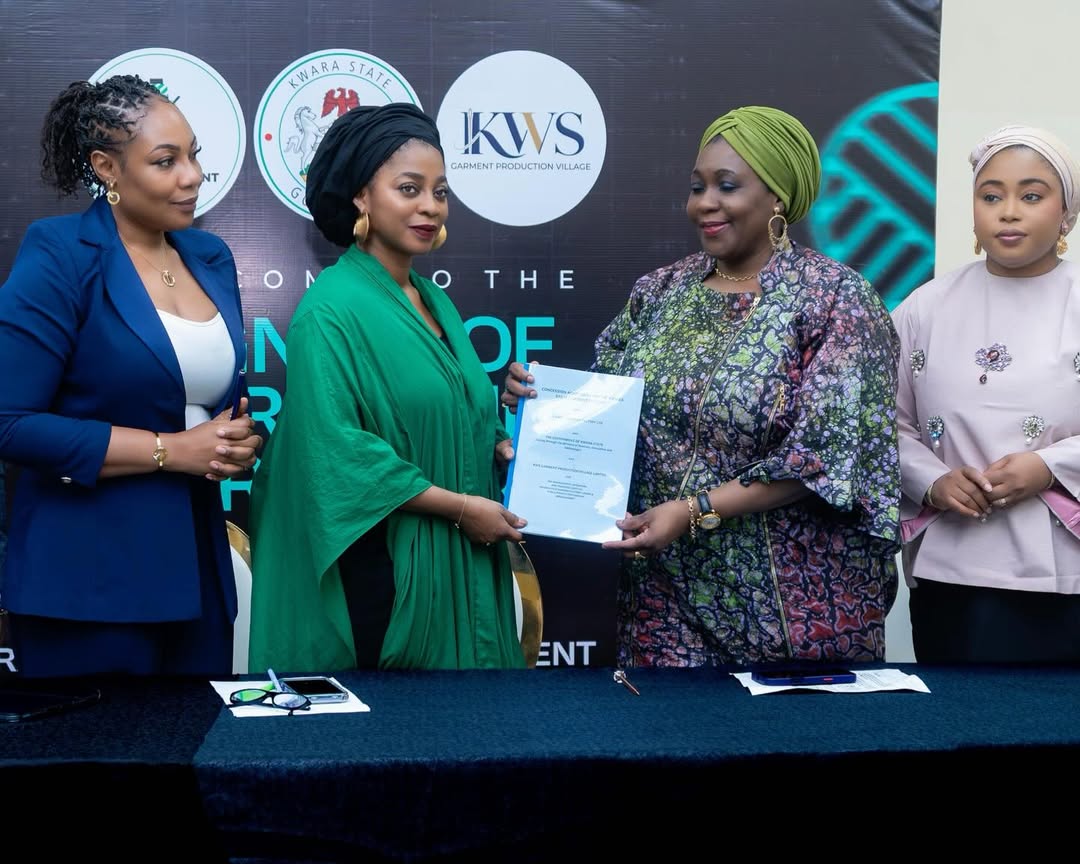
Under a newly signed management and operations agreement, Akindele-Coker’s KWS Garment Production Village will now oversee the Kwara Garment Factory, one of Nigeria’s largest industrial apparel manufacturing facilities.
For many within the industry, the development is bigger than fashion. It represents a rare convergence of creativity, infrastructure, manufacturing, and economic opportunity at a scale the Nigerian fashion sector has long struggled to achieve.
Announcing the milestone on Instagram, Akindele-Coker described the development as deeply personal and symbolic of how far the industry has come.
“This feels like a full circle moment,” she wrote.
“Years ago, when I started out in the fashion industry, if a factory like this had existed, the journey of many designers, myself included, would have looked very different.”
According to her, the facility represents more than just another business expansion.
“This is bigger than me. It is a win for Nigerian garment industry,” she stated.
“It is about building the kind of infrastructure our industry has long needed, where creativity and large scale production can thrive side by side.”
Why this matters for Nigeria’s fashion industry
For years, one of the biggest frustrations among Nigerian designers has been the lack of reliable large-scale manufacturing infrastructure. Many brands have depended on small tailoring operations or outsourced production abroad due to inconsistent local capacity.
The Kwara Garment Factory changes that conversation.
The facility is designed to support large-scale apparel manufacturing across fashion, sportswear, hospitality, institutional uniforms, and corporate production. It can reportedly support up to 4,000 workers and is powered by an on-site solar plant.
Industry experts believe this could significantly reduce production bottlenecks for emerging and established fashion brands while creating a stronger local value chain around textiles, garment production, logistics, and retail.
More importantly, it signals a shift from fashion being viewed purely as culture or aesthetics into being recognized as industrial economic infrastructure.
What this means for young fashion talent
Perhaps the biggest opportunity lies in what the factory could mean for young Nigerian creatives.
The partnership places strong emphasis on skills development, industrial training, and workforce participation, particularly for women and youths. Reports indicate that at least 80 percent of the factory’s workforce will be women and Kwara indigenes.
For young designers, pattern makers, garment technicians, stylists, and fashion entrepreneurs, the factory could become a rare bridge between talent and scalable commercial opportunity.
In a country where many creatives struggle to move from small-scale operations into structured businesses, industrial hubs like this create pathways for production experience, technical training, and access to manufacturing systems that meet global standards.
Akindele-Coker also emphasized that the vision extends beyond local production into building globally competitive African manufacturing systems.
“Through my new company, KWS Garment Production Village,” she wrote. “I step into a new chapter as concessionaire and management company of the Kwara State Garment Factory, a manufacturing facility built for scale, powered by sustainable energy and designed to serve both local and global demand.”
“This is about building infrastructure that allows creativity and large-scale production to thrive side by side.”
Beyond fashion: A creative economy play
The development also reflects a broader evolution happening across Nigeria’s creative economy.
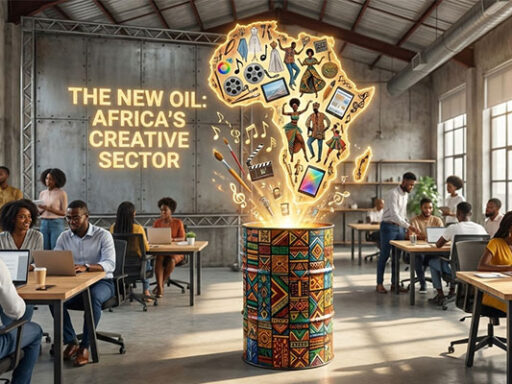
As Afrobeats, Nollywood, fashion, and digital culture continue gaining global attention, conversations are increasingly shifting toward ownership, infrastructure, and monetization.
The Kwara Garment Factory represents one of the clearest examples yet of how creative industries can intersect with industrialization, employment, exports, and regional trade under the African Continental Free Trade Area (AfCFTA).
With Nigeria pushing to diversify its economy beyond oil, large-scale creative infrastructure projects like this may become increasingly important in positioning the country as a continental hub for cultural production and manufacturing.
Akindele also acknowledged the Kwara State Government for backing the vision behind the project.
“I would like to thank His Excellency, Governor AbdulRahman AbdulRazaq and the Kwara State Ministry of Business, Innovation and Technology for the vision, foresight and confidence,” she also wrote.
Many creatives watching across the country are inspired by what this symbolizes as a whole.
One of Africa’s most respected fashion entrepreneurs is no longer just building collections or runway moments. She is now helping build industrial systems capable of supporting the next generation of African fashion businesses.
And for an industry that has often relied on individual brilliance without adequate structure, this shift signals a turnaround.
“Now let’s get to work!” Akindele-Coker concluded.