Creative Economy 101: Why African Creatives Need to Learn the Business of Creativity
Africa doesn’t have a shortage of creative talent. Africa has talent, but talent without business knowledge can leave creators broke, exposed and dependent on unstable platforms.
The continent has musicians filling international arenas, filmmakers reaching global audiences, designers working with major brands, writers telling stories that cross borders, and digital creators building communities of millions. Yet there is a frustrating contradiction.
Many African creatives are good at creating but struggle to turn that creativity into sustainable businesses.
That is the problem a new initiative launched in Kenya is trying to address.
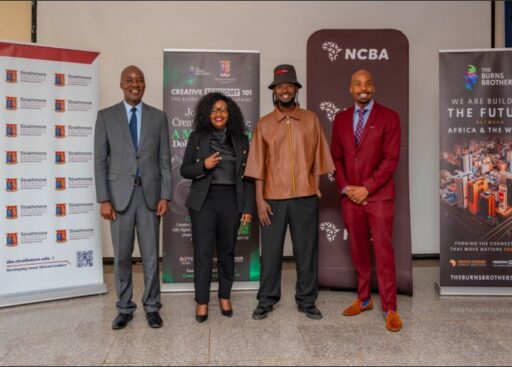
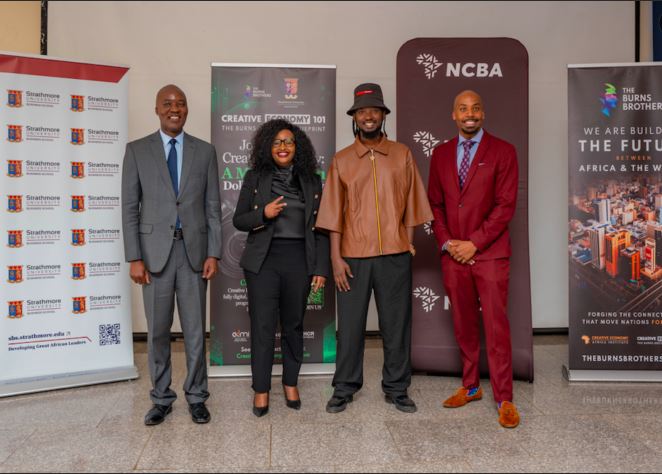
Introducing Creative Economy 101
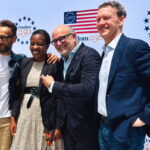
The newly launched Creative Economy 101 program was created by the Creative Economy Africa Institute, a partnership between The Burns Brothers and Strathmore University Business School.
Rather than focusing solely on creative skills, the program is designed to teach creators the commercial side of the industry, including entrepreneurship, monetization, intellectual property, finance and business growth. It is delivered online at a self-paced format and carries certification from Strathmore University Business School.
The idea is simple but important:
Being good at your craft is only one part of building a creative career.
You also need to understand how to make money from it.
The Problem With Being “Just a Creative”
Imagine a photographer who can produce incredible images but doesn’t know how to price their services or a musician who has millions of streams but doesn’t understand music publishing.
A content creator with hundreds of thousands of followers but no idea how to build income outside social media or a filmmaker who produces great work but doesn’t understand licensing or intellectual property.
In each case, the creative talent is there but the business knowledge isn’t, and that gap can become expensive. Creators can undervalue their work, sign unfavourable contracts, lose control of their intellectual property or build businesses that collapse when a social media platform changes its rules.
A recent story highlighted by the program makes this particularly relevant. Kenyan creator and entrepreneur Kerry Amani reportedly built a significant audience online before an AI moderation error resulted in the suspension of his social media account. The experience demonstrated how vulnerable creators can be when their entire business depends on platforms they don’t control.
Your Followers Are Not Your Business
This is one lesson African creatives need to take seriously. Having 100,000 followers is not the same as having a sustainable business. Going viral is not the same as generating consistent revenue and getting brand deals is not the same as owning an asset.
Social media can help you build an audience, but creators need to think beyond the platforms that host that audience. Creators need to build an email list, create digital products, develop intellectual property, offer services build a community, license your work and create partnerships.
Turn your audience into customers, not just followers.
Intellectual Property Is Money
Another reason business education matters is intellectual property. For many creatives, their work is their most valuable asset. A song, screenplay, photograph are all intellectual properties. A logo, illustration, book, film, character or original digital product can all have commercial value.
If you don’t understand what you own, how to protect it, or how it can be licensed and monetized, you may be leaving money on the table. Creative Economy 101’s inclusion of intellectual property in its curriculum is therefore particularly important.
Africa Needs More Creator CEOs
Perhaps the biggest shift we need is in how creatives see themselves. You don’t have to stop being an artist to become a businessperson. In fact, becoming more business-minded may be what allows you to remain an artist for longer.
A musician can be a CEO, a photographer can build a studio, a designer can build an agency, a writer can build a publishing company, a content creator can build a media business, etc. The creative economy becomes truly powerful when creatives stop thinking only about the next job and start thinking about the business behind their creativity.
This Shouldn’t Just Be a Kenyan Conversation
Creative Economy 101 may have launched in Kenya, but the problem it is trying to solve exists across Africa. Nigeria has Afrobeats, Nollywood and one of the continent’s largest creator communities. Ghana has a growing film, music and fashion ecosystem. South Africa has established creative industries across music, television, fashion and design. Kenya has become an important hub for digital creators, film and cultural production.
Across the continent, the talent exists. However, the question is whether the infrastructure, education and business knowledge exist to help that talent scale.
What African Creatives Should Take From This
You don’t necessarily need another creative course. As a creative, you may need to learn business. Learn how to price your work. understand contracts, learn basic accounting, understand intellectual property, study marketing, build multiple revenue streams, learn how to negotiate, understand your audience and most importantly, start treating your creativity as an asset.
Because the goal shouldn’t simply be to become a successful creative.
The goal should be to build a successful creative business.
Wrapping Up
The launch of Creative Economy 101 is a reminder that Africa’s creative economy has reached a point where talent alone cannot carry it forward. The continent needs creators who understand both how to create value and how to capture that value.
That means combining creativity with entrepreneurship, technology, intellectual property, finance and business strategy. The next generation of African creatives shouldn’t have to choose between being artists and being entrepreneurs. They should be both.
And perhaps that’s the bigger opportunity hiding inside Africa’s growing creative economy.
We don’t just need more talented creatives. We need more creative business owners.
At GetCreativeMoney, we believe the future belongs to creatives who understand that their talent is the starting point, not the entire business.