Nyege Nyege Uganda Is Turning Its Festival Into A Film Set
Nyege Nyege Is Turning a Festival Into a Film Set. This Is What a Multi-Industry Creative Economy Looks Like
A music festival usually has a straightforward economic proposition; artists perform, audiences buy tickets, brands sponsor, vendors sell, hotels and transport businesses benefit from the visitors.
Uganda’s Nyege Nyege Festival is experimenting with something else. For its 11th edition, the festival is becoming part music event, part film set.
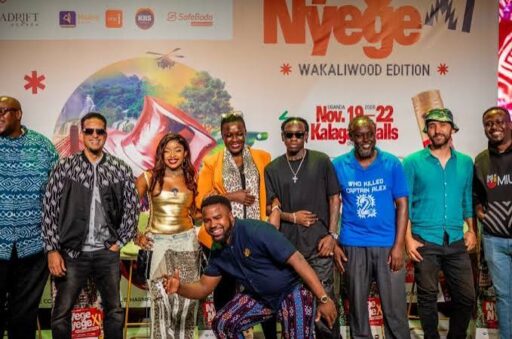
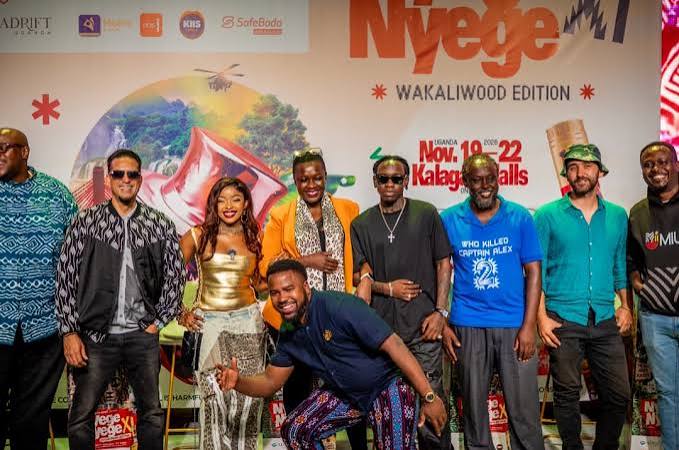
Nyege Nyege 2026, scheduled for November 19–22 at Kalagala Falls in Uganda, will be built around a collaboration with Wakaliwood, Uganda’s independent film movement. Parts of the festival grounds will become a live movie set, with performers, festivalgoers and the environment itself potentially appearing in scenes for a new film.
The organizers are calling it The Wakaliwood Edition and the interesting thing is not simply that a film will be shot at a festival. It is the business model underneath it.
One audience, Multiple creative products.
A festival already concentrates something extremely valuable in one place: people. There are performers, filmmakers, photographers, designers, tourists, brands, influencers and thousands of potential consumers gathered around a shared cultural experience.
Normally, the value of that gathering ends when the festival does. Nyege Nyege is effectively asking: What if the gathering itself becomes content?
The festival site becomes a production location, the audience becomes part of the visual environment, performances can become source material while fashion and visual art can feed into the film.
The Nile and Kalagala Falls become part of the production’s visual identity. Suddenly, one physical event is generating multiple layers of creative output. That is a much more interesting economic proposition than treating the festival as a four-day entertainment product.
Nyege Nyege is already bigger than music
The festival’s official 2026 programme describes Nyege Nyege as an ecosystem where music, fashion, film and performance converge. The 2026 edition is expected to feature more than 200 artists across seven stages, alongside film screenings, fashion showcases, art installations, workshops and tourism and adventure experiences.
That breadth matters, creative industries rarely operate in neat boxes.
A musician can create a soundtrack.
A filmmaker can build a visual world around it.
A fashion designer can supply the wardrobe.
A photographer can document the production.
A festival can provide the audience and location.
A tourism operator can package the experience.
A brand can finance part of it.
The economic opportunity comes from connecting those activities, rather than treating them as separate industries. Nyege Nyege is making that connection visible.
Wakaliwood brings another kind of creative business model
Wakaliwood has long been associated with low-budget, highly independent Ugandan filmmaking and a distinctive approach to creating films with limited resources. That makes the collaboration particularly fitting.
Nyege Nyege itself grew from an independent cultural gathering into an internationally recognised festival. Wakaliwood developed an independent film culture around making and distributing stories outside conventional production structures.
Both have built audiences around a strong sense of identity. Now they are putting those worlds together.
The result could demonstrate another route for African creative businesses: build the world first, then find multiple ways to monetize it.
A festival does not have to be only a festival and a film does not have to exist only as a film. The same cultural property can generate experiences, content, tourism, merchandise, sponsorship and media opportunities.
Tourism is part of the equation too
The location is doing more than providing a backdrop. Nyege Nyege is returning to Kalagala Falls on the River Nile, with camping, rafting, bungee jumping, cruises and other adventure activities built into the wider experience. The festival is also working with Explore Uganda to connect visitors to tourism experiences around the country.
That creates another layer of economic activity. Someone travelling to Uganda for the festival may spend money on accommodation, transport, food, tourism experiences and entertainment.
Now add a film production to that ecosystem; crew members need services, production needs logistics and locations gain exposure. The resulting film can potentially carry those locations to audiences who were never at the festival and the creative product therefore becomes a form of tourism marketing in itself.
The bigger opportunity is IP
This is where the experiment becomes especially interesting. African festivals have historically been very good at creating moments. The harder part is turning those moments into assets that continue to generate value after the event ends.
A successful festival can produce a strong archive of performances, images and cultural moments. But a film can package part of that cultural world into an IP asset with a much longer life. It can be distributed, licensed, screened, sold, promoted, referenced and potentially used to create new commercial opportunities for the festival itself.
That does not mean every festival needs to make a movie. It means creative businesses should start asking what assets they are creating beyond the immediate event.
Nyege Nyege is an interesting case because it is effectively using its own physical environment, audience and cultural identity as raw material for another creative product.
The festival becomes a platform, not just an event
This is probably the most useful way to look at what Nyege Nyege is doing. The festival is becoming a platform for several creative industries to meet. Music brings the audience, film creates IP, tourism brings visitors, fashion creates visual identity, brands provide commercial partnerships, the physical location provides the experience and digital media extends the life of all of it. That is a more sophisticated creative-economy model than simply selling tickets. It also fits the wider direction of African festivals that are increasingly trying to become year-round cultural brands rather than isolated annual events.
For Nyege Nyege, the test will ultimately be what happens after November.
Does the film create another revenue stream?
Does it extend the festival’s international reach?
Does it generate opportunities for Ugandan filmmakers?
Does it bring more attention to Uganda as a creative and tourism destination?
And can the model be repeated?
Those answers will determine whether this is simply a clever festival activation or an example of something much bigger.
For now, Nyege Nyege is demonstrating a simple idea with potentially significant implications: sometimes the most valuable creative asset is not the event itself. It is everything the event makes possible.