Bolloré is deepening its investment in Nigeria’s creative and digital economy
Bolloré Is Deepening Its Investment in Nigeria’s Creative and Digital Economy. The Bigger Question Is What Gets Built
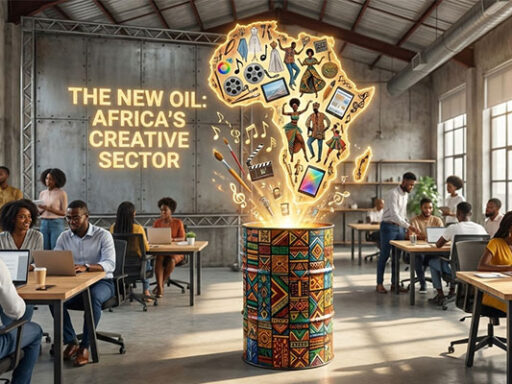
Nigeria’s creative economy has attracted plenty of international attention. What it has needed more consistently is the infrastructure and capital to turn that attention into businesses that can scale.
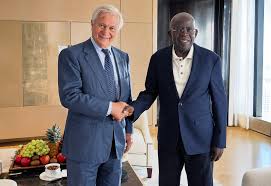
A recent meeting in Paris between Nigerian President Bola Ahmed Tinubu and French businessman Vincent Bolloré has put that conversation back in focus.
According to Nigeria’s State House, the Bolloré Group confirmed plans to deepen the localisation of its operations in Nigeria across film, entertainment, fibre-optic infrastructure and related sectors. The group described Nigeria as a driver of Africa’s cultural revival, pointing to the international growth of Nollywood, Afrobeats and demand for Nigerian culture.
There is an important distinction here. This is not simply another foreign company saying Nigeria has creative talent. The businesses connected to Bolloré’s wider media interests sit across several parts of the entertainment and digital value chain. That creates the possibility of something more consequential: connecting content, distribution and digital infrastructure in one of Africa’s biggest consumer markets.
The interesting part is the localization
The word to watch in the announcement is localization. The State House says Bolloré’s plans involve bringing more of its operations into Nigeria across film, entertainment and fibre optics. But localization can mean very different things in practice.
It can mean employing more local talent.
It can mean producing more content in Nigeria.
Also, it can mean building technical infrastructure locally.
It can mean partnering with Nigerian production companies.
It can mean developing local intellectual property rather than simply distributing international content to Nigerian audiences.
Those are very different levels of economic participation and that is why the next stage matters more than the announcement itself.
Nigeria does not just need international companies to operate in the country. It needs those operations to create production capacity, skilled jobs, businesses, intellectual property and exportable content.
Bolloré’s media footprint makes this more interesting
Bolloré’s connection to the African media ecosystem is particularly significant because of Canal+.
Canal+ has completed its combination with MultiChoice, bringing together businesses with extensive African distribution and entertainment operations. The combined group describes itself as operating across production, broadcasting, distribution and content aggregation, while its African operations include MultiChoice and production studios in Nigeria, Rwanda and Côte d’Ivoire. That means the Nigerian opportunity is not happening in isolation.
There is already a substantial African distribution network sitting behind the wider group. For Nigerian producers, that could eventually matter because creating content is only one part of the business.
Someone has to finance it, distribute it, market it and someone has to make sure the infrastructure can deliver it to audiences.
The more of that value chain that can be anchored locally, the greater the potential economic impact.
Fibre optics may be as important as film
It is easy to focus on the entertainment side of the announcement because that is the more visible part but fibre-optic infrastructure may ultimately be just as important.
The digital creative economy depends on connectivity. Film production increasingly relies on cloud collaboration, digital workflows and large-scale data transfers. Streaming depends on reliable broadband. Gaming depends on connectivity. Music distribution, creator platforms, live digital events and remote production all depend on the same underlying infrastructure.
So putting investment in content and connectivity into the same conversation is significant. The creative economy is not just made up of actors, musicians, filmmakers and designers.
It also depends on the infrastructure that allows their work to be created, distributed, discovered and monetized.
Nigeria has the audience. The challenge is capturing more of the value
Nigeria’s cultural influence is already global. Nollywood travels. Afrobeats travels. Nigerian fashion travels. Nigerian creators have built audiences across Africa and the diaspora.
The harder question is how much of the economic value generated by that global demand stays within Nigeria. That is where localization becomes important.
If more productions are financed and made locally, more money can circulate through local crews, studios, post-production companies, equipment suppliers, marketers and other businesses.
If more digital infrastructure is built locally, it can support not just entertainment but a wider digital economy.
And if Nigerian companies gain access to larger distribution networks, local intellectual property can potentially reach audiences beyond the country. That is a much bigger opportunity than simply attracting another investor.
But the numbers that matter will come later
The announcement does not provide a detailed investment figure or a project-by-project breakdown of what will be built. That means it is too early to measure the economic impact.
The useful metrics will emerge over time.
How many Nigerian productions are commissioned?
How much capital actually enters the sector?
What number of local companies become suppliers or partners?
How many jobs are created?
Which and what infrastructure is deployed?
How much Nigerian-owned IP reaches international audiences?
And perhaps most importantly, how much value remains in the Nigerian creative economy after the content has been produced and distributed?
Those are the questions that will determine whether “localization” becomes a meaningful economic strategy or simply another corporate description.
For now, Bolloré’s renewed interest is another indication that Nigeria’s creative economy is increasingly being viewed alongside the infrastructure and distribution businesses that make it scalable.
The opportunity is not simply to attract more foreign capital. It is to use that capital to build a deeper ecosystem around Nigerian talent one where content, technology, distribution and local businesses reinforce each other.
That is where the real value of this investment will ultimately be measured.