

Africa’s Creative Economy Cannot Scale If Its Creatives Keep Working in Silos
Africa has a creative-market problem that is easy to overlook. There are plenty of artists, plenty of festivals and plenty of creative businesses but the continent’s creative markets are still fragmented by borders, languages, currencies, regulations and professional networks.
A filmmaker in Lagos may have more in common commercially with a producer in London than with a creative professional in another Nigerian city. A Kenyan designer may have an audience in the UK but no established route for collaborating with British institutions. A South African creative-tech company may have the technology for a project but lack the international partner needed to develop it.
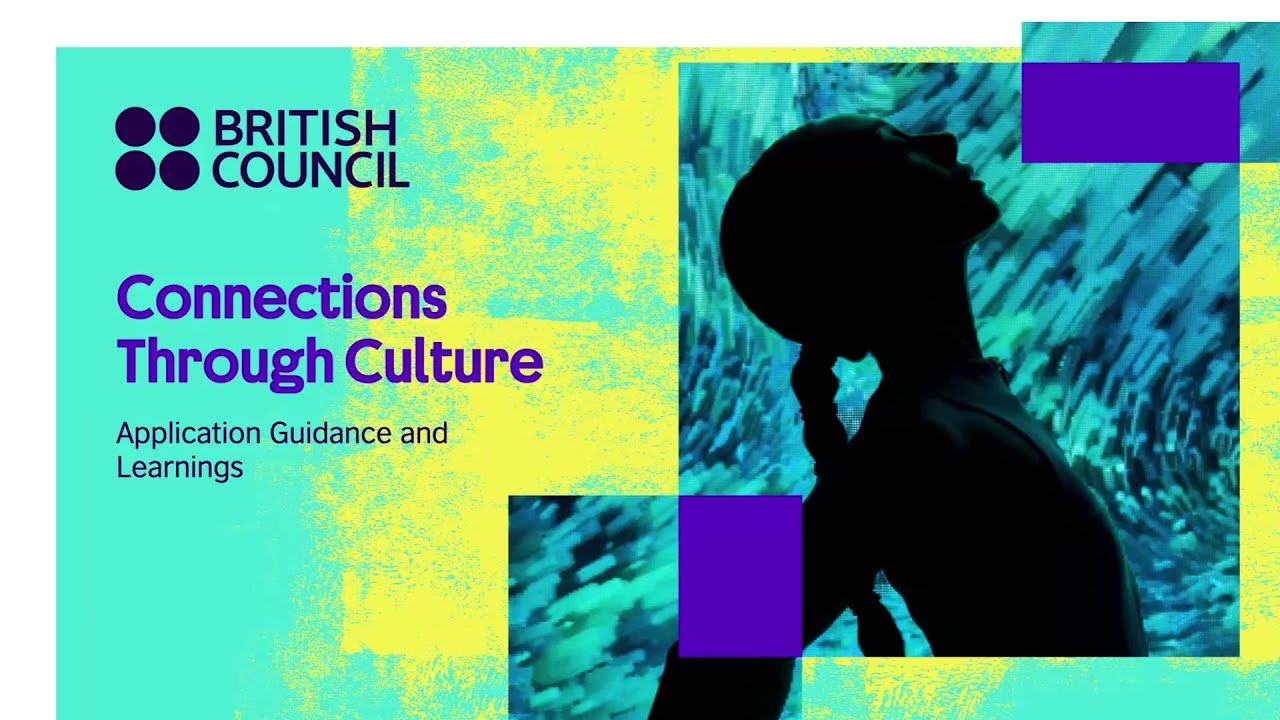
The Connections Through Culture 2026 grants are designed around that problem.
The British Council’s program offers grants ranging from £5,000 to £15,000 for partnerships between UK-based creative organizations or practitioners and counterparts in participating countries. African participants include Nigeria, Kenya, South Africa, Tanzania and Egypt.
The 2026 application round closed on August 12 after receiving a record number of applications from 35 countries. Provisional selection outcomes are expected from October 14. So this is not an open call anymore but the scale and structure of the program point to a bigger development in the way creative collaboration is being financed.
The money is funding relationships, not just projects
Connections Through Culture 2026 supports co-creation, artistic development, residencies, exchanges, workshops, research and knowledge sharing across areas including film, music, fashion, design, creative technology, games, theatre, dance and visual arts. That makes it different from a conventional production grant.
A production grant might pay for a film. This type of funding can pay for the relationship that makes the film possible.
Creative businesses often need access to people before they need access to large amounts of money. A partnership can provide:
- New distribution networks
- Technical expertise
- International audiences
- New clients
- Co-production opportunities
- Market knowledge
- Professional credibility
- Future investment relationships
A relatively small grant can therefore have an impact beyond its immediate financial value if it creates a partnership that continues after the funded project ends.
Africa’s creative economy needs more cross-border infrastructure
One of the biggest risks for Africa’s creative economy is that every country tries to build its own ecosystem independently.
Nigeria builds its film industry.
Kenya builds its music industry.
South Africa develops its fashion and entertainment sectors.
Ghana develops its creative hubs.
But creative businesses do not necessarily operate according to those borders. Audiences are regional, streaming platforms are global, fashion supply chains cross countries, music collaborations routinely involve multiple territories, films increasingly require international financing and distribution and creative technology businesses can sell to customers anywhere.
The infrastructure therefore needs to be connected too.
The grant structure reflects that reality
For 2026, the British Council says partnerships must involve at least one UK-based partner and at least one partner from an eligible participating country. The grant is awarded per partnership rather than per individual partner.
The maximum available amount varies by country. Nigerian partnerships can receive up to £10,000, Kenya up to £7,500, South Africa up to £6,500, Tanzania up to £5,000, while some other participating countries can access up to £15,000.
Those amounts are not enormous by the standards of international arts funding but that is partly the point. The program is not designed to bankroll entire creative industries. It is designed to remove some of the financial friction that prevents people from working together.
A £7,500 or £10,000 grant could fund a residency, research period, workshop series, prototype, collaborative production or knowledge exchange that would otherwise never happen.
The record number of applications is revealing
The 2026 program received applications from 35 countries. That demand is useful evidence of something broader: creative professionals increasingly see international collaboration as part of how they build careers and businesses.
The challenge is that international collaboration costs money.
- Travel costs money.
- Research costs money.
- Production costs money.
- Legal agreements cost money.
And for smaller creative businesses, even relatively modest expenses can make an international project impossible.
Small grants can therefore function as market-access infrastructure. They give creative practitioners a reason and a mechanism to cross the border.
But the real value comes after the grant
There is a risk with collaboration programs and that is, the partnership exists only for the duration of the funding. That would limit the economic impact. The stronger outcome is when a grant-funded relationship becomes something commercial or institutional afterwards:
- A residency becomes a co-production.
- A workshop becomes a training business.
- A design collaboration becomes a collection.
- A film partnership becomes a distribution relationship.
- A creative-tech prototype becomes a product.
- A festival exchange becomes an annual partnership.
That is when relatively small cultural funding can generate much larger economic value.
Africa needs a creative economy that behaves like a market
The phrase “African creative economy” can sometimes make the continent sound like one enormous cultural market when it isn’t. It is a collection of national and regional markets that are gradually becoming more connected.
Programs such as Connections Through Culture are interesting because they invest in the connections themselves and that may be one of the less glamorous but more important pieces of creative infrastructure Africa needs.
Not just more money for individual creatives, not just more festivals, not just more showcases but more relationships between the people, businesses and institutions that make the creative economy work.
The 2026 funding round is now moving into its selection stage, with provisional outcomes expected from October. What matters after that will be whether those partnerships survive beyond the grant because the ultimate measure of cross-border creative funding is not how many projects it supports.
It is how many new creative markets, businesses and long-term relationships it helps create.