How Morocco is Building Africa’s First EV Battery Gigafactory Hub
China’s electric vehicle (EV) powerhouse is expanding its reach across Africa, shifting beyond importing completed cars to manufacturing high-tech battery components directly on African soil. At the center of this industrial pivot is Morocco, which is rapidly positioning itself as Africa’s premier electric vehicle battery manufacturing hub. Powered by proactive government policy, strategic European trade proximity, and substantial development finance, Morocco is creating a full-scale ecosystem for EV battery materials that leaves traditional vehicle assembly behind.
Morocco’s Gigafactory Push
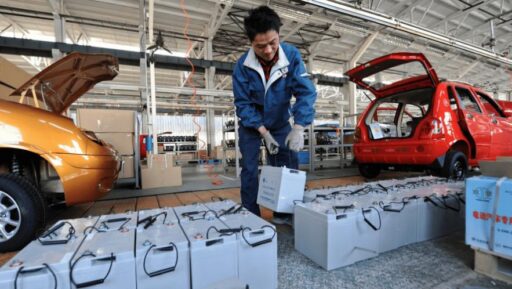
A major milestone in Morocco’s electric vehicle ambition came with the African Development Bank (AfDB) approving a $114 million loan to fund Chinese battery giant Gotion High-Tech’s landmark gigafactory. The deal marks a rare and critical commitment by a major development finance institution to commercial battery production in Africa, helping de-risk large-scale industrial investments for private capital.
Morocco’s progress is built on years of deliberate industrial planning. The kingdom has signed multi-million dollar deals across the entire EV battery supply chain:
Cathode Production: A $300 million agreement with China’s BTR New Material Group to establish a specialized cathode materials facility in Tangier.
Anode Manufacturing: Abu Dhabi-headquartered Falcon Energy Materials commissioned a 25,000-tonne-per-year anode pilot project at Jorf Lasfar, partnering with Chinese firms Shanghai Shanshan and Hensen.
Joint Ventures: Collaborative enterprises like Cobco are building out localized component supply chains to supply both local and European auto assembly lines.
South Africa’s Mineral-Rich Strategy: BYD and Regional Value Addition
Further south, South Africa is pursuing its own path into the EV revolution. World-leading electric vehicle manufacturer BYD is actively exploring local battery manufacturing operations rather than focusing purely on vehicle sales. The move gathered momentum following the launch of a joint venture between BYD Finance and financial institution Absa Group.
For South Africa, local battery manufacturing creates a direct bridge between its vast mineral reserves—such as manganese, nickel, and platinum—and high-value industrial output. The South African government is updating its Critical Minerals and Metals Strategy to incentivize localized refining, aiming to ensure that regional minerals are processed into finished EV components domestically rather than exported as raw ores.
Building Africa’s EV Supply Chain
The contrasting approaches of Morocco and South Africa underscore a critical reality in the green transition: holding raw mineral deposits is not enough to secure industrial investments. Building an electric vehicle battery ecosystem requires reliable energy infrastructure, skilled technical labor, clear trade access, and predictable long-term policy incentives.
Morocco leads the continent because it built an automotive manufacturing base first, pairing it with low-tariff access to European markets. While South Africa boasts established vehicle manufacturing facilities and abundant resources, it must move quickly to enact competitive policies that convert its natural wealth into operational gigafactories.
As Chinese technology leaders continue to shape global energy storage, African nations that build complete industrial ecosystems around raw materials will lead the continent’s transition into the global EV supply chain.