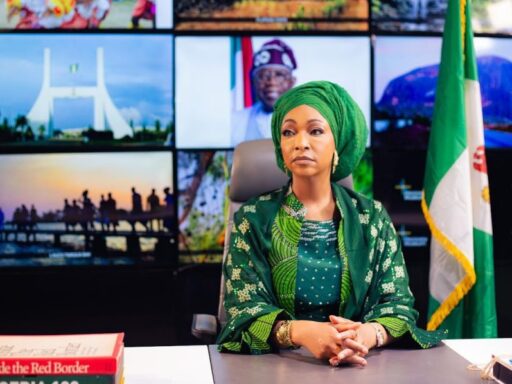
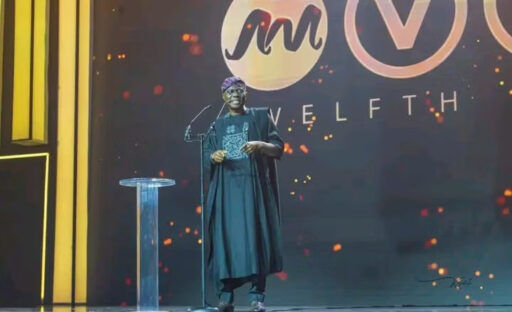

Babajide Sanwo-Olu has reaffirmed Lagos State’s commitment to supporting Nigeria’s creative and entertainment industry, describing the sector as one of the country’s strongest economic pillars.
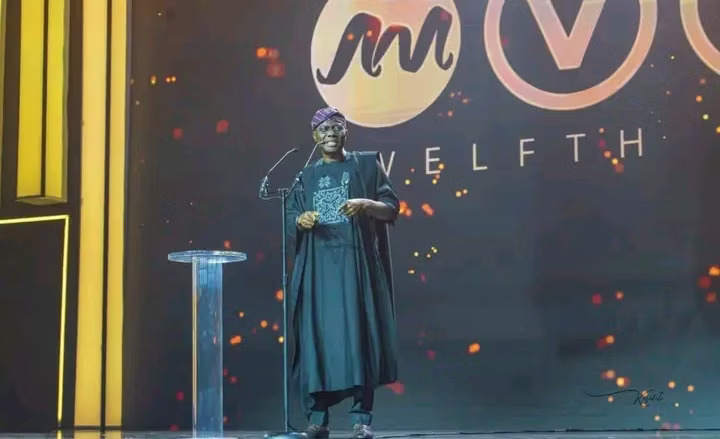
The Lagos governor made the remarks during the 12th edition of the Africa Magic Viewers’ Choice Awards, where major figures across Africa’s film and entertainment ecosystem gathered to celebrate achievements in film, television, and digital storytelling.
His comments arrive at a time when conversations around the creative economy are expanding beyond culture into broader discussions around economic diversification, intellectual property, youth employment, tourism, and global cultural influence.
Lagos Wants to Strengthen its Position as Africa’s Creative Capital
Speaking at the event alongside the Lagos State Commissioner for Tourism, Arts, and Culture, Toke Benson-Awoyinka, Sanwo-Olu stated that Lagos would continue creating an enabling environment for creative professionals to thrive and compete globally.
According to the governor, the state sees the entertainment sector as a major contributor to job creation, youth empowerment, economic growth, and cultural promotion.
He also emphasized that strategic investments and supportive policies would continue across the broader entertainment ecosystem, including filmmakers, actors, producers, digital creators, and other creative professionals.
The statement reinforces Lagos State’s ongoing effort to position itself as Africa’s leading destination for entertainment, tourism, arts and culture, and creative enterprise.
Nollywood’s Global Rise is Reshaping Perceptions of African Storytelling
Sanwo-Olu also acknowledged Nollywood’s growing international recognition, attributing its global expansion to the innovation and resilience of Nigerian creatives.
Over the last decade, Nigerian film and entertainment have gained stronger visibility through streaming platforms, international festivals, digital distribution, and global demand for African stories.
This visibility has helped position Nollywood as one of the most commercially influential film industries in the world by volume and cultural reach.
The governor encouraged creatives to continue telling authentic African stories capable of connecting with audiences globally.
Piracy Remains One of the Industry’s Biggest Challenges
While celebrating the sector’s growth, Sanwo-Olu also addressed one of the industry’s long-standing structural problems: piracy.
He described piracy as a major threat to the sustainability and profitability of the creative sector, noting that stronger collaboration is needed between government institutions, private sector players, and industry stakeholders to strengthen intellectual property protection across the entertainment ecosystem.
For years, piracy has remained one of the biggest barriers limiting revenue retention within Nollywood and the wider African creative industry.
As the sector attracts more investment and global attention, conversations around copyright enforcement, licensing systems, royalty structures, and digital rights management are becoming more urgent across the industry.
Why Government Support Matters for the Creative Economy
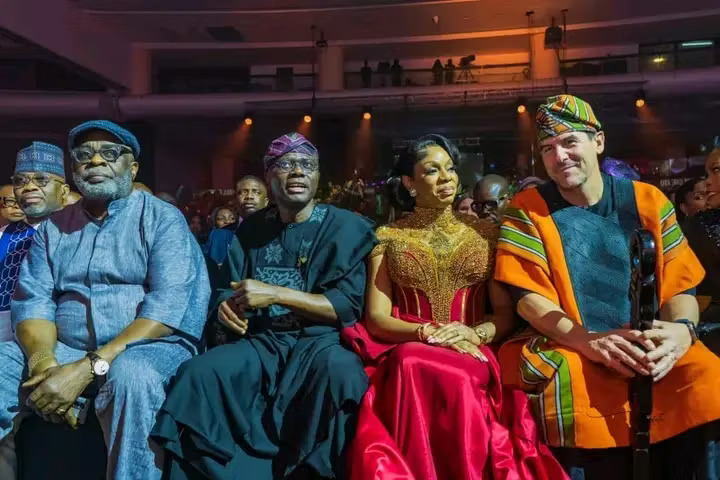
The governor’s comments show a wider shift happening across Africa, where governments are beginning to view the creative economy as a serious economic sector rather than just entertainment.
This includes recognizing the industry’s potential in exports, tourism, digital services, youth employment, and soft power influence
Across music, film, fashion, and digital content, African creativity is attracting global audiences, institutional partnerships, international investment, and commercial expansion opportunities.
However, industry stakeholders continue to stress that long-term growth will depend heavily on infrastructure, policy support, financing access, intellectual property systems, and production investment.
Partnerships are Becoming Central to Industry Growth
Sanwo-Olu also highlighted the role of private sector organizations and development partners in supporting the entertainment ecosystem.
He noted that strategic partnerships remain critical to expanding opportunities for emerging creatives and strengthening the broader industry.
This aligns with a larger trend across Africa’s creative economy, where collaborations between governments, private companies, financial institutions, and global platforms are becoming central to scaling creative industries sustainably.
Beyond the Awards Night
While the AMVCA remains one of Africa’s biggest entertainment events, the conversations surrounding this year’s edition reflected something deeper than awards alone. They pointed toward the growing economic importance of Africa’s creative industries.
As Lagos continues positioning itself as a continental hub for entertainment and culture, the focus is shifting toward building stronger infrastructure, sustainable monetization systems, global partnerships, and long-term industry growth.
Nigeria’s creative sector is clearly headed towards growth and this chapter may depend as much on structure and policy as it does on talent itself.