Threads of Africa 2026 Fashion Film Prize – Grant For African Fashion Designers
A $25,000 Grant Is Betting That African Fashion Heritage Can Become Valuable Creative IP
African fashion has spent years trying to get more global attention but attention is not the same thing as value.
A designer can have a collection admired internationally without owning a strong archive. A traditional textile can appear in fashion campaigns without the communities that developed it seeing much economic benefit. And an important technique can disappear simply because nobody has documented or commercialised it for a new generation.
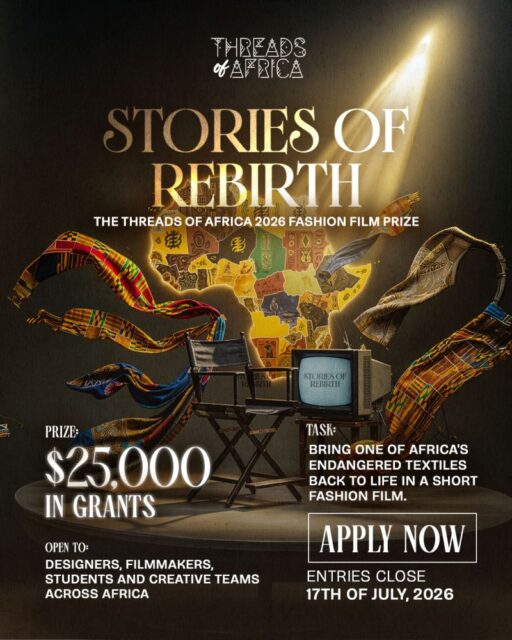
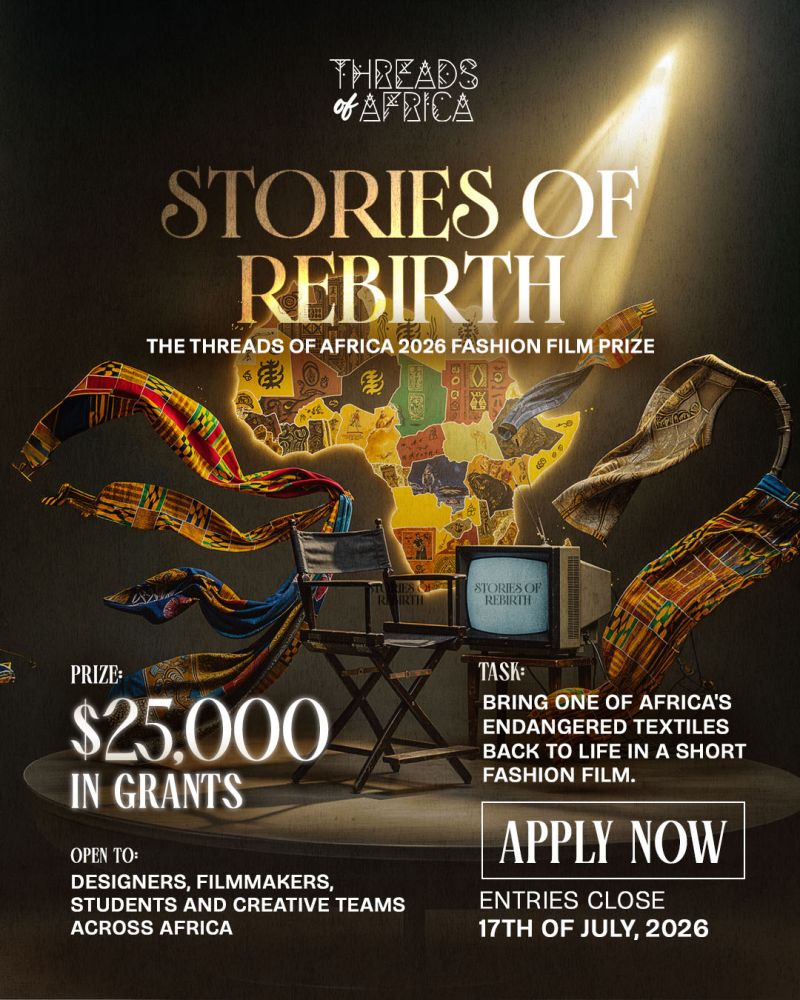
The Threads of Africa 2026 Fashion Film Grant is taking a different approach. The initiative is offering a $25,000 non-dilutive grant to one winning fashion-film project built around an endangered, forgotten or underused African textile, garment or technique. The winner also receives mentorship and visibility through the Threads of Africa: Rebirth film series and exhibition.
The money is only part of the story Rather, the more interesting proposition is that fashion heritage can become creative IP.
Turning heritage into something that can travel
The competition asks applicants to create a three-to-five-minute fashion film documenting a textile, garment or technique and connecting its history to its future.
The films are expected to include research and interviews with people who hold the relevant knowledge, show the creative process and make a case for why the tradition deserves to survive.
That approach moves the project beyond a conventional fashion campaign. The textile becomes the starting point for a story, the story becomes film, the film becomes an archival and promotional asset and, potentially, that asset can become part of a larger cultural and commercial property. That is an important distinction for African fashion.
Too much of the continent’s fashion heritage exists in fragments: techniques passed between generations, textiles held by communities and designs documented inconsistently. Documentation creates another layer of value.
The prize is deliberately non-dilutive
The $25,000 grand prize is structured as a grant rather than an investment. The organization says it takes no equity in exchange for the prize. It also says creators retain credit, while commercial use is governed by a revenue-sharing arrangement. That matters because creative funding can sometimes create tension between supporting creators and acquiring rights to their work.
Here, the structure is attempting to give creators production capital while still creating a pathway for the resulting films and documented collections to have a commercial life. That commercial component is particularly revealing.
One of the judging criteria is commercial and revival viability, alongside cultural authenticity, creative innovation and narrative impact.
In other words, the project is not asking only:
“Is this culturally important?”
It is also asking:
“Can this heritage be given a viable future?”
Fashion film is doing more work than advertising
Fashion film is often treated as a stylish extension of a campaign but it can be much more useful than that.
For African designers, a strong film can document the story behind a collection, preserve knowledge, introduce international audiences to a technique and give a brand a piece of intellectual property that can exist beyond a single runway or product launch.
It can also connect fashion to film, tourism, museums, cultural institutions and streaming platforms. That cross-sector potential is exactly what makes the format interesting. The fashion industry does not have to sell only garments. It can also sell stories, experiences, archives, images, films and cultural knowledge.
There is also an economic-development argument
Threads of Africa explicitly positions the initiative around cultural diplomacy, economic growth and a sustainable creative industry. The 2026 edition expands from design into storytelling, documentation and revival. That suggests a larger model for African fashion.
Instead of treating traditional textiles only as heritage objects, they can become inputs into contemporary creative businesses. A documented weaving technique can inspire new products, a forgotten textile can be reintroduced through contemporary design, a film can generate interest in the designer, artisan or community behind it and a story can create demand for the product.
The important part is ensuring that the people who hold the original knowledge participate in and benefit from that value chain. The competition itself requires applicants to credit collaborators and cultural custodians, which is an important starting point.
The bigger question is what happens after the film
One $25,000 prize cannot transform Africa’s fashion industry but it can demonstrate a model.
What happens when cultural preservation is connected to commercial storytelling?
What happens when designers are encouraged to document rather than simply produce?
What happens when fashion heritage becomes content, intellectual property and a potential route to new markets?
Those are questions worth exploring far beyond this competition because Africa’s fashion opportunity is not simply about producing more clothes or getting more designers onto international runways.
It is also about owning and commercializing the stories, techniques and cultural knowledge that make African fashion distinctive.
The $25,000 prize is funding a film.
The more interesting bet is that the film can help give something much older a commercial future.
Currently, applications are open for just Liberian nationals. You can click here to apply