GITEX Nigeria 2026: Why Creatives Should Be Paying Attention to Africa’s Biggest Tech Stage
When people hear GITEX, technology is probably the first thing that comes to mind; Artificial intelligence, Startups, Fintech, Cybersecurity, Robotics, Cloud computing, etc. But as GITEX Nigeria prepares to return for its 2026 edition, there’s another group that should be paying close attention:
African creatives.
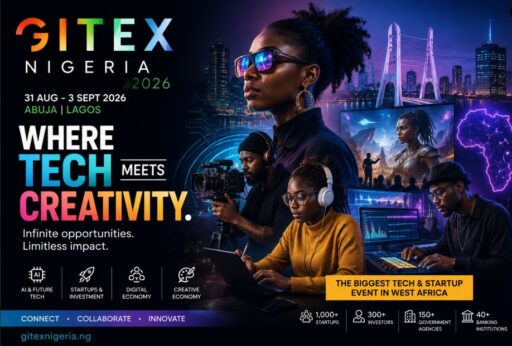
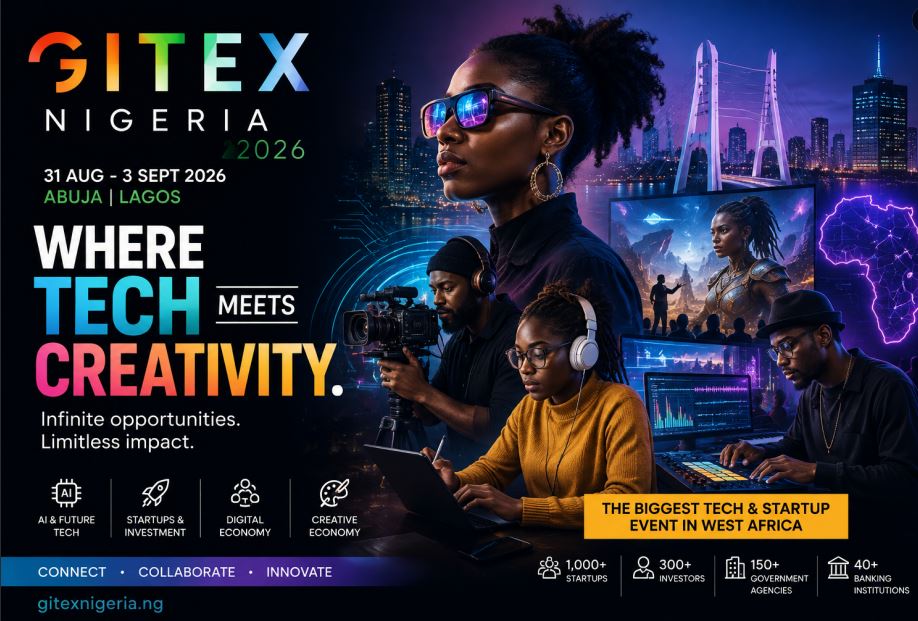
GITEX Nigeria 2026 is scheduled for 31 August to 3 September, with activities spanning Abuja and Lagos. The event is positioned as West Africa’s largest tech and startup show, bringing together startups, investors, technology companies, government representatives and other players shaping the region’s digital economy.
And this year’s programme makes one thing increasingly obvious:
The line between technology and creativity is disappearing.
Creativity Is Becoming a Technology Conversation
For years, creative industries and technology were treated as separate worlds. Musicians made music, Filmmakers made films, Designers created visual identities and Developers built software. Today, those boundaries are becoming increasingly difficult to maintain as a musician can build an audience through an algorithm. A filmmaker can use AI to accelerate production, an animator can create an entire world using digital tools, a game developer combines storytelling, art, music and software. A content creator can build a media company without owning a television station. Technology isn’t simply changing how creatives distribute their work.
It’s changing how creative work is produced, monetized and scaled.
That’s why the presence of the creative economy within GITEX Nigeria matters.
The Creative Economy Has a Seat at the Table
GITEX Nigeria’s exhibitor categories specifically include Creative Economy, alongside sectors such as artificial intelligence, robotics, fintech, cybersecurity, cloud services and software. That is significant as it suggests that creativity is increasingly being recognized as part of the broader digital economy rather than existing solely within entertainment.
The speaker lineup reinforces that point.
Among the announced speakers are Jude “M.I” Abaga, now working in creative empowerment and civic engagement; Joke Silva, actor and co-founder; Ojoma Ochai, Managing Partner of the Creative Economy Practice at CcHUB; Damilola Solesi, CEO and Creative Director of SMIDS Animation Studios; and Ekikere Udofia, TikTok’s Creator Manager for Sub-Saharan Africa.
That’s not a traditional technology conference lineup and that’s precisely why creatives should be interested.
The Future Creative Will Need Technology
You don’t have to become a software engineer to benefit from the technology revolution but you need to understand how technology is changing your industry. If you’re a filmmaker, AI and new production technologies are already changing workflows.
For the musicians, streaming platforms, recommendation algorithms and digital distribution determine how audiences discover music. If you’re a designer, generative AI is changing the speed and economics of visual production.
As a content creator, analytics and recommendation systems can determine whether your work reaches 100 people or 1 million.
And if you’re building a creative business, technology can help you reach customers across borders without needing a physical presence in every market.
The question isn’t whether technology will affect your creative career.
It already is.
Creatives Shouldn’t Just Attend. They Should Network.
One of the biggest mistakes creatives can make at an event like GITEX is attending only to watch presentations. The real opportunity may be happening between sessions. Imagine a filmmaker meeting a technology company looking for content. Or a game developer connecting with an investor, an animator meeting a studio executive, a creator meeting a brand looking for digital talent and a creative entrepreneur discovering a technology that can reduce production costs.
These connections can become partnerships, contracts, investments and entirely new businesses.
GITEX Nigeria says its platform will connect global technology companies with 1,000+ startups, 300+ investors, 150+ federal and state agencies and 40+ banking institutions across Abuja and Lagos.
For a creative entrepreneur, that’s potentially a very different audience from the one they encounter at a traditional entertainment event.
This Is Where Creatives Need to Change Their Thinking
African creatives often attend events looking for one thing: A job. But the bigger opportunity may be finding a partner.
Instead of asking:
“Who can hire me?”
Start asking:
“Who can help me build something?”
That could mean finding someone who can fund your idea. Someone who can distribute your work, a founder who can provide technology, someone who can introduce you to another market or even someone whose skills complement yours. The creative economy grows when creatives stop operating in isolation.
Africa Needs More Creative-Tech Businesses
Perhaps the biggest opportunity coming out of events like GITEX Nigeria isn’t simply that technology companies will discover creatives. It’s that creatives can become technology entrepreneurs themselves.
Consider what happens when creativity meets technology. Animation becomes a scalable studio, music becomes a digital platform, storytelling becomes an interactive game, fashion becomes an e-commerce business and content becomes a subscription platform.
A creative idea becomes intellectual property that can be licensed, distributed and commercialized globally. That’s where the real economic opportunity lies.
What Creatives Should Be Looking For at GITEX Nigeria
If you’re attending, don’t just look for celebrities or the biggest technology brands.
Look for:
Technology that can improve your creative workflow
Investors interested in creative businesses
Potential collaborators
Digital distribution opportunities
AI tools that can reduce production costs
Companies looking for creative talent
Other African creatives building businesses
Ideas that can turn your creative skill into a scalable product
And come prepared. By that we mean, have your portfolio ready, know what you do, know what problem you solve, know what you’re looking for and most importantly, be able to explain how your creativity creates value.
What else you should know
GITEX Nigeria 2026 is primarily a technology and business event but that doesn’t mean creatives are outsiders.
In fact, the growing presence of creative-economy voices, creator platforms, animation companies, filmmakers and creative entrepreneurs suggests that the creative economy is becoming an increasingly important part of Africa’s digital future. Technology gives creativity reach and creativity gives technology meaning. When the two come together, entirely new businesses become possible.
So if you’re an African creative wondering whether a technology event is relevant to you, the answer is increasingly clear:
Don’t wait for the tech industry to come looking for you. Go and meet it.
GITEX Nigeria 2026 could be more than a technology conference.
For the right creative, it could be where the next collaboration, client, investor, idea or business begins.