New Report Says Nigeria’s Creative Economy Has a Systems Problem, Not a Talent Problem
Nigeria’s creative industry has long been celebrated for producing globally recognized films, music, fashion and digital content. A new industry report argues that the country’s biggest challenge is no longer talent but the systems required to help creative businesses grow.
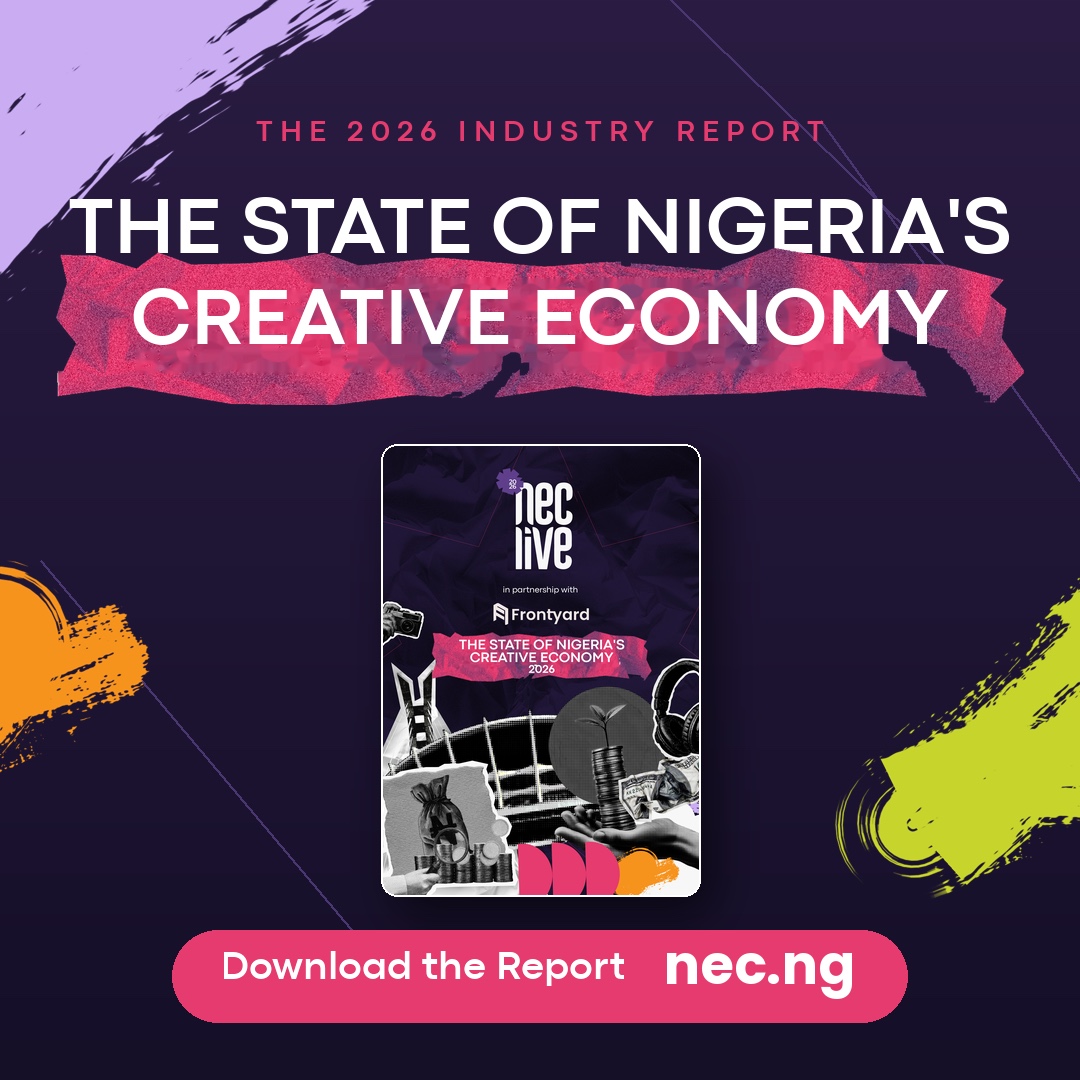
NECLive, in partnership with Frontyard Group, has released The State of Nigeria’s Creative Economy 2026. This research report examines the experiences of 377 creative professionals across eight sectors and identifies the structural barriers limiting the industry’s growth.
Released following NECLive 2025, the report directs attention from the achievements of Nigerian creatives to the conditions under which they work. Rather than asking whether the country has enough creative talent, the research examines why many creative businesses continue to struggle despite Nigeria’s growing cultural influence worldwide.
According to the report, inadequate infrastructure, limited access to finance, administrative bottlenecks, inefficient payment systems and gaps in training remain some of the most significant obstacles facing creative professionals. These challenges, it argues, affect the ability of individuals and businesses to scale their work, access new markets and build sustainable enterprises.
The findings are based on responses from 377 practitioners working across eight segments of Nigeria’s creative economy, providing one of the more comprehensive snapshots of the industry’s current operating environment.
“We have never lacked influence,” said Tomiwo Ojo, Head of Content at ID Africa. “What we have lacked is evidence about the machinery beneath that influence and the honest conversation that evidence makes possible. A sector that can name its own constraints is a sector ready to be built. The talent has already done its part. It is time for the systems to catch up.”
This opens up a broader conversation taking shape across Nigeria’s creative economy. While government targets, private investment and international recognition have continued to place the sector at the center of economic diversification discussions, many operators argue that commercial success depends on far more than creative ability alone.
The report positions itself as a resource not only for creative professionals but also for policymakers, investors, development organizations and businesses seeking a clearer understanding of the industry’s operational realities. Alongside its findings, it proposes recommendations aimed at improving financing, strengthening industry infrastructure, reducing administrative barriers and supporting long-term sector growth.
Its release also comes at a time when Nigeria is seeking to expand the economic contribution of its creative industries through investment, policy reforms and stronger institutional support. Recent government ambitions to grow the creative economy into a major contributor to national output have renewed attention on the conditions required for creative businesses to thrive.
By grounding that conversation in data from working professionals, The State of Nigeria’s Creative Economy 2026 adds fresh evidence to debates that have often been driven by anecdote. The report suggests that Nigeria’s next phase of creative growth will depend not only on producing world-class talent, but also on building the systems that allow that talent to create lasting economic value.
The full report is available for public download through the NECLive website.