
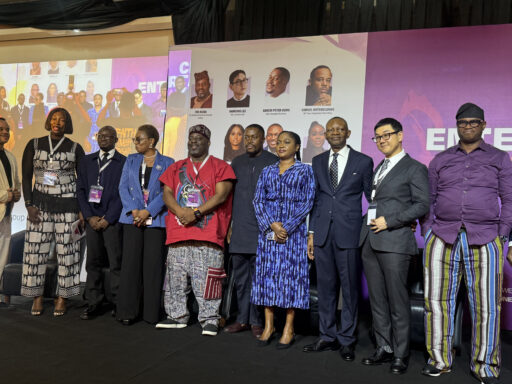

Conversations concerning Africa’s creative economy have, for many years, been centered around visibility, virality, and global recognition. Afrobeats on international charts. Nollywood on global streaming platforms. African fashion on global runways.
But at the 2026 BusinessDay Creative Entertainment Summit in Lagos, a different thread ran through the discussions: one less about cultural export, and more about the systems that determine who actually earns from Africa’s creative output.
Across panels and on the sidelines of the summit, industry leaders repeatedly returned to the same concerns: revenue capture, intellectual property, data gaps, and the business infrastructure behind entertainment.
In exclusive interviews with Creative Money Africa, three notable speakers (Samuel Onyemelukwe, MD, Trace Anglophone West Africa; Michael Odiong, CEO, Premier Records Limited; and Ifeyinwa Anyadiegwu, VP, Head of Legal and Business Affairs, Chocolate City Group) during the panel sessions pointed to a shared reality: Africa’s creative economy is not limited by talent, but by how effectively value is extracted, tracked, and sustained.
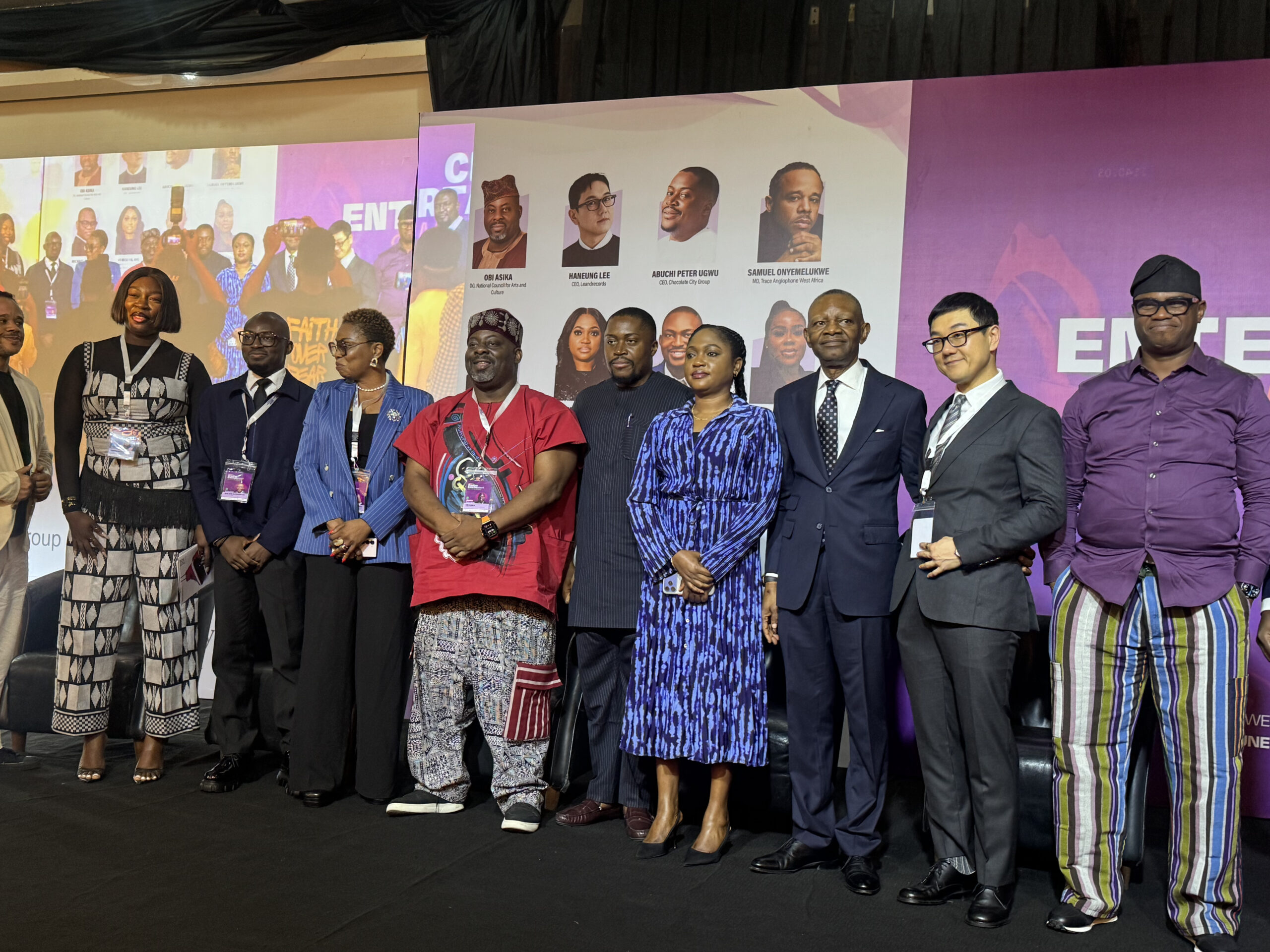
Revenue collection remains the industry’s weakest link
For Ifeyinwa Anyadiegwu, VP, Head of Legal and Business Affairs, Chocolate City Group, the issue begins with how revenue is structured across the industry. Speaking exclusively to Creative Money Africa on the sidelines of the summit, she emphasized that long-term sustainability depends on how effectively creatives and industry players understand and capture all available income streams.
“One thing I would say creatives and everybody in the industry should pay special attention to is just how we collect revenue and how we generate revenue because that’s truly the backbone to a sustainable industry,” she said.
Her concern was not just about earnings, but also about awareness: whether creatives and rights holders are fully exploiting all available royalty structures within the industry. That gap between creation and collection, she suggested, continues to weaken the long-term financial foundation of the sector.
The industry is still losing significant value
For Michael Odiong, CEO, Premier Records Limited, the problem is far more systemic. Describing the summit discussions as “educative and explorative,” he pointed to ongoing inefficiencies in monetization and intellectual property management across the creative economy. “This country and this industry loses a lot of money, we lose hundreds of millions of dollars every year,” he said.
He argued that the solution cannot come from one part of the ecosystem alone. Government, financial institutions, and creatives all need to be part of the same conversation if the industry is to stop revenue leakage at scale. “We need to talk to the government. We need to talk to the financial sector. We need to talk to the creatives themselves,” he added.
For him, the challenge is not just structural but also collaborative. Without coordinated action, he warned, the industry risks failing to convert its cultural momentum into sustainable economic value.
The real economy lives behind the stage
While much of the public attention around Africa’s creative industries focuses on performance, fame, and visibility, Samuel Onyemelukwe, MD, Trace Anglophone West Africa drew attention to where real financial activity is happening.
He described a disconnect between the visible glamour of entertainment and the less visible but far more lucrative systems operating underneath it. “Everybody likes the glamour of it; they want to be on stage; they want to be under the lights and on the red carpets,” he said. “But the real money is made behind them. The real money is made sometimes in the daily transactions.”
He pointed to digital ecosystems such as gaming, micro-transactions, and platform-based consumption as examples of where large-scale value is being generated outside traditional creative visibility.
His broader message was one of awareness. That young creatives must look beyond surface-level success markers and begin to understand the commercial systems powering the industry.
He also emphasized access to information as a key advantage for today’s generation of creatives, particularly around grants, funding opportunities, and digital business models that many are still unaware of.
A shift from visibility to value
Taken together, the perspectives shared at the summit reflect a gradual but important shift in Africa’s creative economy discourse. The conversation is moving from visibility to value and from how far African creativity travels globally, to how effectively it is monetized at home and across markets.
While the global success of Afrobeats, Nollywood, and African fashion continues to expand cultural influence, industry leaders are beginning to focus more on the systems required to sustain that growth.
These include royalty tracking, legal frameworks, data infrastructure, investment mechanisms, and broader financial participation across the value chain.
Beyond talent: the real question facing the industry
The underlying message from the summit is not a lack of creativity, but a lack of structure around creativity. Africa’s creative economy, as reflected in the discussions at BusinessDay’s summit, is entering a new phase: one where cultural success alone is no longer the endpoint.
The next phase will be defined by how effectively the industry builds systems that allow creators, investors, and institutions to participate in the value being generated. And as the conversations on June 17, 2026 at the Oriental Hotel, Lagos made clear, that shift is already underway.