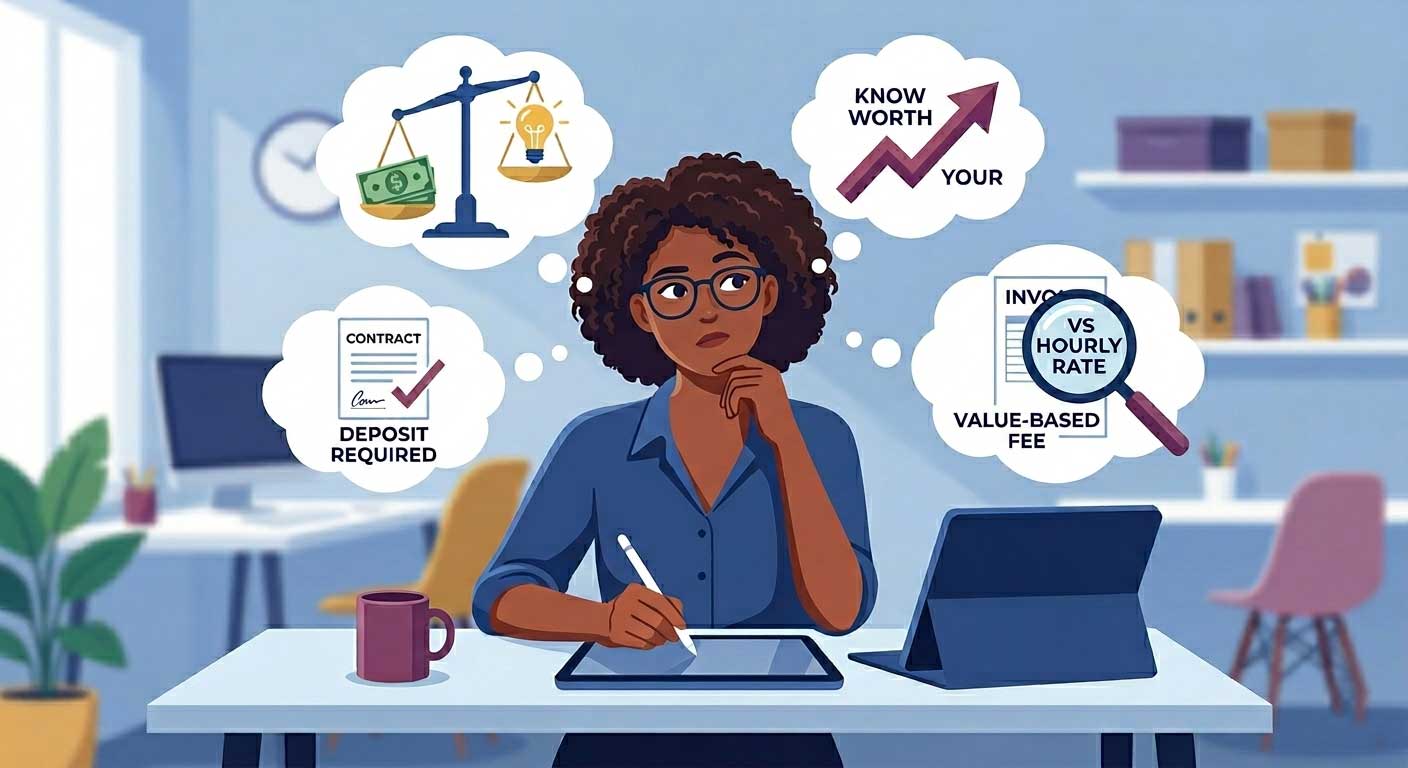
Common Mistakes Creatives Make When Charging Clients
Know Your Worth: Common Mistakes Creatives Make When Charging Clients
As a creative, your art, design, writing, or skill is your product. However, transitioning from a passionate artist to a business-minded professional requires an important shift: properly valuing and charging for your work. Unfortunately, many creatives fall into common pricing traps that undermine their profitability and professional reputation.
Here are some of the most frequent mistakes creatives make when charging clients, and how you can avoid them.
1. Undercharging (Often Due to Imposter Syndrome)
One of the most pervasive issues is undercharging. This often stems from imposter syndrome—the feeling that your work isn’t “good enough” to command professional rates. You might compare yourself to seasoned veterans and feel inadequate.
The Trap: When you undercharge, you not only make less money, but you also attract clients who don’t value your work. Low prices can also signal low quality.
The Fix: Research industry standards. Understand that you are being paid for your expertise, time, and the value your work brings to the client’s business, not just the hours you spend.
2. Charging a Flat Rate for Undefined Projects (Scope Creep)
This particular one is very common with a lot of creatives. Offering a flat rate is common, but doing so before a project’s scope is crystal clear is a recipe for disaster. This leads to the infamous “scope creep,” where the client keeps adding small requests without increasing the budget.
The Trap: A project that should have taken 20 hours turns into 40, and your flat fee suddenly looks like an hourly wage below minimum wage.
The Fix: Define the project scope meticulously in a written contract. Specify what is included (e.g., number of revisions, specific deliverables) and, crucially, what is not included. Clearly state your rates for additional work.
3. Pricing Based on Time, Not Value
Many creatives start by calculating their hourly rate. While time is a factor, charging only for your time misses the bigger picture. If you work quickly because of your expertise, should you be penalized with a lower fee?
The Trap: You solve a complex problem for a client in an hour, but because you charge by the hour, you only bill a small amount, even though your solution saved the client thousands of dollars.
The Fix: Consider value-based pricing. Ask your client: What is the outcome worth to them? If your logo design helps a startup secure $100,000 in funding, your fee should reflect that impact, not just the few hours it took to draft.
4. Failing to Account for Overheads and Taxes
When you work for yourself, your gross income isn’t your profit. You are responsible for every business expense, plus taxes.
The Trap: You set a rate based on what you think is a fair “salary,” forgetting that from that number you must pay for software subscriptions, computer equipment, health insurance, and at least 25-30% in self-employment taxes.
The Fix: Use a robust spreadsheet to calculate your actual cost of doing business. Your base rate must cover these overheads before you see any true profit.
5. Working Without a Deposit
Trust is essential, but a contract and a deposit protect both parties. A surprising number of creatives start work without any financial commitment from the client.
The Trap: Clients can cancel a project at any time, leaving you with hours of unbilled work. A deposit secures the project and validates the client’s commitment.
The Fix: Always require a non-refundable deposit, typically 25% to 50% before any work begins. Clearly outline the milestone payment schedule in your agreement.
Conclusion
Charging correctly is a skill that takes practice. By recognizing these common pitfalls, you can move toward more sustainable, profitable pricing. Your creativity is valuable. So, don’t be afraid to charge what it’s truly worth.
At Getcreativemoney, we are on the lookout for creatives, enlightening them on ways to move from just having a skill to making a living from it. We are rooting for you!
Missed our last article on how to leverage AI in building profitable brands in 2026? Read here!