3 Reasons Why Many Content Creators Struggle to Make Money in the Nigeria
Content creation has become one of the fastest-growing careers in Nigeria. We can see them within and around us. Every day, creators build audiences on TikTok, YouTube, Instagram, Facebook, and X by sharing entertainment, education, lifestyle, business, and tech content.
This growing industry, known as the creator economy, allows people to earn income through their content using ads, brand partnerships, digital products, affiliate marketing, memberships, and other revenue streams.
The opportunity is huge, but so is the challenge.
According to the Africa Creator Economy Report 2.0, Africa’s creator economy is worth $3 billion today and is expected to reach $17.8 billion by 2030. Nigeria contributes about ₦500 billion annually and has over 250,000 active creators.
Yet 6 in 10 African creators earn less than $100 a month.
So, what’s going wrong?
Why Most Nigerian Content Creators Struggle to Make Money
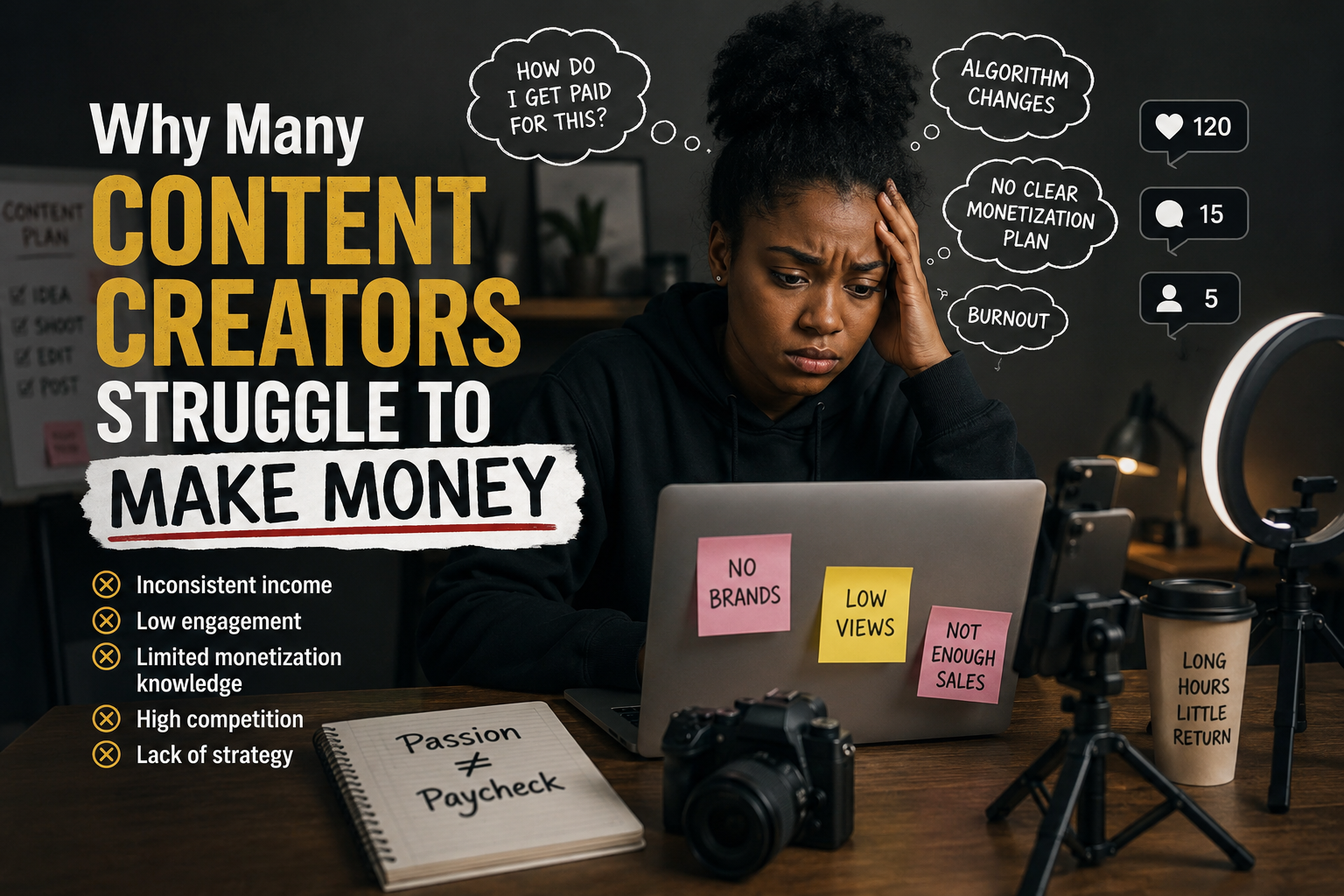
While a few creators have turned their passion into thriving businesses, many others continue to struggle financially despite putting in countless hours creating content.
The reality is that creating great content is only one part of the equation. Building a sustainable income requires understanding how the creator economy works and having a strategy beyond chasing views.
Here are some of the biggest reasons why many Nigerian content creators struggle to make money.
1. Most Platforms Don’t Pay Nigerian Creators Well
One of the biggest misconceptions among new creators is that viral content automatically leads to significant income.
Unfortunately, that’s rarely the case.
Several monetization programs offered by major social media platforms either aren’t available in Nigeria or generate considerably lower earnings than creators receive in countries like the United States, Canada, or the United Kingdom.
For example, TikTok’s Creator Rewards Program is unavailable to Nigerian creators, while YouTube advertising revenue (RPM) is generally much lower because advertisers spend less targeting Nigerian audiences.
This means two creators with similar view counts can earn vastly different amounts simply because they’re located in different countries.
As a result, many Nigerian creators produce high-performing content but see very little financial reward from platform monetization alone.
2. Too Many Creators Depend on One Income Source
Another common challenge is relying on just one way of making money.
Many creators focus entirely on YouTube ad revenue, TikTok payouts, or the hope of landing sponsored posts. While these income streams can be profitable, they are also highly unpredictable.
Algorithms change, views fluctuate, brands reduce marketing budgets and sometimes campaigns get postponed.
When your entire income depends on one platform or one client, your finances become unstable.
The most successful creators diversify their revenue by combining multiple income streams such as affiliate marketing, digital products, subscriptions, paid communities, consulting, speaking engagements, freelance services, and brand partnerships.
Diversification creates stability, even when one income source slows down.
3. They Build an Audience But Not a Business
Growing followers is exciting, but followers alone don’t generate consistent income.
Many creators spend years chasing likes, comments, and viral moments without thinking about what happens after someone follows them.
The creators who earn consistently understand that content is a marketing tool, not the final product.
They use their audience to sell products, offer services, launch online courses, build membership communities, promote events, or provide coaching and consulting.
In other words, they don’t just create content. Rather, they build businesses around their expertise and influence.
Instead of asking, “How do I get more views?” they ask, “How can I create more value for the audience I already have?”
That shift in mindset often makes the biggest difference.
How to Build Sustainable Income as a Creator
Instead of depending on one source of income, diversify your earnings.
Here are practical ways to do that:
Create and sell digital products like e-books, templates, guides, or online courses on platforms like Selar and Nestuge.
Join affiliate programs and recommend products you genuinely use.
Offer coaching, consulting, or freelance services based on your expertise.
Build a paid community on platforms like Telegram, WhatsApp, or Discord.
Work with brands whose audience aligns with yours.
Grow an email list so you own your audience instead of relying only on social media algorithms.
Repurpose your content across multiple platforms to increase reach and income opportunities.
Treat Content Creation Like a Business
The creators earning consistently aren’t just making videos, they’re building businesses.
They understand their audience, create valuable content consistently, diversify their income, and own products or services people are willing to pay for.
Virality may bring attention, but a business creates long-term income.
Conclusion
Nigeria’s creator economy is growing rapidly, but growth alone doesn’t guarantee income.
If you want to earn sustainably, stop relying solely on platform payouts. Focus on building multiple income streams, creating value beyond free content, and turning your audience into a community that trusts your expertise.
The goal isn’t just to go viral. Views may attract attention, but a well-built business is what creates long-term financial success.
It’s to build a creator business that continues to earn even when the algorithm changes.
The creators who thrive aren’t always the ones with the biggest audiences. They’re the ones who understand how to turn influence into value and value into sustainable income.