Creative Talent Alone Won’t Build a Career, Says Ekpedeme Ufot
Creative talent can open doors, but on its own, it seldom leads to a lasting career. As advertising strategist and Creative Money Africa founder Ekpedeme Ufot explained, the true difference between enduring success and untapped promise lies in transforming creativity into commercial value.
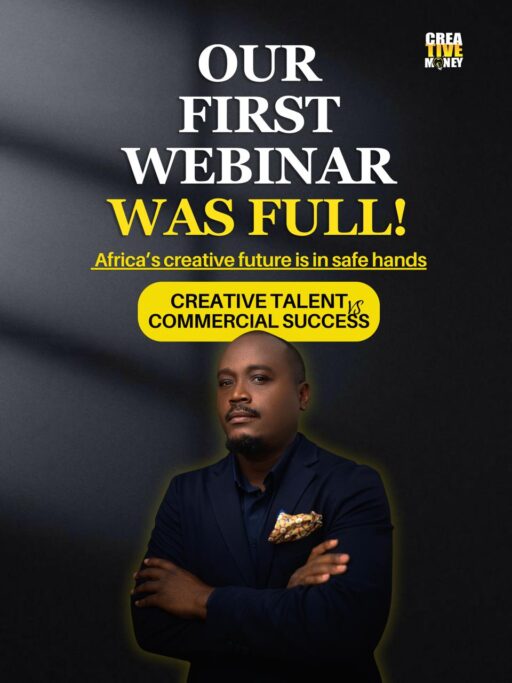
This message set the tone for the very first Creative Money Africa Webinar Series, held on Thursday, July 9, 2026. Creatives from Nigeria, Kenya, and across Africa gathered online for a session titled “Creative Talent vs Commercial Success: 18 Lessons from My 18 Years in Advertising.“
The webinar kicked off a 12-part series to help African creatives build the business skills to turn their creative skills into thriving, sustainable careers.
Bringing business conversations into creative careers
Opening the session, Creative Money Africa’s Community Manager, Sulaimon Sodiq, welcomed participants from different creative disciplines, including communications, digital marketing, law, visual design and content creation. He described the webinar as a response to a challenge familiar across the industry.
“Have you ever wondered why someone can be incredibly talented, put in so much work, and still struggle to make a sustainable living from their creativity?” he asked participants. “That is exactly what today’s conversation is about.”
This question set the stage for a session that shifted the spotlight from creative techniques to the business choices that truly shape lasting creative careers.
“Talent is only the entry ticket”
Drawing on nearly two decades of experience across advertising, media planning, strategy, and creative direction, Ufot noted that while many creatives have been taught how to improve their craft, far fewer have been shown how markets turn creativity into real value.
“The market doesn’t reward potential,” he said during the session. “It rewards outcomes.”
He explained that talent opens doors to opportunity but leads to commercial success only when it is used to solve problems people are willing to pay for.
According to him, clients are rarely paying for creative ability itself. They are paying for the business results that creative work helps them achieve. This distinction echoed throughout the webinar as a central theme.
Why execution matters more than ideas
Another major lesson centered on execution. Although ideas are often celebrated in creative circles, Ufot pointed out that unfinished concepts hold little value until they are brought to life as completed work with real, measurable results.
Reflecting on his journey, he remembered being recognized for his stream of ideas, only to realize that many of his projects never reached the finish line.
“I was someone who had lots of ideas,” he said. “Then one day, a senior colleague told me, ‘You’re always full of brilliant ideas, but you have several abandoned projects.'”
That remark, he shared, made him reconsider the distance between bursts of inspiration and the discipline of seeing ideas through to fruition.
“Ideas create possibilities,” he said. “Execution creates results.”
Visibility creates opportunity
The conversation also pushed back against the idea that great work will always be noticed on its own.
Ufot urged creatives to intentionally invest in visibility and personal branding, describing them as valuable business assets instead of mere self-promotion. “The world’s best singer in a locked room remains unknown,” he said.
He added that countless professionals miss out on valuable opportunities simply because their best work stays hidden from potential clients, collaborators, and investors.
He noted that, for many creatives, building visibility is less about seeking attention and more about making their expertise accessible to those who need it.
Relationships remain part of the business
Networking also stood out as a major lesson woven throughout the discussion. Ufot explained that professional relationships often hold the keys to information, opportunities, and collaborations that pure technical skill cannot unlock.
He encouraged participants to view relationship-building as a long-term investment in their careers rather than an occasional networking exercise.
“There are opportunities that come strictly from the relationships you have,” he said.
Pricing reflects positioning
The webinar also tackled one of the most pressing challenges for independent creatives: how to price their work. Ufot stressed that pricing should never be driven by emotion or guesswork, calling it a strategic business decision that shapes how clients perceive quality and expertise.
“If you don’t value your work,” he told participants, “the market won’t either.”
He shared that Creative Money Africa is building a pricing calculator to help creatives set structured, sustainable rates for their services.
A platform built around commercial growth
Throughout the session, Ufot kept returning to Creative Money Africa’s core mission: bridging the gap between creativity and commercial success.
Instead of focusing only on creative excellence, the platform is dedicated to equipping African creatives with hands-on knowledge in pricing, branding, business strategy, monetization, and building lasting careers.
The webinar forms part of a broader series that will continue over the coming months, with future sessions exploring different aspects of building sustainable creative businesses across Africa.
As Africa’s creative economy draws more investment and global interest, discussions like this suggest that commercial savvy could soon rival creative skill in terms of value. This first webinar helped attendees realize that gaining more talent is not as pressing an issue as learning how to turn existing talent into a thriving career.