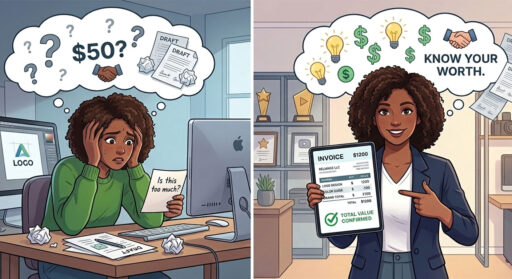
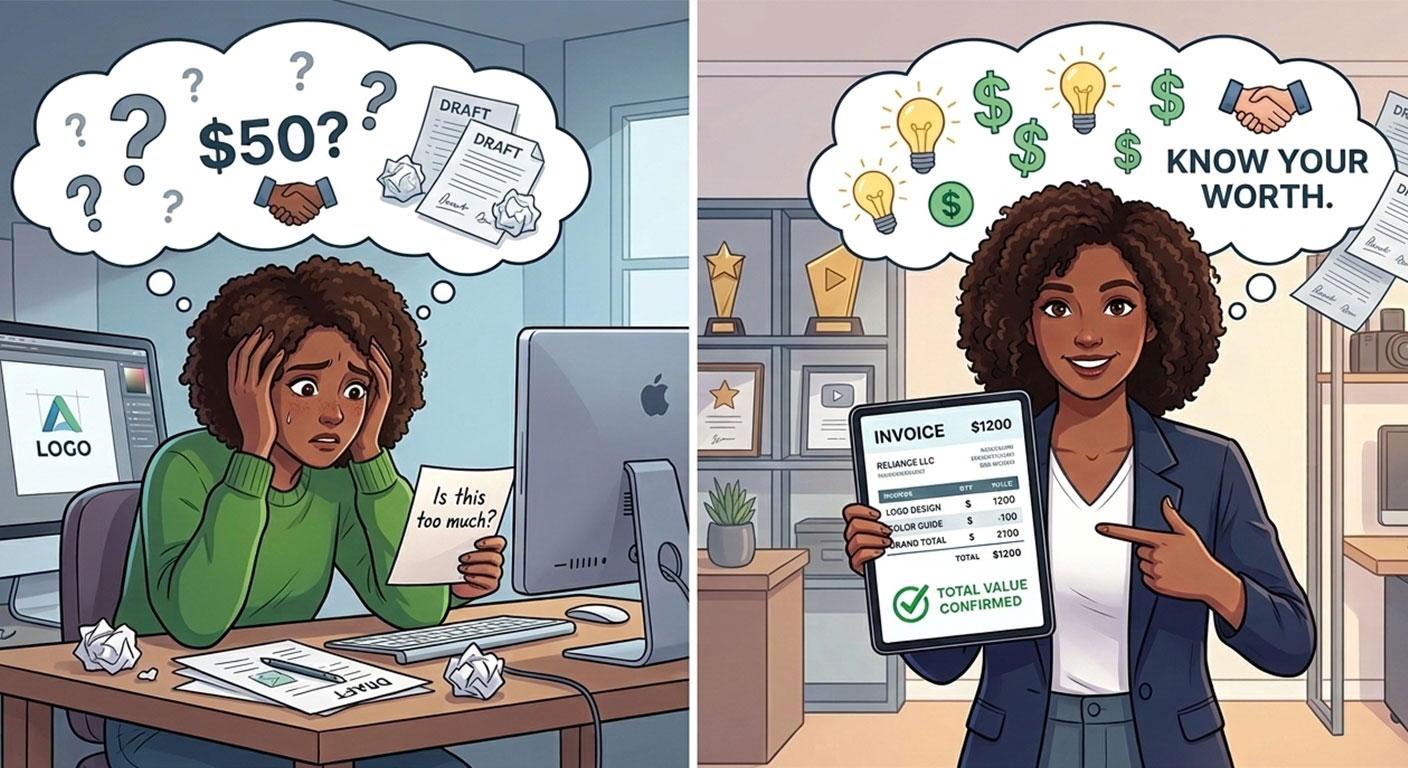

One of the most common things creatives like designers, writers, photographers, videographers, strategists and yourself need to stop, is undervaluing their work. It is a struggle for many and it shows up in underpricing, over-delivering, accepting unpaid “exposure,” and constantly second-guessing your worth. Over time, it leads to burnout, resentment, and slow career growth.
If you’re serious about turning your creative skill into a sustainable income stream, learning to price and position your work confidently is not optional. Rather, it is essential.
Why creatives undervalue themselves
Firstly, many creatives attach emotion to their work. When you create something personal, you sometimes feel lucky that someone wants it at all. That mindset makes it hard to charge appropriately.
Secondly, there’s the comparison trap. Seeing others charge less or claim to, creates pressure to lower your rates, even when your quality, experience, and process are stronger.
Thirdly, inconsistent income creates fear. When projects don’t come regularly, creatives drop prices just to “secure something,” reinforcing a cycle of underpayment.
Lastly, many creatives don’t understand the business side of creativity. They price based on effort instead of value.
So what can creatives do?
Shift from effort-based pricing to value-based pricing.
Clients are not paying for how long it took you; they’re paying for what your work helps them achieve.
- A logo is not just a design. It’s brand recognition.
- A social media strategy is not just content. It’s customer acquisition.
- A photoshoot is not just pictures. It’s positioning and perception.
When you understand the outcome your work creates, pricing becomes easier and more confident.
Ask yourself these questions:
- Does this work help a client make money?
- Does it save them time?
- Does it improve their brand perception?
- Does it help them attract better opportunities?
If the answer is yes, your work carries business value, not just creative value.
Stop normalizing “exposure” as payment
Exposure rarely pays bills. While strategic free work early in your career can build your portfolio, continuing that habit limits growth.
Does that mean creatives shouldn’t take on unpaid or low-paying jobs?
Before accepting any unpaid or low-paying work, ask yourself these:
- Will this lead to paid opportunities?
- Does this align with the kind of clients I want?
- Is the brand credible and visible enough to justify it?
If the answer is no, it’s not exposure. it’s exploitation.
Build confidence through structure
Confidence in pricing doesn’t come from motivation. It comes from clarity.
Learn to define:
- Your niche
- Your process
- Your deliverables
- Your pricing tiers
When you operate like a professional service provider rather than “someone who creates things,” clients take you more seriously and you take yourself more seriously.
Create packages for what you do:
- Starter package
- Standard package
- Premium package
This helps to remove emotional negotiation and frames your work as a business offering.
Document your wins. Many creatives forget how much value they’ve created because they don’t track results.
Start documenting:
- Client testimonials
- Growth metrics from campaigns
- Before-and-after brand transformations
- Revenue impact tied to your work
These become proof points that justify higher pricing and better positioning.
Learn to say no. Every underpaid project consumes time that could go toward better opportunities. Saying no protects your time, your energy and your brand.
Not every opportunity is alignment. Some are distractions disguised as “chances.”
Position yourself, not just your work
Clients don’t just buy outputs. They buy people who understand their problems.
Learn to share:
- your thinking
- your strategy
- your process
- your insights
When clients see you as a problem-solver, not just a creative executor, your value rises automatically.
Final thought
Undervaluing your work doesn’t just affect your income, it shapes how the market perceives you. The more you discount your skill, the more clients expect it.
Getcreativemoney is set to let creatives know that creativity is not a hobby when it solves real business problems. It is a service, an expertise and offers economic value.
The moment you start seeing your work through that lens, pricing stops feeling uncomfortable and starts feeling fair.