
Build the Mind First
There are places the human mind can take a person that no highway, rail line, or airport ever will.
A road can connect cities.
A trained mind can connect continents.
A bridge can move vehicles.
An idea can move culture.
In the 21st century, the most valuable infrastructure is not always physical, it is intellectual.
Because a single piece of intellectual property can:
- Travel globally without visas.
- Earn in dollars without leaving home.
- Scale infinitely through digital platforms.
- Outlive its creator.
But only if the creator understands the system.
That last line is the difference between talent and wealth.
The System Is the Game
Africa is not short on creativity. From the global resonance of Wizkid and Burna Boy to the cinematic rise of The Woman King, African stories are crossing borders at unprecedented scale.
Yet for every globally recognized success, thousands of creatives remain locally brilliant but globally invisible—and financially vulnerable.
Why?
Because creativity without structure is fragile.
Many creatives know how to create. Few know how to:
- Register and protect intellectual property.
- Structure royalty agreements.
- Negotiate publishing splits.
- Price their services strategically.
- Access global marketplaces.
- Build systems around their talent.
Without this knowledge, creators become participants in the value chain but not owners of it.
And ownership is where the real money lives.
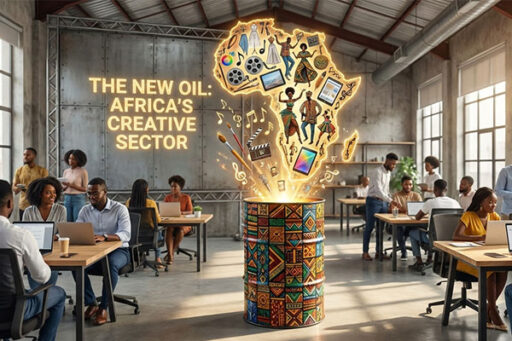
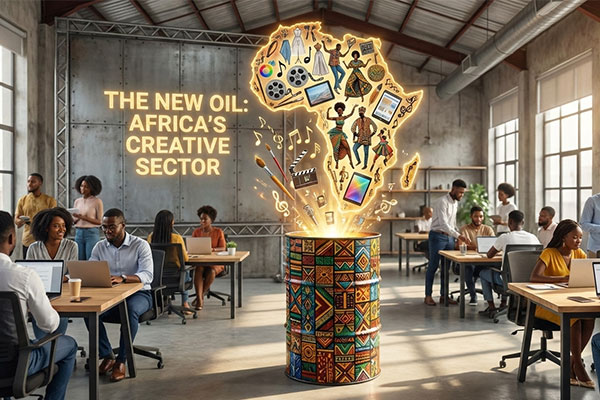
Is Intellectual Property The New Oil?
A song streamed millions of times.
A film licensed across territories.
A design sold repeatedly online.
A course purchased across continents.
These are not one-time transactions. They are assets.
Unlike physical goods, intellectual property does not deplete with use. It multiplies.
But intellectual property only becomes an asset when it is:
- Properly created.
- Legally protected.
- Strategically distributed.
- Commercially structured.
Without IP literacy, creators sign away rights.
>Without business education, they underprice value.
>Without distribution systems, they remain local.
This is why building the mind must come first.
What Africa Must Prioritize
If the creative economy is to become a serious contributor to GDP, Africa must deliberately invest in intellectual infrastructure.
- Creative Education Reform
Our education systems must move beyond theory and teach commercialization. Students in creative disciplines should graduate understanding contracts, licensing, branding, and monetization—not just craft.
- Intellectual Property Literacy
Creators must understand copyright, trademarks, publishing rights, royalties, and ownership structures. IP education should not be optional—it should be foundational.
- Digital Skills Development
Digital tools have removed geographic barriers. A creator in Lagos, Nairobi, or Accra can serve clients in London, Toronto, or New York. But only if they understand platforms, algorithms, digital marketing, AI tools, and global payment systems.
Even Artificial Intelligence is proof that the greatest competitive advantage is cognitive. AI did not emerge from raw materials—it emerged from research, thinking, and structured innovation.
- Creative Business Training
Creativity must be treated as enterprise. That means training creatives to think in terms of revenue models, systems, teams, scalability, and long-term asset creation.
- Distribution Ecosystems
Africa must strengthen its digital enablers—platforms, payment systems, logistics, and export channels—that make access to global markets easier and faster. Creation without distribution is stalled potential.
- Platform Ownership
Owning platforms changes the power dynamic. When Africans own the platforms that distribute African creativity, value retention increases. Narrative control strengthens. Economic impact multiplies.
Why Creative Money Matters
This is where platforms like GetCreativeMoney become critical.
GetCreativeMoney exists to build the intellectual infrastructure behind Africa’s talent.
It focuses on helping creatives:
- Structure their skills into market-ready products.
- Package their brand for visibility and authority.
- Protect and monetize their intellectual property.
- Understand funding pathways.
- Leverage marketing and PR for growth.
- Navigate the digital economy strategically.
The goal is simple: move creatives from raw talent to structured enterprise.
Because talent creates applause.
Structure creates assets.
Assets create wealth.