
For many creatives across Africa, talking about designers, photographers, content creators, writers, and marketers, turning your craft into a business is a major step forward. But beyond building your skills and getting clients, there’s one important question that often gets overlooked:
“What kind of business structure should I operate under?”
The structure you choose affects everything. From how you get paid, to how you pay taxes, to how seriously clients take you.
Let’s break down the most common options available and how to decide what works best for you.
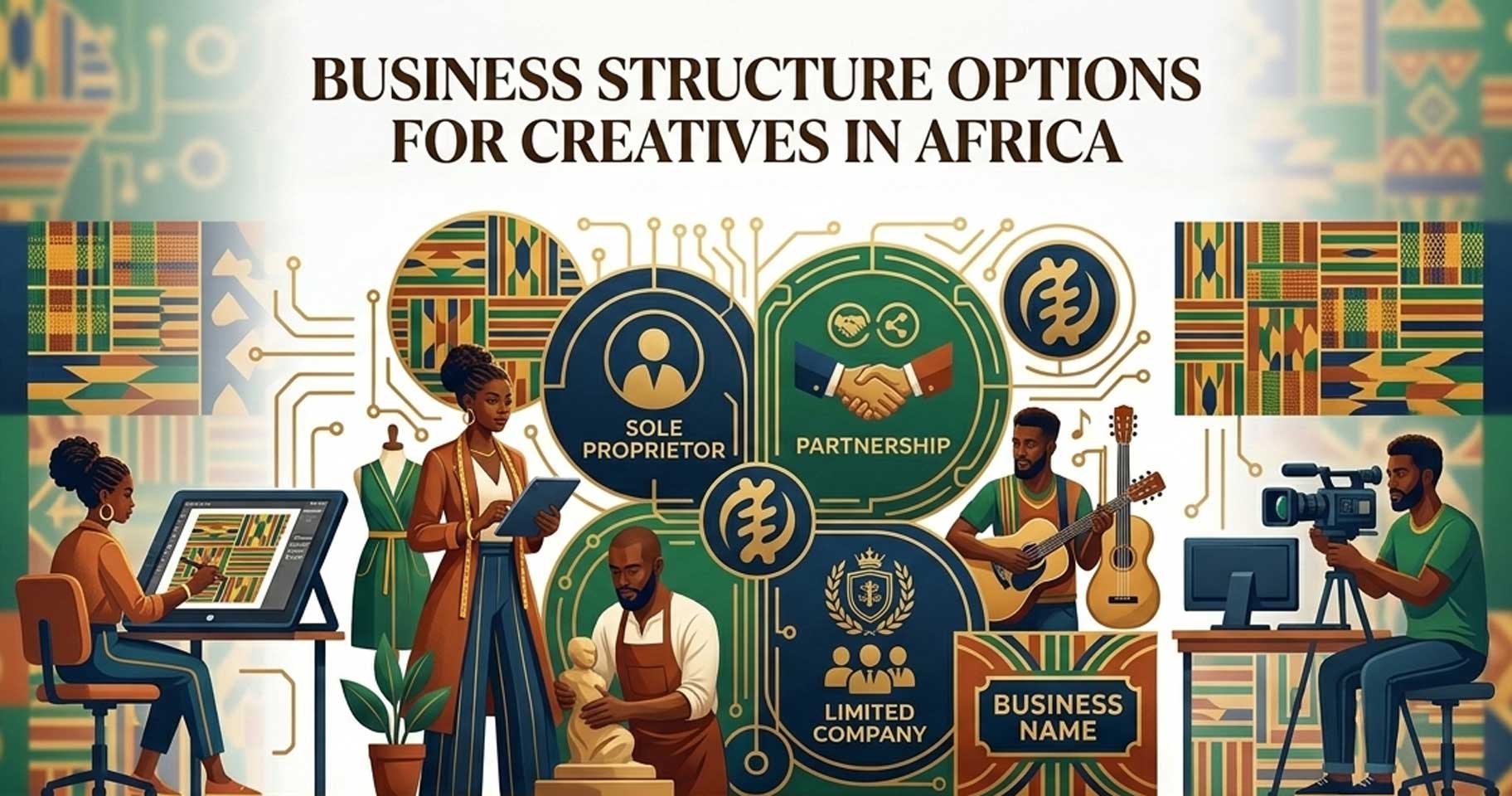
1. Sole Proprietorship (The Starting Point)
This is the simplest and most common structure for creatives starting out.
As a sole proprietor, you and your business are legally the same. You can operate under your name or a registered business name.
Why it works:
- Easy and affordable to set up
- Full control of your business
- Minimal paperwork
Here are some things to consider:
- You are personally responsible for debts and liabilities
- Limited credibility with larger clients
For many freelancers and solo creatives, this is the perfect entry point.
2. Partnership (When You’re Not Alone)
If you’re building with a friend, co-founder, or team, a partnership might just be the right fit.
This structure allows two or more people to run a business together and share profits, responsibilities, and risks.
Why it works:
- Shared resources and workload
- Diverse skill sets
- Easier to scale than going solo
Things you should consider:
- Potential for disagreements
- Shared liability
- Requires clear agreements from day one
If you’re going to take this path, don’t rely on verbal agreements everything must be put in writing.
3. Limited Liability Company (LLC)
As your brand grows, you most likely will need more structure and protection. This is where an LLC (or its equivalent in many African countries) comes in.
An LLC separates you from your business legally.
Why it works:
- Protects your personal assets
- Boosts credibility with bigger clients and partners
- Better structure for scaling
Things to consider:
- Higher setup and maintenance costs
- More regulatory requirements
For creatives working with brands, agencies, or international clients, this structure signals:
“This is a serious business.”
4. Incorporating a Brand vs Building a Personal Brand
This is where many creatives get stuck.
Should you:
- Build under your personal name?
- Or create a separate company identity?
Personal Brand:
- Easier to grow online
- Stronger emotional connection with your audience
- Great for freelancers, influencers, consultants
Business Brand:
- Easier to scale beyond you
- More professional for corporate clients
- Better for building teams or agencies
The smart move?
At Getcreativemoney, we will suggest you start with a personal brand, then evolve into a business structure as you grow.
5. Registering Your Business (Why does it matter?)
Here are some reasons why you need to formally register your business . Across many African countries, it:
- Gives you legal recognition
- Allows you to open a business bank account
- Makes it easier to access funding or grants
- Builds trust with clients
Even if you’re just starting, registering your business name is a strong step toward long-term growth.
6. Tax & Compliance Considerations
Between us, you know deep down that most creatives avoid this part. However, understanding your obligations helps you:
- Avoid penalties
- Price your services correctly
- Operate professionally
Depending on your structure, you may need to:
- File taxes annually
- Keep proper financial records
- Register for VAT (in some cases)
It might seem like stress now, but it saves you bigger problems later.
Final Thoughts
There’s no one-size-fits-all answer when it comes to business structures for creatives in Africa.
Your choice is dependent on either:
- Your current level
- Your income
- Your growth plans
Start simple if you need to. But as your brand grows, don’t be afraid to upgrade your structure.
Because at some point, you’ll need to move from:
“I’m just a creative” to “I run a business.”
And that shift?
It changes everything. From how you’re perceived to how much you earn.