The Place of Public Casting Calls in Strengthening the Movie Industry
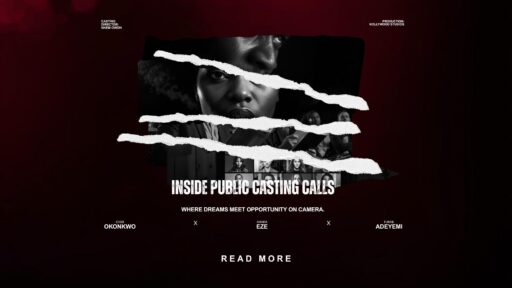
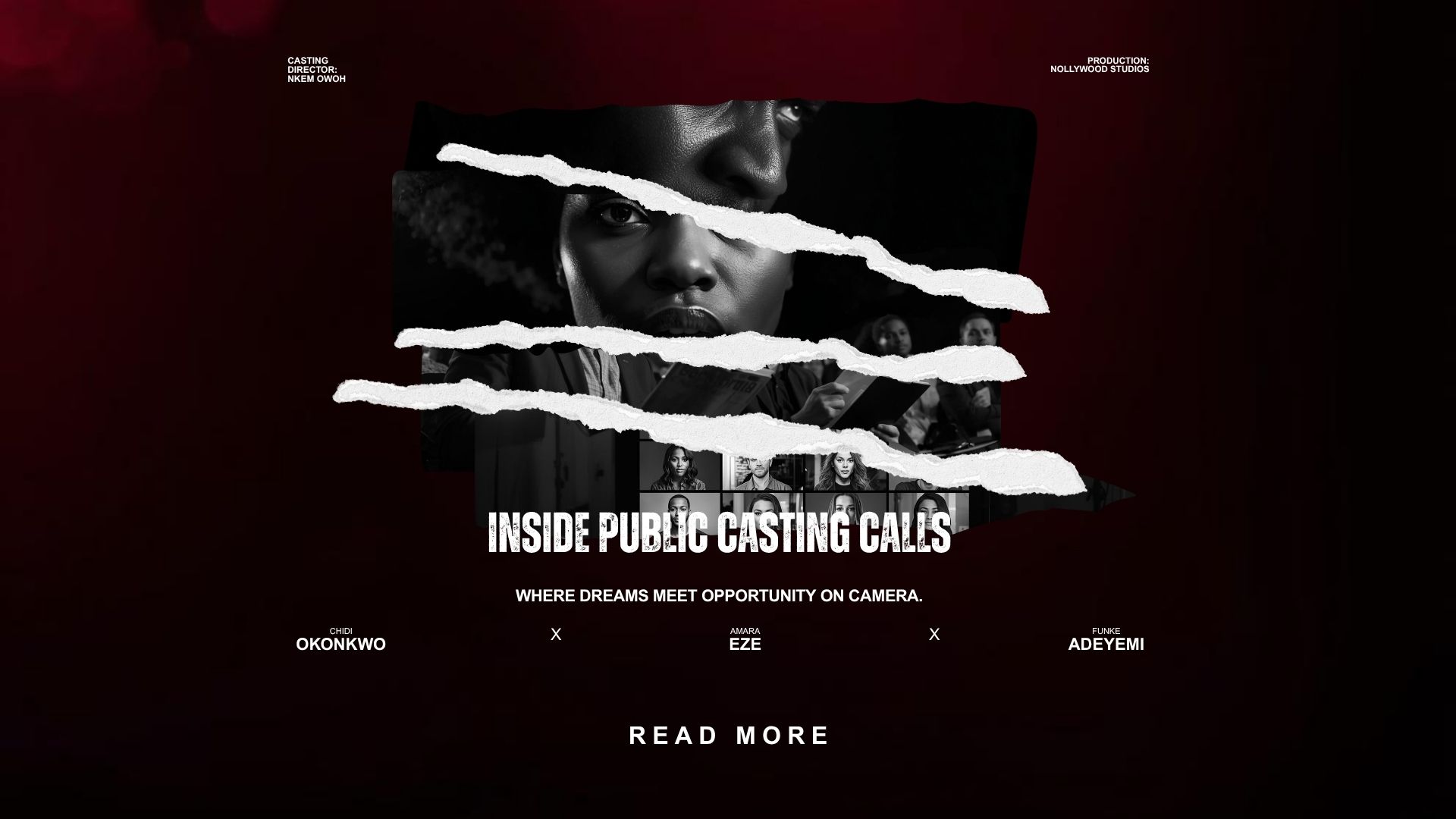
Public casting calls have always played an important role in the film industry, but in recent times, they have gained renewed attention through social media.
The recent wave of monologue audition tapes seen across social media has sparked a much-needed conversation about how talent is discovered, evaluated, and introduced into modern filmmaking — particularly within Nollywood.
While there have been viral moments, these open calls raise a deeper question about the structure of the industry itself: do public auditions play a key role in shaping access, opportunity, and the future of acting talent?
What Public Casting Calls Are and How They Work
Public casting calls, also known as open casting calls, are open auditions where filmmakers invite actors, both aspiring and experienced, to audition for specific roles in a production. Unlike closed casting processes, where actors are directly invited or recommended by agents, public calls are accessible to anyone who meets the basic requirements.
These auditions typically involve submitting self-tapes or attending in-person casting sessions where performers deliver prepared monologues or cold reads. The goal is to evaluate range, presence, interpretation, and suitability for specific roles.
For many actors pursuing creative career paths, especially those without industry connections, public casting calls represent one of the few direct entry points into professional film spaces.
Why Public Casting Calls Matter in the Movie Industry
Public casting calls remain important because they expand access to talent within the Nollywood casting process and beyond established networks. In industries where “who you know” can often influence opportunity, open auditions introduce a level of accessibility that helps surface new and unexpected performers who are investing in growing a creative career online.
They also widen the talent pool. Instead of relying solely on familiar faces or agency rosters, filmmakers can evaluate a broader range of interpretations for a role. This often leads to more dynamic casting choices and, in some cases, breakthrough performances from first-time actors.
At their core, public casting calls reinforce a simple idea: talent can exist anywhere, not just within established industry circles.
The Impact on Nollywood and Modern Filmmaking
In Nollywood, public casting calls have become more visible due to the influence of digital platforms and the growing demand for transparent movie auditions.
Social media has transformed how auditions are shared, viewed, and discussed, allowing casting processes that were once private to become part of public conversation.
This shift has also changed how actors approach auditions. Self-tapes, in particular, have become a standard entry method which makes it easier for filmmakers to review large volumes of talent efficiently while giving actors more flexibility in how they present themselves.
At the same time, public engagement with audition content has increased interest in the filmmaking process itself. As such, casting feels more transparent and participatory than before.
Kemi Adetiba: Viral Monologue Auditions and Industry Attention
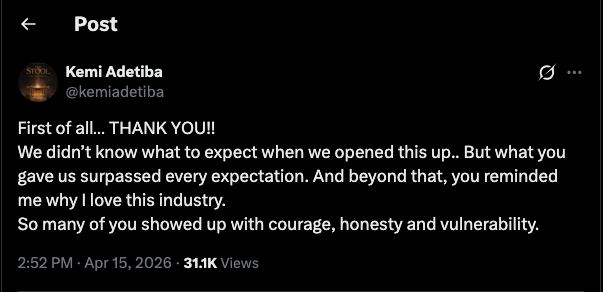
The recent public monologue audition tapes circulating on social media following Kemi Adetiba’s open casting call, has brought attention to how casting decisions are made.
The widespread sharing and commentary around these auditions highlight a growing public interest in not just finished films, but the process behind them.
Although viral attention does not determine casting outcomes, it reflects a shift in how audiences engage with film production. Auditions are no longer hidden stages of filmmaking; they have now become part of the broader cultural conversation around cinema, performance, and opportunity.
This visibility places both opportunity and responsibility on filmmakers: opportunity to engage wider talent pools and responsibility to manage the process with structure and clarity.
Challenges of Public Casting Calls
Despite their benefits, public casting calls are not without challenges. One of the most common issues is volume. Open auditions often attract large numbers of submissions, which can make it difficult to efficiently evaluate talent without strong filtering systems in place.
There is also the question of consistency. Without clear direction or structured evaluation frameworks, the quality of submissions can vary widely, making the selection process more demanding for casting teams.
For actors, public casting calls can also be emotionally intense. The openness of the process means rejection is often more visible and more frequent, requiring resilience and a strong understanding of the competitive nature of the industry.
The Future of Casting in Film
The future of casting is likely to be hybrid. While public casting calls will continue to play an important role in discovering fresh talent, they will increasingly exist alongside more curated and technology-driven selection processes.
Digital submissions, AI-assisted screening tools, and global audition platforms are already reshaping how film auditions in Nigeria and globally are conducted. At the same time, in-person auditions and director-led selections will remain essential to assess chemistry, presence, and performance depth.
In this evolving system, public casting calls will continue to serve as a gateway, opening doors while feeding into more structured professional pipelines.
Wrapping Up
Public casting calls, more than just open auditions, are a reflection of how the film industry balances access, opportunity, and structure. While they are not without challenges, their value lies in expanding the reach of talent discovery in film and ensuring that opportunity is not limited to established networks alone.
As filmmaking continues to evolve in the digital age, casting processes will likely become more layered and more visible. What remains constant is the need to identify talent fairly, intentionally, and in ways that strengthen the industry as a whole.